
The Culinary Visionary Who Changed British Palates
Long before the modern fascination with regional specificity and chef-led transparency, a single individual dared to challenge the soggy, lukewarm reputation of British Chinese takeaways by introducing London to the rigorous artistry of Cantonese gastronomy. Bill Poon was not merely a restaurateur; he was a cultural architect who fundamentally dismantled the “cheap and greasy” stereotype that had long plagued his heritage in the West. With his recent passing at the age of 81, the industry lost a giant who demonstrated that authenticity, when paired with uncompromising standards, could captivate even the most traditional palates.
His reputation rested on his ability to bridge the gap between two vastly different worlds. By treating Cantonese ingredients with the same reverence usually reserved for French haute cuisine, he invited diners to see Chinese food as a sophisticated art form. His career served as a powerful reminder that culinary traditions are not static relics but living, breathing expressions of excellence that deserve a place at the highest table of global gastronomy.
From Shunde to London: The Roots of a Revolution
Poon’s story began in Shunde, a region of Guangdong celebrated for its rich culinary heritage and demanding standards. Born in 1944 amidst the chaos of Japanese occupation, his family eventually sought safety in Macau, where his parents established a successful restaurant. It was in this professional environment that a young Bill Poon absorbed the foundational techniques of flavor balance and precision. These formative years instilled in him a belief that quality was non-negotiable, a philosophy that would define his entire professional life.
Upon arriving in the United Kingdom in the mid-1960s to pursue his future wife, Cecilia, Poon was reportedly dismayed by the poor quality of the Chinese food available. He found the localized, heavy adaptations to be a pale imitation of the vibrant cuisine he knew. Before launching his own empire, he honed his craft as a dim sum and pastry chef in Birmingham and London, including a stint at the exclusive Playboy Club. These roles allowed him to study the British market while maintaining his commitment to the authentic traditions he would eventually champion.
Pioneering Milestones and Gastronomic Successes
The trajectory of Poon’s career was marked by a series of bold moves that shifted the center of gravity in London’s dining scene. He understood that to change perceptions, he needed to create spaces that felt both accessible and undeniably elite.
The Establishment of a Michelin-Starred Dynasty
The 1976 opening of Poon’s of Covent Garden was a watershed moment for the UK restaurant industry. Backed by influential supporters like Lord and Lady Tanlaw, the establishment quickly became a sensation, moving beyond the traditional confines of Chinatown to compete in the heart of London’s theater district. When the restaurant was awarded a Michelin star in 1980, it sent a clear message to the culinary world: Chinese cuisine had officially arrived in the realm of fine dining. This accolade validated Poon’s vision and paved the way for future generations of Asian chefs to seek high-level recognition.
Mastering Tradition with Wind-Dried Meats
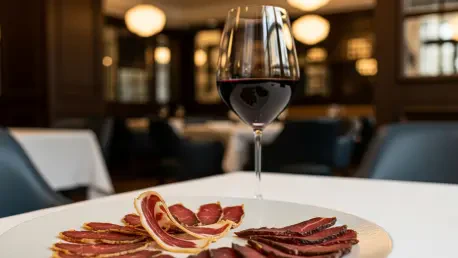
Even as his restaurants gained fame, Poon never abandoned the specialized crafts of his ancestors, particularly the production of “Lapo” or wind-dried meats. Utilizing traditional family recipes, he built a business that provided high-quality sausages and cured meats to both professional kitchens and home cooks. These products became a benchmark for quality, praised by critics for their depth and complexity. By focusing on these specific artisanal components, he proved that the “clean, ingredient-driven” philosophy he advocated was rooted in tangible, high-quality production methods.
Bridging the Gap Between Chinese Cuisine and Fine Wine
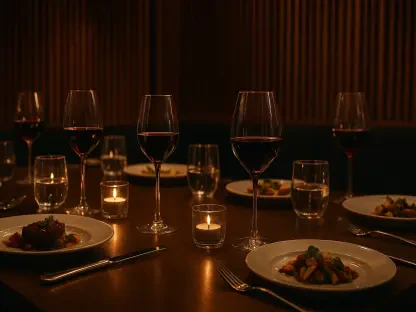
Poon’s most sophisticated effort to elevate his craft involved a landmark collaboration with Jean-Michel Cazes of Château Loudenne. At a time when many believed Chinese flavors could not pair with fine European wines, Poon traveled to Bordeaux to prove the skeptics wrong. By matching his delicate Cantonese dishes with rare vintages, he demonstrated a level of gastronomic nuance that was previously unimagined. This crossover didn’t just elevate his personal brand; it reframed the entire conversation around how Asian food could be enjoyed in a global, high-end context.
Transparency and Authenticity as a Competitive Edge
Perhaps his most radical innovation was the introduction of the central open kitchen. By placing the heat, speed, and skill of his chefs on full display, he dismantled lingering negative stereotypes about the cleanliness and complexity of Chinese food preparation. This transparency was a bold invitation for the public to witness the labor-intensive reality of his craft. Moreover, it shifted the focus toward a “clean” style of cooking that emphasized freshness and lightness, contrasting sharply with the heavy, starch-laden dishes often found in more localized establishments.
The Continued Presence of the Poon Legacy
The legacy of the Poon family remains a vibrant part of the modern dining landscape through the work of his daughter, Amy Poon. Her restaurant at Somerset House carries the torch of her father’s technical brilliance, ensuring that his signature recipes are preserved for a new generation of diners. Current activities, such as the organization of memorial events and the continued curation of their famous wind-dried meats, highlight a family commitment to maintaining the high standards Bill Poon established decades ago.
Reflection and Broader Impacts
His influence extended far beyond the kitchen, affecting how society viewed immigrant culture and business success.
Reflection
Bill Poon’s career was a testament to the power of artistic integrity over easy profit. Despite early industry biases, he transformed a marginalized cuisine into a celebrity-magnet art form that attracted icons like Mick Jagger and Barbra Streisand. His approach demonstrated that when a chef refuses to compromise on their cultural roots, they don’t just find a market—they create a movement.
Broader Impact
The emphasis on transparency and authentic techniques paved the way for the current wave of high-end Asian dining. Modern kitchen designs that favor open layouts owe a debt to Poon’s early experiments with visibility. Furthermore, his success challenged the broader industry to reconsider the value of “ethnic” cuisines, encouraging a more diverse and respectful approach to global cooking traditions.
A Lasting Impact on Global Gastronomy
The journey of Bill Poon from a determined immigrant to a Michelin-starred icon successfully redefined a nation’s palate and elevated Cantonese heritage to the global stage. He championed the idea that transparency was the ultimate antidote to prejudice and that quality was a universal language. The industry eventually recognized that his “clean” philosophy was not a trend but a fundamental standard for excellence.
The story of this culinary pioneer suggested that the path toward a more vibrant dining scene required a deep dive into heritage rather than a dilution of it. Future restaurateurs looked to his example as proof that authenticity was the most sustainable competitive advantage. By exploring the depth of Cantonese traditions and supporting transparent kitchen practices, the culinary community honored the standard he set. The lessons from his life provided a roadmap for any chef aiming to transform a misunderstood culture into a celebrated pillar of the global dining scene.