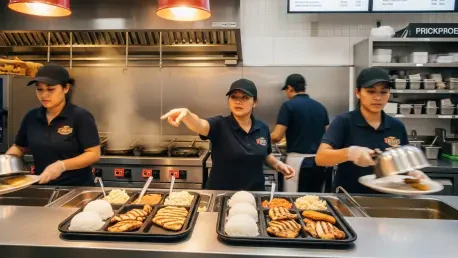

Opening a single restaurant rarely shifts a company’s trajectory, yet Mo’ Bettahs’ move into Gilbert, Arizona, read as more than a ribbon-cutting and instead looked like a stress test of brand reach, message discipline, and operational depth in a competitive metro. The location at 5378 S Power Road debuted with a deliberate cadence: preview “Friends and ‘Ohana” events on May 1–2, lively programming that blended founder appearances with giveaways and live music, and a Saturday block party capped by a 5:30 p.m. ribbon-cutting and a classic VW display to spark curbside curiosity. The May 4 opening layered in a buy-one-get-one-free play on regular plates when mentioned at the register, a simple mechanic with measurable lift. Hours landed at Monday–Saturday, 10:30 a.m.–10 p.m., a clear signal of fast-casual intent. Crucially, the concept centered the Hawaiian plate lunch—two scoops rice, macaroni salad, and proteins like teriyaki chicken, kalua pig, and katsu—delivered with practiced speed.
The Launch: A Test of Market Fit
Gilbert’s debut framed authenticity as both product and promise, relying on founders Kimo and Kalani Mack’s Hawai‘i upbringing to ground the menu in familiar island staples and the service in a relaxed, hospitable rhythm. That cultural positioning mattered as the Phoenix area continued to attract chains scaling beyond home turf; diners have seen punchy openings before, but fewer backed the talk with details like pulehu chicken char and kalua pig texture executed at volume. The preview events offered more than sizzle: they created an early feedback loop on throughput, order accuracy, and daypart demand across lunch and dinner windows. The buy-one-get-one-free lever functioned as an acquisition tactic rather than a blunt discount; staff could map mention rates at the register to channel performance, then calibrate media and in-store prompts to maximize trial while protecting check averages.
Building on this foundation, the Saturday block party and community partnerships served as a strategic hedge against the transience of grand-opening buzz. Yard games and vendor booths may sound quaint, yet they nudged the brand into local routines, a useful counter to the Phoenix market’s wide selection of fast-casual Asian, barbecue, and fusion players. The company also used the event cadence to test catering appetite, a high-margin adjunct in suburban corridors flush with youth sports and corporate off-sites. Meanwhile, the address near commuter flows positioned the store for mixed trip missions: solo weekday lunches, family takeout on Fridays, and dine-in on slower weeknights. Measured against Arizona’s crowded calendar of food holidays and school schedules, the exaggerated opening week acted like a pilot—show what resonates, keep what converts, and institutionalize what scales.
Growth Strategy: From Gilbert to a Wider Map
Mo’ Bettahs’ scale story did not start in the desert. The company expanded to 70-plus units across Utah, Idaho, Oklahoma, Texas, and Nevada before stepping into Arizona, and it arrived with a funding stack—Savory Restaurant Fund, Blue Marlin Partners, and Trive Capital—that signaled confidence in the model’s repeatability. Eighteen consecutive years of same-store sales growth pointed to tight cost control and resilient demand, but it also implied disciplined site selection and menu guardrails that resisted creep. The Gilbert play extended that discipline: a compact menu anchored by teriyaki chicken or steak, katsu, and shrimp tempura accelerated line speed and trained guests to navigate builds fast. Dine-in, takeout, and catering covered use cases without diluting kitchen flow, while the plate format protected perceived value in inflation-sensitive households.
However, success in Arizona required more than exporting a Utah-tested script. The Phoenix metro rewarded concepts that localized without losing core identity, and that meant calibrating marketing to neighborhood vernacular while keeping the island cadence intact. In practice, that looked like founders’ stories in-store rather than broad national campaigns, community leagues over paid influencers, and a quiet emphasis on consistency over novelty drops. The growth engine benefited from these choices because operations stayed stable as momentum built. The next step naturally pointed to clustering units in the East Valley to tighten logistics and marketing waste, then radiating across the metro at a pace supply chains could absorb. By pacing expansion with precise radius planning, the brand reduced delivery costs, preserved training quality, and kept each opening from cannibalizing the last.
What to Watch Next: Metrics That Will Matter
Near term, the indicators that counted most had been concrete and observable. Average ticket needed to hold after the buy-one-get-one-free window closed; if mix drifted toward single proteins and away from premium steak, pricing and in-store merchandising would have required a nudge. Table turns and order-to-pickup times during the lunch rush had been the other litmus tests; a consistent sub-10-minute handoff for takeout with minimal remakes suggested the kitchen cadence traveled well. Catering order frequency by zip code, particularly within five to seven miles, had been a proxy for brand entrenchment with schools, offices, and clubs. If those orders climbed by week four, the opening playbook likely translated to sustainable revenue, not just celebratory noise.
Actionably, expansion choices should have prioritized dense clusters, a measured digital stack, and precise menu stewardship. Clustering sites around Gilbert and nearby suburbs would have leveraged shared labor pools, cross-training, and coordinated local sponsorships. Digital investments should have focused on a clean native ordering flow, predictable pickup shelving, and a simple rewards mechanic that recognized repeat plate shoppers without overcomplicating accruals. On menu, holding the line on the core proteins while testing one limited-time island side at a time would have protected throughput. If those moves were executed, Mo’ Bettahs left Arizona’s starting blocks with momentum and a roadmap: earn trust block by block, grow where delivery trucks and training teams could keep up, and let the plate lunch do the persuading.