
As an expert in the hospitality and travel sectors, Katarina Railko brings a wealth of experience in navigating the intersection of tourism management and environmental responsibility. Having refined her skills in high-stakes environments like international expos and conferences, she is a leading voice on how the industry can transition toward more ethical practices. In this conversation, we explore the profound shifts required by the new EU Directive, discussing the death of narrative-led marketing, the logistical bridge between data and branding, and how destinations can turn rigorous compliance into a powerful competitive advantage.
Since the new EU directive takes effect in September 2026, what immediate steps should destination managers take to audit their current marketing? How can they ensure that visuals and labels are just as evidence-based as their written claims?
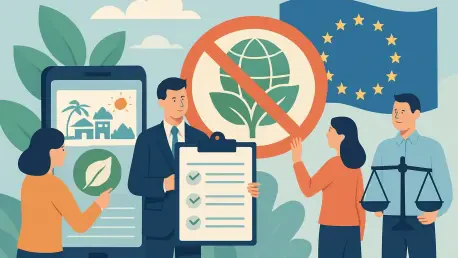
The very first step is a comprehensive audit of every consumer-facing touchpoint, from social media captions to the imagery used in brochures. By September 27, 2026, the directive requires that every claim—including labels and branding—is specific and not misleading, which means we can no longer rely on vague “eco-friendly” badges without substance. To ensure visuals are evidence-based, managers must verify that an image of a pristine forest or a “green” hotel actually reflects the specific environmental impact of that service rather than serving as a decorative placeholder. This process involves cataloging every environmental assertion and cross-referencing it with current sustainability reports to identify where the narrative outpaces the reality. It’s about building a library of “approved” claims that are backed by a paper trail, ensuring that when a traveler sees a sustainability label, they are seeing a verified achievement.
Environmental claims now require verifiable data rather than just narrative storytelling. How should organizations restructure the relationship between their marketing and data departments, and what specific internal processes are necessary to maintain this long-term alignment?
Organizations must break down the traditional silos where marketing creates the story and operations handles the metrics. A successful transition requires a “tripartite” alignment between marketing, operations, and data functions to ensure that what is measured is exactly what is being communicated. We need to implement internal verification loops where the data department signs off on any environmental claim before it goes to the creative team. This could look like a shared digital dashboard where marketing can see real-time sustainability KPIs, ensuring that a claim about carbon reduction or waste management is grounded in the latest figures. Maintaining this long-term requires a cultural shift where data becomes the foundation of the brand’s voice, turning every marketing professional into a pseudo-analyst who understands the weight of a measurable impact.
There is a fine line between avoiding greenwashing and falling into “greenhushing” due to regulatory fear. What strategies can event organizers use to remain transparent about their progress without risking non-compliance, and how do they determine which data points are “clear and specific” enough?
The fear of litigation often leads organizations to go silent, but “greenhushing” can be just as damaging to a brand as greenwashing because it erodes consumer trust. To stay transparent, organizers should focus on “clear and specific” data points, such as exact percentages of waste diverted from landfills or verified certifications from recognized bodies. Instead of promising a “sustainable event,” provide a breakdown of the actual measures taken, such as the kilowatt-hours saved through energy-efficient lighting or the specific local sourcing of 80% of the catering. If a claim is measurable and has a direct evidence trail, it is usually safe from regulatory scrutiny. The key is to speak in terms of progress and tangible outcomes rather than abstract ideals, transforming the report from a vague promise into a documented journey.
Transitioning to a system based on proof rather than promises requires significant technical capability. What are the most common gaps in data governance you see in the tourism sector, and how can destinations build the necessary infrastructure to bridge those gaps?
One of the most glaring gaps is the lack of centralized data governance; often, sustainability data is scattered across various vendors, hotel partners, and local transport agencies. Destinations frequently struggle with inconsistent metrics, where one hotel measures water usage per room and another per guest, making a destination-wide claim nearly impossible to verify. To bridge these gaps, destinations need to invest in unified data infrastructure that aggregates these diverse data streams into a single, verifiable source of truth. This involves setting standardized reporting protocols for all stakeholders and perhaps hiring dedicated sustainability data officers. By strengthening these evidence capabilities now, a destination can move from a fragmented collection of promises to an accountable, evidence-driven system that meets the new EU standards.
Beyond mere compliance, these regulations are framed as a way to build a competitive advantage. Can you walk us through how a destination might turn rigorous evidence-gathering into a core part of its brand identity to win over skeptical travelers?
Rigorous evidence-gathering is the ultimate tool for building credibility in an era where travelers are increasingly skeptical of corporate “green” claims. A destination can turn this into a brand identity by making transparency a feature of the guest experience, perhaps through QR codes at sites that lead directly to real-time impact reports. When a traveler can see exactly how their visit supports local biodiversity or reduces carbon footprints, it creates an emotional connection rooted in honesty rather than marketing fluff. This level of accountability positions a destination as a leader in long-term resilience, attracting high-value travelers who prioritize ethical choices. Essentially, you are selling “peace of mind” and authenticity, which are far more valuable in the current market than any flashy, unverified slogan.
What is your forecast for the future of sustainability communication in the travel industry?
I believe we are entering an era of “radical accountability” where the travel industry will eventually function like the financial sector, with standardized environmental auditing as the norm. By 2030, I forecast that unverified environmental claims will virtually disappear from the European market, replaced by sophisticated digital passports for destinations that provide real-time sustainability metrics. This shift will reward those who act early, as consumers will gravitate toward the transparency and “proof” that is now being mandated by the EU. Those who treat this directive as a creative challenge rather than a legal hurdle will define the next generation of global tourism. It is a defining moment where we stop telling stories and start proving our impact, fundamentally changing how we value and market the beauty of our planet.