
The global saturation of cultural tourism often leaves sophisticated travelers feeling disconnected from the very masterpieces they traveled thousands of miles to witness in person. In an age where major museums face unprecedented crowds, the ability to engage deeply with history requires a level of access that traditional luxury travel rarely provides. Karen Stone Talwar, a veteran of the international art market with a background at institutions such as Christie’s and Sotheby’s, addressed this void by establishing a specialized firm that bridges the gap between high-end exploration and academic rigor. Her background in the auction houses and organizations like the Asia Society allowed her to cultivate a network that spans continents, ensuring that her clients do not merely view art but experience it within its most intimate contexts. This professional pedigree serves as the foundation for a business model that treats travel as a scholarly pursuit rather than a leisure activity, catering to a demographic that values intellectual depth.
Crafting Intimacy through Curated Access
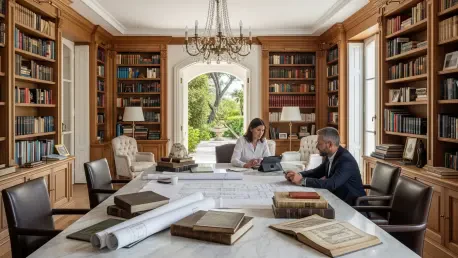
The operational philosophy of the organization centers on what are described as signature moments, which elevate a trip from a standard itinerary to a profound cultural encounter. These moments often involve bypassing the logistical barriers that typically separate the public from the art world’s inner workings. For instance, the company frequently arranges for private, after-hours access to global landmarks such as the Louvre in Paris, allowing guests to stand before the Mona Lisa or the Venus de Milo without the distractions of thousands of other visitors. Beyond the major institutions, the focus shifts toward the private sphere, where guests are invited into the homes of prominent collectors for dinner or into the active studios of world-renowned artists. This level of immersion provides a rare glimpse into the creative process and the motivations of those who preserve cultural heritage, transforming the traveler from a passive observer into a privileged guest within the community.
Program structures are meticulously divided into two distinct categories to cater to varying levels of engagement and professional interest. The signature trips are designed for small, intimate groups of approximately twelve individual travelers who seek a curated but social environment. In contrast, the bespoke programs are specifically tailored for museum trustees and significant donors, often focusing on niche exhibitions or specific regional movements. These donor-led tours are frequently accompanied by museum directors or expert curators, ensuring that every discussion is rooted in high-level scholarship and historical accuracy. The organization manages every aspect of the logistical chain, from securing accommodations and private transportation to coordinating fine dining experiences. By removing the burdens of planning, the firm ensures that participants remain focused on the educational lectures and historical insights, creating a seamless integration of luxury and intellect.
Blending Global Reach with Local Heritage
While the company maintains an extensive global footprint with regular excursions to destinations like India, Mexico, Italy, and France, it places an equal emphasis on the architectural and artistic heritage found closer to its home base in Palm Beach. This dual approach acknowledges that profound cultural stories are often hidden in one’s own backyard, waiting to be rediscovered through an expert lens. Local programming includes specialized boat tours that examine the unique waterfront estates characterizing the Florida coastline, alongside walking tours that deconstruct the Mediterranean Revival architecture of Worth Avenue and the historic significance of Bethesda-by-the-Sea. By applying the same level of scholarly scrutiny to local landmarks as it does to international treasures, the firm highlights the interconnectedness of global design movements. This strategy caters to the growing demand for hyper-personalized, experiential journeys that prioritize deep regional understanding.
The evolution of the high-end travel market demonstrated that exclusivity alone was no longer sufficient for the discerning traveler; instead, a focus on intellectual fulfillment became the new benchmark for luxury. This shift required agencies to transition toward a model of partnership with cultural institutions, ensuring that travel dollars directly supported the preservation and study of the arts. Moving forward, those seeking to deepen their engagement with the art world should have prioritized relationships with firms that offered direct paths to scholarship and private stewardship. The success of these curated programs proved that the most valuable asset in modern travel was not the destination itself, but the quality of the access and the expertise of the guide. Individuals looking to enhance their collections or cultural knowledge benefited from seeking out platforms that integrated philanthropic opportunities with personal discovery. The focus remained on creating sustainable connections.