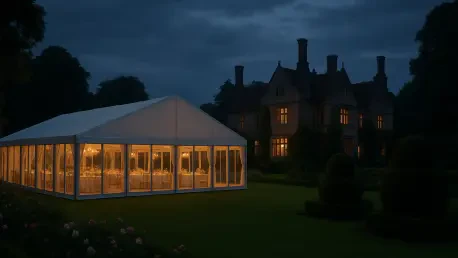

Integrating industrial-grade fans and flexible wall systems into initial designs helps planners manage the conflict between safety requirements and natural cooling. The festival landscape is currently undergoing a significant transformation, moving away from muddy fields toward sophisticated environments like manor estates and World Heritage Sites. As the industry pivots toward “micro-festivals” and heritage-site gatherings, the rigorous standards of luxury event planning are becoming the new benchmark for success. This evolution suggests that the choice of infrastructure is no longer a secondary logistical concern but a primary driver of an event’s identity. By integrating high-end marquee designs and bespoke engineering, organizers can elevate the attendee experience from a basic outing to a premium, immersive journey. A successful integration of luxury standards begins with a strategic relationship between the temporary structure and its external environment. In high-end planning, a marquee is treated as a design centerpiece that must harmonize with the surrounding landscape to enhance the prestige of the event.
Overcoming Logistical and Environmental Hurdles
Engineering for Complex Terrains
Managing site topography represents one of the most daunting challenges in adapting luxury standards to large-scale festivals. Sloping ground and uneven surfaces present significant safety risks and can quickly drain a budget if not addressed during the conceptual phase. For instance, high-stakes events on uneven terrain often require elevated flooring systems and custom-built ramps or balustrades to ensure guest safety and efficient service flow. These elements must be seamlessly integrated to avoid disrupting the visual flow of the high-end setting.
By conducting thorough site assessments early on, planners can determine if expensive leveling is necessary or if the terrain can be navigated more naturally. This proactive approach allowed funds to be redirected toward superior interior finishes rather than invisible structural corrections. It is essential to recognize that the ground beneath a marquee dictates the flow of the entire event, influencing everything from waiter service speed to the accessibility of emergency exits. Effective engineering transforms a difficult site into a stable foundation for luxury.
Climate Control and Guest Comfort
The relationship between structural engineering and environmental adaptability is a delicate balance, particularly when aiming for a premium feel. While traditional canvas marquees offer natural breathability, the use of raised flooring for safety can inadvertently restrict airflow by requiring certain side walls to remain closed. This creates a challenging microclimate that can detract from the guest experience if not managed with technical precision. Maintaining a consistent temperature is vital for upholding the luxury illusion, as physical discomfort often overshadows even the most beautiful event designs.
To solve this, modern festival planners must integrate industrial-grade ventilation and flexible wall systems into their initial designs. This proactive approach ensures that whether the event faces a heatwave or a sudden downpour, the internal climate remains comfortable and inviting. By utilizing advanced climate control technology, organizers can guarantee a stable environment that protects both the guests and the delicate interior decor. Providing a climate-controlled sanctuary within a temporary structure has become a non-negotiable standard for the 2026 festival season.
Optimizing Management and Financial Value
Sophisticated Coordination and Site Protection
Managing a luxury-tier festival requires a level of project management that mirrors complex construction sites, often involving the coordination of over 75 independent suppliers. Protecting the venue is paramount, especially at heritage sites where ancient trees or delicate lawns must remain pristine throughout the build and live phases. This necessitates the use of temporary trackways for heavy machinery and delivery vehicles to ensure that the natural beauty of the location is preserved. Such precautions are essential for maintaining long-term relationships with prestigious venues and heritage organizations.
Furthermore, a strict sequential planning process is required to avoid logistical bottlenecks. By involving marquee specialists early in the process, organizers ensured that every element—from flooring and lighting to internal drapery—was installed in a logical order that minimized site impact. This coordinated effort prevented costly mid-build adjustments and allowed for a smoother transition between different installation phases. Successful execution in 2026 relied on the ability to treat the assembly process as a choreographed performance where timing and site integrity were equally prioritized.
Maximizing Utility Through Strategic Design
Adopting luxury standards does not inherently mean a bloated budget; rather, it emphasizes value through informed decision-making and multi-purpose functionality. Organizers can achieve a “premium” atmosphere by choosing structures with inherent character, such as traditional pole marquees, which reduce the need for expensive additional decor. These structures provide a sophisticated backdrop that feels intentional and high-end without requiring excessive thematic dressing. This strategic selection of structural materials allows for a more sustainable and cost-effective approach to creating a luxury environment.
The most successful festivals utilized a “chameleon” approach to space, where a structure designed to be a tranquil lounge during the day was transformed into a high-energy venue at night. This transformation was achieved through strategic lighting shifts and furniture reconfigurations, maximizing the utility and financial efficiency of every square foot. Planners analyzed traffic patterns to ensure that these transitions occurred without disrupting the guest experience. By focusing on dual-use spaces and site-specific engineering, organizers delivered high-impact events that remained logistically sound and financially viable throughout the year.