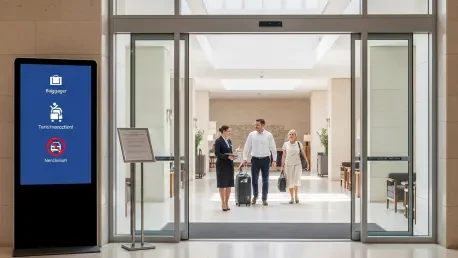

The global hospitality landscape frequently becomes a theater of clashing cultural norms when international travelers arrive at their destinations with rigid expectations shaped by their home environments. A recent incident involving a high-profile Glasgow hotel and a family from the United States highlighted these tensions with remarkable clarity, turning a standard check-in into a series of logistical disputes. Cultural friction often arises not from malice, but from a fundamental lack of preparation regarding local infrastructure and service standards. When guests expect the world to conform to the specific conveniences of their home city, the resulting frustration creates an unnecessarily hostile environment for service staff who are simply following established protocols. This specific case served as a reminder that international travel requires a level of humility and an openness to different ways of operating. Without these traits, communication breaks down.
Infrastructure Realities: Urban Logistical Constraints
One of the primary sources of conflict in the Glasgow incident centered on the city’s rigorous traffic regulations, which are designed to prioritize public transportation and safety. In many American urban centers, travelers are accustomed to door-to-door service where private vehicles can stop directly in front of a hotel entrance for loading and unloading. However, Glasgow utilizes strict bus and taxi lanes that prohibit private cars from idling during peak hours, a detail that was clearly communicated on the hotel’s digital booking platforms. Despite this documentation, the guests felt slighted when their driver was forced to drop them off a short distance from the lobby. They interpreted a legal mandate as a deliberate failure of the hotel to provide basic accessibility. This disconnect illustrates how a lack of localized knowledge can lead travelers to view standard urban management as a personal inconvenience or a sign of poor hospitality service.
The psychological shift from being a pampered guest to a participant in a functional urban ecosystem often proves difficult for those who equate luxury with absolute convenience. When the American family arrived, their frustration with the walk from the car to the entrance immediately colored their perception of the property. Instead of recognizing the hotel’s compliance with local law, they projected their dissatisfaction onto the front desk team, creating a tense atmosphere before they even reached the counter. This reaction highlights a broader trend where travelers expect a frictionless experience that ignores the physical and legal realities of their destination. When a city prioritizes sustainable transit over private car access, it creates a logistical challenge for those traveling with excessive amounts of luggage. These guests viewed the situation through a lens of entitlement, failing to see that the hotel had no authority to override the municipal laws governing the street.
Divergent Definitions: Luxury and Professional Roles
A significant portion of the misunderstanding originated from the different ways hotels are classified and staffed across international borders. The property in question is a high-quality four-star establishment, which in the United Kingdom implies a high standard of comfort and amenities but does not always include the specialized labor of a five-star luxury hotel. In the United States, travelers often expect bellhops and porters to be present at any property marketed as high-end. This family arrived with fourteen pieces of luggage for only four individuals, an amount that would challenge the logistical capacity of most standard urban hotels. Because the hotel did not employ dedicated porters, the expectation that front desk staff would abandon their posts to provide manual labor was fundamentally misaligned with the facility’s operational structure. This clash shows how international rating systems can mislead guests who assume that four stars in one country guarantee the same staff roles as in another.
Despite the clear lack of formal porter services, a hotel employee eventually decided to go beyond the call of duty by personally moving all fourteen bags to the guests’ rooms. This act was intended as a gesture of goodwill to de-escalate the rising tension and provide a solution to the family’s logistical struggle. However, the guests notably failed to acknowledge this effort or offer any form of gratitude, treating the employee’s physical labor as an expected entitlement rather than an exceptional courtesy. This behavior underscores a growing issue in the hospitality sector where service workers are treated as invisible facilitators rather than professionals. When staff members perform tasks outside their official job descriptions to appease unhappy visitors, the absence of basic courtesy can lead to burnout and low morale. The incident demonstrated that providing extra mile service does not always resolve friction if the guest does not respect the human effort involved in providing that service.
Strategic Resolutions: Evolving Industry Norms
The resolution of this conflict required the hotel management to implement more robust pre-arrival communication strategies that explicitly detailed local limitations. They recognized that relying on fine print was insufficient for guests traveling from vastly different cultural contexts. Consequently, they developed automated messaging systems that provided clear visual guides on traffic zones and baggage expectations. This proactive approach ensured that future travelers arrived with a realistic understanding of the environment, which significantly reduced the frequency of similar disputes. By adjusting the digital onboarding process, the hospitality team created a buffer against the traveler paranoia that often plagued international visitors. They also provided staff with specialized training on how to navigate these specific cultural frictions without compromising their professional boundaries. These changes highlighted the importance of setting clear expectations long before a guest ever set foot on the property.
On the other side of the interaction, the situation served as a case study for why travelers needed to adopt a more humble and research-based approach to international trips. Industry experts suggested that successful journeys depended on the guests’ willingness to adapt to local norms rather than demanding the American model of service everywhere. The family eventually realized that their safety concerns regarding local taxis were unfounded, as the city maintained rigorous standards for its transport providers. This realization led to a broader discussion about how traveler paranoia often obscured the reality of foreign safety. Travelers were encouraged to view local variations as cultural lessons rather than signs of danger or incompetence. Ultimately, the industry moved toward a model where mutual respect was the cornerstone of the guest-host relationship. This transition proved that when travelers took the time to understand their destination, the logistical and emotional friction of travel was greatly minimized.