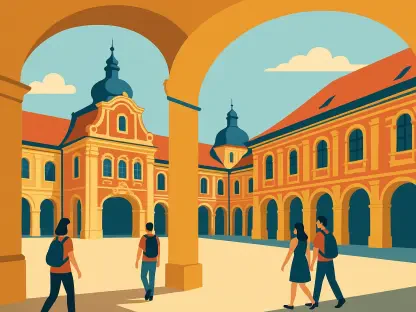

The city of Grodno, positioned at a critical geographic and cultural juncture in the northwestern corner of Belarus, represents a unique fusion of European architectural heritage and modern geopolitical complexity. As one of the few urban centers in the region to emerge from the twentieth century with its historic core largely intact, it offers a visual narrative that spans from the era of the Polish-Lithuanian Commonwealth to the height of the Russian Empire. This preservation makes it a primary destination for those interested in Baroque and Renaissance architecture, yet its location along the Neman River, just a short distance from the borders of Poland and Lithuania, places it at the heart of contemporary international tensions. In the landscape of 2026, the city functions as both a peaceful retreat and a high-stakes environment where the rules of international travel have been fundamentally rewritten by regional instability. Visitors are often struck by the immediate contrast between the tranquil, cobblestoned streets and the underlying administrative pressures that define life in a frontier zone. Balancing these elements requires a sophisticated understanding of how physical safety and state-level risk coexist in a space that is increasingly isolated from Western diplomatic frameworks.
Physical Security: The Absence of Traditional Criminal Activity
From a strictly statistical perspective regarding common street crime, Grodno continues to maintain a level of public order that exceeds many major metropolitan areas in Western Europe. Violent crimes, such as muggings, armed robberies, or gang-related activities, are exceptionally rare within the city limits, particularly in the well-frequented historic center. The local police presence is highly visible and serves as a significant deterrent to petty criminals, creating an atmosphere where travelers can generally walk through the city at night without the heightened vigilance required in Paris or London. This sense of security is bolstered by a culture that prioritizes public decorum and a legal system that imposes severe penalties for even minor disturbances. While tourists should still exercise basic precautions against pickpocketing in crowded areas like the central market or the main bus station, the prevailing environment is one of discipline and predictability. For the average visitor, the most tangible threats to physical well-being are more likely to involve uneven pavement or winter ice than any form of interpersonal violence or theft.
However, the high level of physical safety observed on the streets is often a direct byproduct of the very state control that presents the primary risk to international visitors. The orderliness of Grodno is maintained through a pervasive security apparatus that does not distinguish between protecting the public and monitoring individual behavior for signs of political non-conformity. While a traveler is unlikely to be accosted by a common thief, they are under constant, if subtle, observation by various state agencies. The definitions of “public order” and “security” are broad, and what might be considered harmless behavior in a Western democracy can be interpreted as a provocation or a legal violation in this context. Consequently, the absence of traditional crime does not equate to a lack of danger; rather, it indicates a shift in the source of potential harm from private individuals to state entities. Understanding this distinction is vital for anyone planning to navigate the city, as the mechanisms intended to keep the streets safe are the same ones that can lead to arbitrary legal complications for the unwary foreigner.
Political Surveillance: Navigating the Digital and Social Environment
The most profound risk for those entering Grodno in 2026 involves the rigorous enforcement of laws governing political expression and digital conduct. Foreign nationals are often surprised to find that their digital history, including social media activity and private messaging, is subject to scrutiny upon entry or during their stay. In an era where regional security is a paramount concern for the government, any content perceived as critical of the state or supportive of opposition movements can serve as grounds for immediate detention or deportation. This surveillance extends into the physical realm, where the act of photographing government buildings, military installations, or even certain infrastructure projects can be classified as espionage or a threat to national security. The lack of a clear, publicly accessible list of prohibited sites means that visitors must exercise extreme caution, often opting to avoid photography altogether in areas that are not explicitly designated for tourists, such print museums or public parks.
Moreover, the atmosphere of surveillance creates a social environment where open political discussion is effectively non-existent among the general population and the visiting public. Travelers are advised to refrain from engaging in any conversation regarding the government, regional conflicts, or international sanctions, even in seemingly private settings like cafes or hotel lobbies. Experience has shown that authorities are adept at monitoring both physical spaces and digital communications, often utilizing advanced technological tools to track the movement and interactions of foreign citizens. The legal framework in Belarus allows for a wide interpretation of what constitutes “anti-state activity,” leaving little room for error or nuance. This environment demands a high degree of self-censorship and a neutral public persona, as any deviation from the expected behavior of a passive tourist can trigger an investigation. The challenge for the visitor is to enjoy the cultural riches of the city while remaining entirely invisible to the state’s security mechanisms, a task that requires constant awareness and digital hygiene.
Border Volatility: The Logistics of a Frontier City
Grodno’s status as a gateway to the European Union significantly complicates the travel experience due to the inherent instability of its border crossings with Poland and Lithuania. In the current climate of 2026, these checkpoints are prone to sudden and unannounced closures that can last for days or weeks, often triggered by regional military exercises or shifting diplomatic stances. These closures can leave travelers stranded or forced to take lengthy detours through third countries, dramatically increasing the cost and complexity of a trip. Furthermore, the wait times at active border crossings have become notoriously unpredictable, frequently exceeding twenty-four hours due to meticulous inspections of vehicles, luggage, and electronic devices. For those relying on strict itineraries, the proximity of Grodno to the border is less of a convenience and more of a logistical liability that requires significant buffer time and flexible planning to manage effectively.
Compounding the risk of border instability is the drastic reduction in Western diplomatic representation within Belarus, which leaves travelers with limited options if they encounter legal or medical emergencies. Most European and North American nations have scaled back their consular services in the region, meaning that assistance for detained citizens or those facing complex administrative hurdles is often delayed or entirely unavailable. This vacuum of support means that visitors must be exceptionally self-sufficient and prepared to navigate a foreign legal system without the intervention of their home government. In the event of a medical crisis, the situation is similarly precarious; while Grodno has functional healthcare facilities, the availability of specialized medications and advanced treatments may be restricted by international sanctions. Travelers are essentially entering a zone where the traditional safety nets of international tourism have been stripped away, making the decision to visit an act of high individual responsibility.
Administrative Compliance: Financial and Legal Requirements
Successfully navigating a visit to Grodno in 2026 necessitates a meticulous approach to local administrative regulations, beginning with the mandatory registration process for all foreign visitors. While various visa-free regimes may exist for certain nationalities, they do not exempt the traveler from the requirement to register their presence with the Ministry of Internal Affairs within a specified timeframe. If a visitor chooses to stay in a hotel, this process is generally handled by the staff, but those opting for private rentals or staying with acquaintances must personally ensure that the registration is completed and documented. Failure to produce valid registration papers during a routine document check or when exiting the country can lead to substantial fines, official interrogations, and potential bans on future entry. This bureaucratic layer serves as a primary method for the state to track the movement of foreigners, making it an essential task that cannot be overlooked or delayed without serious consequence.
The financial landscape of the city presents an additional layer of complexity due to the extensive international sanctions that have disconnected the local banking system from Western financial networks. In 2026, credit and debit cards issued by European or American banks are largely non-functional at local merchants, ATMs, and hotels, necessitating a complete reliance on physical cash. Visitors are required to bring sufficient quantities of Euros or U.S. Dollars to cover their entire stay, which must then be converted into Belarusian rubles at local exchange offices. It is critical that these foreign banknotes are in pristine condition, as local banks frequently reject any currency that has even minor tears, ink marks, or significant wear. This cash-centric economy requires careful budgeting and secure storage of funds, as there is no digital fallback if money is lost or stolen. The combination of strict registration laws and a decoupled financial system creates a high-friction environment where every logistical step must be planned with precision to avoid total operational failure.
Environmental Hazards: Health and Infrastructure Realities
Beyond the geopolitical and administrative challenges, visitors to Grodno must also contend with practical environmental concerns that can impact their health and safety. The municipal water system in the city, while treated to meet basic standards, often contains high mineral concentrations and traces of aged infrastructure that can cause significant gastrointestinal distress for those unaccustomed to it. Consequently, the reliance on bottled water is a standard practice for all international visitors, extending even to tasks like brushing teeth or washing produce. While the city center is well-maintained, the quality of healthcare and the availability of specific Western-grade pharmaceuticals can be inconsistent. Travelers with chronic conditions are advised to bring a comprehensive supply of their own medications, accompanied by original prescriptions and translated documentation to avoid any misunderstandings during customs inspections at the border.
The climate of Grodno also introduces seasonal physical hazards that require appropriate preparation, particularly during the long and often severe winter months. The historic center’s cobblestone streets and narrow sidewalks, while aesthetically pleasing, become treacherous when covered in ice and packed snow, leading to a high incidence of slips and falls. Local municipal services work to clear major thoroughfares, but secondary streets and residential areas can remain hazardous for extended periods. Furthermore, the humid continental climate means that weather patterns can shift rapidly, bringing heavy rainfall or sudden temperature drops that can complicate outdoor exploration. Travelers must prioritize functional footwear and high-quality layered clothing to mitigate these risks. Understanding the intersection of aging infrastructure and a harsh natural environment is essential for maintaining physical well-being in a city where emergency response times for non-political incidents may be slower than what is expected in more developed urban centers.
Strategic Foresight: Navigating a Shifting Geopolitical Landscape
The safety profile of Grodno in the middle of this decade was shaped by its proximity to the intense friction between Eastern and Western political blocs. When compared to the interior regions of the country, the city served as a more volatile environment due to its role as a transit hub for both civilians and military assets. While the capital city of Minsk offered a more robust infrastructure for international visitors, Grodno’s unique location meant that it was often the first to feel the effects of border closures or changes in regional security posture. The city was characterized by a paradoxical peace; the streets remained orderly and the architecture stood as a silent witness to history, yet the potential for sudden disruption was always present. For those who chose to journey there, the experience was less about traditional tourism and more about navigating a living map of geopolitical tension where every action carried a weight of potential consequence.
In retrospect, the successful travelers of this era were those who adopted a posture of total discretion and extreme logistical preparedness. They prioritized the security of their digital devices, ensuring that no sensitive data remained accessible to border guards or state monitors who frequently requested passwords for inspection. These individuals also maintained a physical reserve of high-quality currency and comprehensive insurance policies that specifically covered the unique risks of the region. By treating the trip as a mission requiring high-level risk management rather than a casual vacation, they managed to experience the undeniable beauty of the Old and New Castles without falling afoul of the state’s restrictive legal framework. Ultimately, Grodno remained a destination that rewarded those with a deep respect for local laws and an unwavering awareness of their surroundings, proving that while the architectural heritage was accessible, the price of admission was a constant and vigilant state of caution.