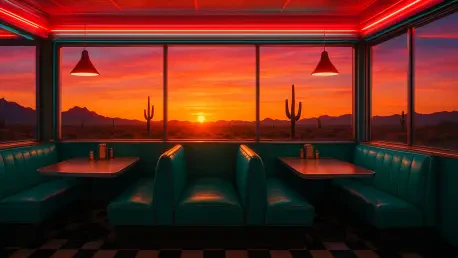

The sun-drenched landscapes of the American Southwest have long been celebrated for their rugged beauty and unforgiving climates, yet Arizona has cultivated a reputation for something far more unexpected than just its cacti and canyons. This state serves as a sprawling laboratory for culinary eccentricity, where the act of eating is frequently eclipsed by the sheer spectacle of the environment in which the food is served. While many regions prioritize minimalism or sleek modernism in their dining establishments, Arizona embraces a different philosophy that treats every meal as a performance or a journey through time. From the neon-lit corridors of historic Route 66 to the depths of ancient limestone caverns, the state’s restaurateurs have mastered the art of the quirky experience. This phenomenon is not merely a gimmick designed for tourists; it is a fundamental part of the local cultural identity that blends history and geography with a distinct sense of humor. These elements work in tandem to create a dining scene that is unparalleled in its diversity, inviting guests to explore the unexpected.
Nostalgia and the Legacy of the Open Road
The enduring allure of Route 66 has provided a fertile ground for businesses that reject the sterile uniformity of modern corporate franchises in favor of a more chaotic and personalized charm. In towns like Seligman and Kingman, the spirit of the Mother Road is preserved through establishments that function as much as museums as they do eateries. For example, Delgadillo’s Snow Cap Drive-In utilizes vintage automobiles and a collection of humorous gags to engage patrons, creating an atmosphere where the interaction with the staff is as memorable as the burgers. Similarly, Mr. D’z Route 66 Diner captures the mid-century aesthetic with precision, utilizing checkerboard floors and neon lights to transport guests back to a specific era of American optimism. These locations capitalize on a collective yearning for a simpler, more colorful past, ensuring that the journey across the desert is punctuated by moments of genuine wonder and historical curiosity for every traveler who seeks the authentic spirit of the American highway.
Beyond the paved highways, Arizona’s deep-seated connection to its Wild West heritage manifests in dining venues that feel like living movie sets rather than standard commercial spaces. The Mammoth Steakhouse & Saloon, situated within a reconstructed ghost town, allows diners to immerse themselves in a meticulously crafted frontier atmosphere that honors the state’s mining and ranching history. This dedication to thematic consistency is echoed at Rustler’s Rooste in Phoenix, where the experience is elevated by live country music and the presence of a legendary indoor tin slide that serves as a rite of passage for visitors. Such establishments do not merely use history as a backdrop; they integrate it into the physical structure and service style of the restaurant. By blurring the lines between a theme park and a steakhouse, these venues provide a sense of place that is uniquely Arizonan, offering a rugged escapism that resonates with both locals and international tourists who are looking for more than just a standard meal.
Immersive Spectacle and Future Culinary Directions
The integration of high-energy entertainment and extraordinary physical environments has become a hallmark of Arizona’s most successful eateries, proving that a menu alone is often insufficient to capture the modern consumer’s imagination. Organ Stop Pizza in Mesa serves as a prime example, centering its operation around a massive, historic Wurlitzer theater organ that provides a thunderous, choreographed soundtrack to every meal. This commitment to performance is mirrored in the geological wonders of the state, such as the Crystal Restaurant located 210 feet beneath the surface within the Grand Canyon Caverns. Here, diners are surrounded by 345-million-year-old limestone walls, offering a sense of isolation and grandeur that is impossible to replicate in a standard building. Whether it is through the repurposing of historical warehouses or the use of singing servers at Black Bart’s Steakhouse, these venues force patrons to reconsider their relationship with space and sound, creating memories that last far longer than the meal.
The success of these idiosyncratic establishments underscored a fundamental shift in how the hospitality industry approached the concept of value during the mid-2020s. Operators recognized that the modern diner sought an emotional connection and a shareable narrative, which led to a surge in investment toward immersive storytelling and architectural preservation. As Arizona evolved, the integration of advanced sensory technologies and unique thematic elements provided a blueprint for other regions looking to revitalize their tourism sectors. Strategic planners identified these restaurants as critical drivers of regional economic growth, suggesting that preserving the soul of a venue was as important as modernizing its menu. By maintaining this balance between historical authenticity and imaginative spectacle, the state ensured that its culinary landscape remained a global destination. These unique venues offered experiences that prioritized personality, effectively making the dining table a stage for cultural expression.