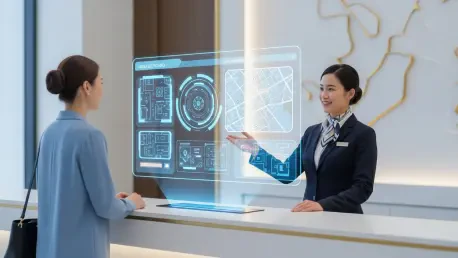

The global hospitality landscape in 2026 has become a complex battlefield where the cold precision of algorithmic efficiency competes with the enduring necessity of genuine human connection across every guest touchpoint. As travelers navigate an increasingly automated world, the value of a sincere greeting or an intuitive gesture of care has skyrocketed, transforming basic service into a rare and luxury commodity. Technology vendors often promise a world where robots and large language models handle everything from check-in to concierge services, but reality on the ground suggests a more nuanced integration is required to maintain guest satisfaction. Many properties that over-indexed on automation are now seeing a decline in loyalty, as guests feel like data points in a system rather than welcomed travelers in a home away from home. The drive for efficiency must not come at the cost of the very hospitality that defines the industry, which is rooted in the warmth and responsiveness of a dedicated staff. Building a successful hotel brand in this environment requires a strategic re-evaluation of where machines can help and where they absolutely must stay out of the way. By treating technology as a supportive tool rather than a replacement for human presence, operators can create a sustainable model that preserves the soul of their business while optimizing their bottom line. The goal is to build a moat around the human experience that machines simply cannot cross.
1. Organizing Hotel Duties via the Three-Category Method
To navigate the integration of advanced technologies without eroding the guest experience, hotels should categorize their daily operations based on the required level of human involvement and emotional weight. This methodical approach allows management to see exactly where a machine can excel and where a person is indispensable for maintaining brand standards. By segmenting duties into distinct tiers, properties can deploy software to handle repetitive, low-stakes tasks while reserving their human talent for the complex interactions that drive guest loyalty. This strategy prevents the common mistake of applying a one-size-fits-all digital solution to a business that is fundamentally built on individual relationships and micro-moments. When a hotel clearly defines these categories, it creates a roadmap for a hybrid operation that is both modern and deeply personal.
The first step in this categorization involves auditing every guest interaction and staff task to determine its inherent complexity and emotional impact. This data-driven look at the hotel’s workflow reveals that much of the front-desk workload consists of information retrieval that does not require a human touch to be successful. Conversely, many tasks that appear simple on the surface, such as handling a late check-out request, often carry hidden emotional weight that an algorithm might miss or handle too rigidly. By assigning each task to a category, the hotel ensures that its resources are deployed where they provide the most value, rather than simply where they are easiest to automate. This organized framework provides a clear set of rules for staff and technology to follow, ensuring that the guest never feels like they are being handed off to a machine during a moment that truly matters.
2. Category One: Automating Basic Facts Without Emotional Weight
Category One covers the frequent, repetitive questions that have a single, objective answer and carry no significant emotional weight for the traveler. These include queries regarding Wi-Fi passwords, the operating hours of the fitness center, the availability of the pool, or current parking rates at the property. These interactions are often a distraction for front-desk staff who are trying to manage arrivals or solve complex problems, yet they are vital for the guest’s immediate convenience. Grounded technology, such as specialized hotel software that links directly to a verified knowledge base, can handle these inquiries instantly and accurately 24 hours a day. By automating these “basic facts,” the hotel provides the immediate gratification that modern guests expect without burdening the human team with mundane tasks that do not require their specialized skills or warmth.
Implementing this automation effectively requires that the technology be strictly “grounded” to avoid the hallucinations often seen in generic generative AI systems that might guess an answer. When a guest asks for the breakfast hours, the system must provide the exact time from the hotel’s database rather than a probable guess that could lead to a frustrated traveler and a service failure. The success of Category One automation is measured not just by the speed of the response, but by the volume of time it frees up for the physical staff to engage in higher-level hospitality. This layer of the digital architecture acts as a filter, clearing the noise of routine inquiries so that the front desk remains a place for welcome and assistance rather than just a source of information. When done correctly, the guest perceives this as a seamless convenience, while the staff experiences a significant reduction in repetitive stress.
3. Category Two: Handling Routine Business Actions with Human Oversight
The second category involves routine business actions that are more complex than simple information retrieval but follow established rules and procedures. These tasks include making or modifying reservations, booking tables at the on-site restaurant, or processing room upgrades based on availability. While software can handle much of the heavy lifting for these actions, the best approach for maintaining a high-tier experience is to allow the technology to draft the response or process while a human provides final approval. This “human-in-the-loop” model ensures that the hotel maintains control over its inventory and guest relationships while benefiting from the speed of digital drafting. For example, a guest requesting a specific room type can have their request queued by the system, but a staff member ensures the assignment makes sense given the guest’s history and current property dynamics.
Maintaining this level of human oversight prevents the rigidity that often frustrates travelers when they interact with purely automated systems that cannot understand nuance. If a regular guest asks for a room change that technically violates a minor rule, a machine would likely provide a firm “no,” whereas a staff member can recognize the value of that guest and approve the request to build further loyalty. This category represents a collaborative effort between the precision of software and the judgment of a trained professional. By using technology to do the “drafting,” hotels can respond to requests much faster than before, while still keeping a human eye on the final output to ensure accuracy and personal touches. This balance allows the property to operate at a higher volume without losing the personalized feel that distinguishes a premium hotel from a budget, self-service facility.
4. Category Three: Prioritizing Empathy in High-Stakes Interactions
Category Three is the most critical tier of hospitality, encompassing situations that require deep empathy, complex problem-solving, and professional judgment. This includes managing guest complaints, addressing safety or medical concerns, and recognizing special celebrations such as birthdays, anniversaries, or wedding nights. These are the moments where a hotel either wins a lifelong fan or loses a customer forever, and they must remain strictly within the domain of the human staff. A machine cannot feel the frustration in a guest’s voice after a delayed flight, nor can it offer a sincere, heartfelt apology that actually resonates with a disappointed traveler. These interactions require a level of emotional intelligence and improvisational skill that today’s technology simply cannot replicate, regardless of how advanced the underlying code becomes.
The risk of automating these sensitive moments is substantial, as an inappropriate or robotic response to a serious issue can quickly escalate a minor grievance into a brand-damaging social media crisis. When a guest is experiencing a problem, they need to feel heard and understood by someone who has the authority to make things right immediately. Machines operate on probabilities and scripts, but empathy requires a shared human experience and a genuine desire to help. By reserving Category Three tasks for the staff, the hotel signals to its guests that it values their well-being and emotional satisfaction above operational efficiency. This commitment to human-led service in high-stakes moments forms the foundation of a property’s reputation, ensuring that the “warmth” of the hotel is not just a marketing slogan but a tangible reality for every visitor who walks through the doors.
5. Phase One: Leveraging Technology for Immediate Operational Efficiency
The first phase of a successful hospitality strategy in 2026 involves using basic technology to address immediate revenue losses and operational bottlenecks within a ninety-day window. Many hotels lose significant income to third-party booking commissions because their internal systems are too slow or difficult for guests to navigate directly. By deploying simple, automated tools to manage room pricing and handle repetitive inquiries, hotels can redirect potential guests to their own booking engines, increasing their direct-to-consumer revenue almost overnight. This phase is not about replacing staff, but about providing them with the tools to compete effectively in a digital marketplace. Automating the most common questions allows the team to spend more time following up on high-value leads and ensuring that every direct booking is handled with a personal touch that an OTA cannot provide.
In addition to revenue protection, Phase One focuses on streamlining internal paperwork and routine management reports that traditionally eat up hours of a manager’s day. When the leadership team is buried in spreadsheets and manual data entry, they are not on the floor interacting with guests or mentoring their front-line employees. Automating these administrative burdens gives managers the freedom to be present in the lobby and the dining room, where their experience is most needed. This phase also includes the implementation of basic automated communication tools that keep guests informed of their status without requiring a manual phone call for every update. The key throughout this ninety-day period is to ensure that every technological addition is invisible to the guest unless it adds direct convenience, maintaining the illusion of effortless human service while the backend becomes significantly more efficient.
6. Phase Two: Identifying and Protecting Essential Human Roles
Moving into the second phase, which typically spans from three to twelve months, the focus shifts toward pinpointing and protecting the staff positions that are vital to the hotel’s long-term health. Rather than looking for roles to eliminate, forward-thinking managers identify the “anchors” of their service delivery, such as experienced housekeepers who know the quirks of every room and front-desk supervisors who can navigate any crisis. This phase involves providing these essential employees with stable schedules, competitive wages, and clear paths for professional growth within the organization. By investing in the human capital of the hotel, the business creates a stable environment where staff feel valued and are therefore more likely to provide the high-quality, warm service that guests crave. Protecting these roles is a strategic move to preserve the institutional knowledge and emotional intelligence that are the hotel’s most valuable assets.
A major component of this phase is the empowerment of frontline workers, giving them the authority to solve guest problems immediately without seeking permission from several layers of management. When a housekeeper or a bellman can offer a small amenity or resolve a minor issue on the spot, the guest feels the power of a truly responsive human environment. This empowerment must be backed by specialized training in “service recovery,” the specific art of turning a negative experience into a positive one through swift and thoughtful action. Training teams to handle these moments creates a culture of ownership where every employee feels responsible for the guest’s happiness. This human-centric investment during Phase Two builds a resilient workforce that can navigate the complexities of modern travel with a level of grace and flexibility that no automated system could ever hope to achieve.
7. Phase Three: Scaling the Human-First Model for Long-Term Success
The third phase of the strategy, beginning after the first year, focuses on growing the successful “human-first” model across the entire property or hotel group to establish a dominant market reputation. Once the balance between technology and staff has been optimized, the results should be documented and shared to demonstrate that a well-treated, stable workforce is a significant financial asset. This phase is about moving beyond internal operations and using the hotel’s high staff retention and service quality as a core brand promise in all marketing efforts. Guests in 2026 are increasingly choosing hotels where they know they will see familiar faces and receive personalized care, making a low turnover rate a powerful competitive advantage. By highlighting the people behind the service, the hotel differentiates itself from the sterilized, highly automated chains that treat guests as transactional units.
Scaling this model also involves refining the technological support to ensure it remains a background player that never interferes with the human connection. As the hotel group grows, the focus remains on maintaining the “small hotel” feel through consistent personal recognition and high-touch service delivery. This long-term approach allows the property to build deep equity with its guests, who come to rely on the hotel as a place of genuine hospitality in an increasingly digital world. The financial success of this model becomes evident through higher average daily rates and superior occupancy levels, proving that travelers are willing to pay a premium for human warmth. By the end of this phase, the hotel has established a self-sustaining cycle where happy, empowered employees create loyal, high-spending guests, ensuring the long-term viability of the business regardless of broader economic or technological shifts.
8. The Irreplaceable Strengths of Human Insight and Adaptability
The core of the argument for human warmth in hospitality lies in six distinct strengths that technology, by its very nature, cannot match. The first of these is practical insight and empathy, which allow a human staff member to instantly read a guest’s emotional state through subtle cues like body language, tone of voice, and facial expressions. A computer can analyze the words in a sentence, but it cannot sense the underlying stress of a traveler who has just lost their luggage or the quiet excitement of a couple celebrating an engagement. This ability to adjust one’s tone and approach based on the guest’s immediate needs is the essence of true hospitality. Humans provide a level of emotional resonance that makes a guest feel truly “seen” and valued, a feeling that is impossible to generate through an interface or a pre-programmed script.
Closely related to empathy is the strength of adaptable problem-solving, which allows a person to take quick, creative action when things go wrong in ways that were not anticipated by a programmer. Every hotelier knows that the most unusual situations—from a guest needing a specific medical device in the middle of the night to a surprise change in a large event’s itinerary—require improvisational thinking. While AI thrives in structured environments with clear rules, hospitality is often chaotic and unpredictable. A person can break a rule to save a situation, combine resources from different departments on the fly, and take a unique path to a solution that follows no set script. This flexibility is what prevents a minor inconvenience from becoming a total service failure, as humans can navigate the “gray areas” of life that machines simply cannot process.
9. Personalization and the Art of Genuine Service Restoration
The third human strength is the capacity for remembering small, personal preferences that create a profound sense of belonging for the guest. While a database can store a guest’s favorite pillow type, only a human can recall a passing comment about a favorite dessert or a family member’s name and bring it up in a way that feels natural and caring. This level of personalization moves beyond data points into the realm of genuine relationship-building, making the guest feel like more than just a room number. This sense of being recognized and remembered is a powerful psychological driver of loyalty, as it taps into the fundamental human need for connection. When a staff member delivers a surprise that was never requested but was intuitively understood, they create a “wow” moment that defines the hotel’s identity in the mind of the traveler.
The fourth strength involves managing service restoration, which is perhaps the most difficult task in any service-oriented business. When a mistake happens—and in a complex operation like a hotel, mistakes are inevitable—the way it is handled determines the future of that guest relationship. A sincere, eye-to-eye apology from a manager, combined with a thoughtful follow-up that addresses the specific frustration, can actually make a guest more loyal than if the mistake had never happened at all. This “recovery paradox” relies entirely on the guest perceiving a genuine effort to make things right. A machine-generated apology often feels hollow and can even further anger a guest who is already frustrated. The human touch in these moments provides a release valve for tension and a path toward reconciliation that purely digital systems cannot provide.
10. Ownership and Kindness as the Final Frontiers of Hospitality
The final two human strengths that protect the hospitality industry from total automation are the ability to take direct ownership and the expression of real kindness. There is no digital substitute for a manager looking a guest in the eye and saying, “I will personally make this right.” This statement of accountability provides the guest with a sense of security and trust that no algorithm can emulate. Ownership means the guest is no longer shouting into a void but is being heard by a person who has taken responsibility for the outcome. This psychological bridge is the foundation of high-end service, ensuring that the traveler feels protected and prioritized throughout their stay. In an era where many businesses use technology to hide from their customers, the hotel that offers direct human accountability stands out as a beacon of reliability.
Finally, the simple expression of real kindness remains the most powerful tool in the hotelier’s arsenal and the one most resistant to technological imitation. The warmth of a genuine “welcome home” or a small, unprompted act of generosity is a feeling that a computer in a data center simply cannot produce. Kindness is not a transaction; it is a human-to-human exchange that enriches both the giver and the receiver. As the world grows more digital and often more impersonal, the physical environment of a hotel becomes a sanctuary where these traditional values are preserved. The successful hotel of 2026 realized that its true product was not a bed or a meal, but the feeling of being cared for by another person. This fundamental truth ensures that while technology will continue to evolve, the need for human warmth will always remain at the center of the industry.
The transition toward a human-centric AI model represented a pivotal moment for the hospitality sector as the year 2026 progressed. Industry leaders who prioritized the preservation of staff autonomy and emotional intelligence discovered that they could command higher average daily rates while maintaining superior occupancy levels compared to their fully automated competitors. By focusing on the six core human strengths and using the three-category method for duties, hotels moved beyond the limitations of probability-based software and reclaimed the traditional art of the welcome. These strategic steps ensured that technology remained a background player, silently supporting the front-line experts who truly defined the guest experience. The industry eventually realized that while a machine could process a transaction with great speed, only a person could provide the genuine hospitality that made a stay memorable. Looking ahead, the focus shifted toward deepening these human connections, ensuring that the hotel remained a vital space for real-world interaction in an increasingly digital age.