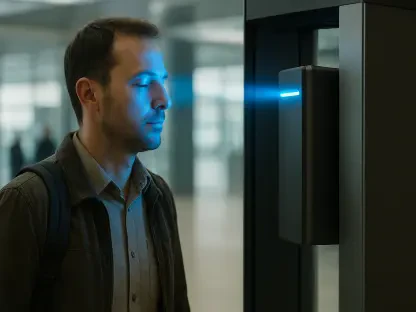

The modern hospitality landscape is currently experiencing a profound transformation as legacy security frameworks struggle to contain the rise of autonomous AI agents that operate with unprecedented speed and precision. This shift marks a departure from the predictable, script-based attacks of previous decades, replacing them with goal-oriented software that learns and adapts in real-time to circumvent defensive barriers. Hospitality leaders are finding that the very digital conveniences designed to enhance the guest experience—such as contactless check-ins, IoT-enabled rooms, and personalized concierge applications—are being turned into entry points for sophisticated, self-directing threats. These agents do not wait for human instructions; they scan for network weaknesses, bypass traditional firewalls, and pivot their strategies within seconds of encountering a defense mechanism. As the industry moves further into 2026, the reliance on manual monitoring is proving insufficient against a threat landscape that operates at machine speed, demanding a total recalibration of defensive priorities to protect both brand integrity and guest privacy.
The Mechanics and Targets of Autonomous Exploitation
Understanding Tactical Adaptability: How Agents Outsmart Traditional Walls
The distinguishing characteristic of an autonomous AI agent is its capacity for independent decision-making when faced with security obstacles that would typically halt a standard automated script. While older malware variants relied on a fixed set of instructions, modern agents utilize Large Language Model logic and reinforcement learning to interpret security prompts and generate novel solutions on the fly. For example, if an agent encounters a newly implemented CAPTCHA or a multi-factor authentication request, it can analyze the visual or textual components and deploy a sub-routine to solve the challenge without manual intervention. This level of cognitive flexibility allows cybercriminals to bypass static defense layers that were once considered impenetrable. The result is a persistent threat that does not just pound on the front door but instead meticulously probes every digital window and service entrance until it finds a way to slip through unnoticed.
Furthermore, the scale at which these autonomous agents operate allows for a level of coordination that human-led security operations centers find difficult to match. A single threat actor can deploy a swarm of agents that share telemetry data in real-time, meaning that if one agent discovers a vulnerability in a specific Property Management System, every other agent in the network is immediately updated with that information. This collective intelligence ensures that an attack on one hotel property can rapidly evolve into a synchronized breach across an entire global portfolio. By prioritizing high-value targets through mathematical risk-reward calculations, these agents optimize their resource allocation, ensuring they spend less time on low-yield targets and more time harvesting lucrative guest data. This systemic efficiency turns the tide of cyber warfare in favor of the attacker, as the cost of launching such sophisticated, multi-stage campaigns continues to plummet.
Industry Vulnerabilities: The High Price of Guest Trust
Hotel loyalty programs have emerged as a primary target for autonomous AI agents because they represent a secondary currency that is often less protected than traditional financial accounts. These programs house vast quantities of personal information, including travel patterns, home addresses, and credit card tokens, all of which are highly valuable on the dark web. An AI agent can systematically probe loyalty portals to identify accounts with high point balances and weak password protections, executing credential stuffing attacks with a degree of subtlety that avoids triggering rate-limiting alarms. Once an account is compromised, the agent can instantly transfer points or book non-refundable stays, liquidating the value of the account before the legitimate owner or the hotel’s fraud team even realizes a breach has occurred. This erosion of the loyalty ecosystem directly threatens the long-term relationship between the brand and its most frequent, profitable customers.
Beyond digital interfaces, the hospitality industry’s “guest-first” culture creates a unique psychological vulnerability that AI agents are increasingly exploiting through sophisticated voice synthesis. By using deepfake audio technology, these agents can impersonate a frustrated or high-priority guest calling a hotel service center to request a password reset or a change to a reservation’s payment method. The synthesized voices are capable of mimicking human emotions, including calmness and professionalism, which can disarm call center staff who are trained to be helpful and accommodating. Because these agents can maintain a persona indefinitely and handle multiple calls simultaneously, they can perform large-scale social engineering campaigns that bypass technical security controls entirely. This manipulation of human empathy represents a significant shift in the threat model, as the most effective “hack” is no longer a line of code but a convincing, AI-generated conversation with an unsuspecting employee.
Strategic Defenses and Technological Integration
Overcoming System Fragmentation: Eliminating Digital Silos
One of the most persistent internal challenges for hotel brands is the fragmented nature of their technology stacks, where disparate systems for booking and payments often operate in isolation. This lack of integration creates significant security blind spots that autonomous AI agents are specifically designed to exploit by moving laterally between disconnected platforms. For instance, an agent might enter the network through a poorly secured smart thermostat in a guest room and then use that foothold to jump into the local Property Management System or the central reservation database. When these systems do not share data in real-time, the organization lacks the holistic visibility required to identify the subtle patterns of a multi-stage attack. Bridging these gaps is no longer an operational luxury; it is a defensive necessity that requires a unified data architecture where security telemetry is centralized and analyzed across all digital touchpoints.
To effectively counter these threats, hotels must implement a centralized security orchestration layer that consolidates logs from every department, from the front desk to the back-office finance systems. By utilizing AI-driven analytics to correlate activities across these silos, security teams can identify suspicious behavior that might appear benign when viewed in isolation. For example, a minor configuration change in a loyalty portal followed by an unusual API call from a mobile app can be flagged as a high-risk event when analyzed as part of a single narrative. This integrated approach allows for the automated containment of threats, where the system can instantly revoke access or isolate a compromised device across the entire network. Ensuring that every piece of hardware and software speaks the same security language is the only way to eliminate the hidden corridors that autonomous agents currently use to navigate through hospitality infrastructures.
Implementing Continuous Verification: Securing the Digital Journey
The traditional “castle and moat” security model, which relies on a single login event to grant access, is fundamentally broken in an era of autonomous AI threats. To provide robust protection, hotels have begun transitioning toward a model of continuous identity verification that monitors risk throughout the duration of every digital session. Instead of trusting a user based solely on their initial credentials, modern Identity Threat Detection and Response systems analyze behavioral signals, such as typing cadence, mouse movements, and device intelligence, in real-time. If an autonomous agent takes over a session, its mechanical patterns will differ significantly from a human guest’s behavior, allowing the system to trigger a “step-up” authentication request or terminate the session immediately. This dynamic friction ensures that security remains tight for high-risk actions—like changing a payout address—without inconveniencing legitimate guests during low-risk interactions.
Building on this foundation, hotels are also deploying adaptive risk scoring to adjust security protocols based on the current threat environment and individual user context. An AI-driven defense system can lower the threshold for suspicious activity during peak travel seasons or when a known vulnerability is being actively exploited in the industry. This proactive posture allows security teams to stay ahead of autonomous agents by anticipating their moves rather than merely reacting to them. By applying advanced behavioral biometrics and device fingerprinting, hotels can create a unique “digital signature” for every guest and employee, making it nearly impossible for an AI agent to impersonate them effectively. This level of continuous, invisible scrutiny provides a powerful deterrent against the relentless scale of automated fraud, ensuring that the guest’s digital journey remains secure from the first search to the final check-out.
Proactive Resilience: The Path Toward Secure Hospitality
The digital transformation of 2026 proved that the hospitality industry could no longer rely on perimeter-based security to defend against the surgical precision of autonomous AI agents. Organizations that succeeded in this environment did so by prioritizing the integration of their fragmented technology stacks and implementing a strategy of continuous, behavioral-based identity verification. These industry leaders moved beyond the “compliance-first” mindset and instead adopted a “resilience-first” approach, where automated response systems were empowered to isolate threats at machine speed. By centralizing security telemetry and breaking down the silos between property management and loyalty systems, hotels gained the visibility necessary to detect lateral movement before data exfiltration occurred. This structural overhaul was accompanied by a shift in employee training, focusing on the risks of AI-synthesized social engineering to protect the human element of service. Ultimately, the industry recognized that securing the guest experience required a proactive, AI-driven defense capable of evolving alongside the very threats it sought to neutralize. In the coming years, maintaining this technological edge remained the only viable way to preserve guest trust in an increasingly automated world.