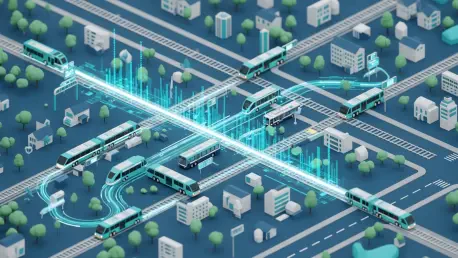

Navigating the sprawling urban and suburban corridors of the Greater Golden Horseshoe has historically presented a significant challenge for residents who face a fragmented web of transit agencies and inconsistent service levels. The daily commute for thousands often involves complex transfers between local buses and regional trains, where a lack of coordination results in lost time and increased financial burden for the average passenger. As the province continues to invest in massive infrastructure projects, the focus is shifting toward creating a truly seamless network that operates as a single, cohesive system rather than a collection of independent providers. This transformation is not merely about laying tracks or buying new buses; it represents a fundamental change in how regional mobility is governed and delivered to the public. By prioritizing a user-centric approach, planners aim to eliminate the friction that has long discouraged people from choosing public transit over personal vehicles.
Integrating Fragmented Systems for Seamless Mobility
Bridging the Fare and Technology Gap
The implementation of the One Fare program has marked a pivotal shift in how passengers interact with the regional transit network by eliminating double fares for most transfers. This initiative allows travelers to move between GO Transit, the TTC, and several suburban agencies like MiWay and Brampton Transit without the financial penalty that previously hindered inter-municipal travel. By aligning these previously disparate payment structures, the province has effectively lowered the barrier to entry for cross-boundary commuting, encouraging a more fluid movement of labor and leisure across the region. The backend technology supporting this integration involves sophisticated data sharing between agencies, ensuring that revenue is distributed accurately while the passenger experiences a unified digital interface. This progress is further supported by the expansion of contactless payment options, which allow riders to tap their credit cards directly at terminal gates.
Beyond fare integration, the evolution of digital infrastructure is playing a critical role in providing passengers with real-time, accurate information across all transit modes. Through the adoption of open data standards such as GTFS-Realtime, various agencies can now broadcast their vehicle locations and service alerts to a centralized platform accessible by third-party applications. This transparency enables commuters to plan multi-leg journeys with greater confidence, as they can monitor the live status of a suburban bus and a regional train simultaneously. This digital connectivity acts as a force multiplier for the physical network, making existing services feel more reliable even before new tracks are laid. As machine learning algorithms begin to analyze these vast streams of transit data, agencies can better predict congestion patterns and proactively adjust schedules to minimize bottlenecks. This technological synergy is essential for transforming a collection of lines into a responsive network.
Harmonizing Schedules Across Municipal Boundaries
The most visible component of the regional transformation is the ambitious GO Expansion program, which is currently reconfiguring the rail network to support fifteen-minute service. This initiative transitions the system from a peak-oriented commuter rail service into a frequent, all-day rapid transit backbone that serves as the foundation for the entire region. To achieve this frequency, the province is overseeing the electrification of key lines and the construction of new tracks to separate passenger trains from freight traffic, thereby reducing delays and increasing safety. These physical improvements are being paired with a fundamental redesign of transit hubs, which are being transformed into multi-modal centers where local buses, light rail, and subways converge seamlessly. By concentrating density around these stations through transit-oriented communities, planners are ensuring that more people live and work within walking distance of high-quality public transportation.
In the final stages of this structural reorganization, planners and policymakers focused on the long-term sustainability of the network by establishing a more centralized governance model. This approach ensured that regional priorities took precedence over local municipal interests, allowing for a more strategic allocation of funding and resources toward critical bottleneck areas. New insights into passenger behavior and environmental impact were utilized to refine service levels, ensuring that the transition to zero-emission bus fleets remained on schedule across all participating agencies. The successful integration of these systems demonstrated that technical and political barriers could be overcome through a shared vision of regional mobility. Actionable steps were taken to formalize these partnerships, creating a resilient framework that adapted to the evolving needs of the Greater Golden Horseshoe. Ultimately, the shift toward a unified network proved that a cohesive transit strategy was the most effective tool for managing urban growth.