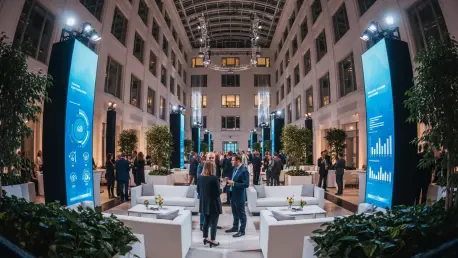

The 2026 Creative Leaders Summit at East Sussex National served as a landmark gathering for the event industry’s elite, bringing together top-tier creative directors and production specialists. This assembly marked a decisive transition in how brand activations are conceptualized, moving away from shallow, transactional interactions that often fail to leave a lasting impression. Industry veterans emphasized the necessity of operational excellence as the foundation for any successful creative endeavor, highlighting that even the most innovative ideas require a disciplined framework to succeed. By focusing on deep-seated trust and shared strategic goals, the summit established a new benchmark for how immersive live experiences should be designed and delivered in an increasingly competitive global market. Attendees explored the intersection of human psychology and technical precision, acknowledging that the future of brand engagement lies in creating meaningful connections that resonate far beyond the conclusion of a specific event. This refocusing on quality over quantity suggests a maturing industry ready to handle the complex demands of a modern global audience.
Modernizing the Pitching Ecosystem
The traditional pitching model is widely recognized as an unsustainable resource drain that requires a fundamental overhaul through a framework of shared responsibility between agencies and clients. To fix this broken system, corporate clients must provide clear, actionable briefs that define success parameters from the outset, rather than inviting broad, uncurated speculation. This shift allows agencies to focus their creative energy on solving specific problems rather than guessing at vague requirements, which often leads to wasted resources and creative burnout. Furthermore, the industry is calling for a more disciplined approach to agency selection, where chemistry and past performance are given as much weight as the pitch presentation itself. By creating a more efficient and respectful selection process, both parties can ensure that the investment in time and creativity is directed toward building a successful partnership. This modernization is essential for maintaining the health and longevity of the creative workforce.
Moving toward multi-year partnerships rather than single-project contracts allows for the chemistry and mutual trust necessary to execute the kind of bold, innovative ideas that one-off deals often stifle. These longer-term commitments provide agencies with the stability required to invest in deep brand research and specialized talent, resulting in more authentic and effective activations. At the same time, radical transparency regarding the use of Artificial Intelligence has become a non-negotiable requirement for modern creative work. Agencies must clearly communicate how AI tools are being used to enhance their processes, ensuring that clients understand the origin and ethical implications of the creative output. This honesty builds the foundational trust required for clients to approve more adventurous concepts, knowing that the agency is acting with integrity. As the industry evolves, the focus is shifting toward collaborative growth and technological accountability, which ultimately strengthens the bond between brand owners and their creative partners.
Designing for Impact and Strategic Partnerships
A significant shift in event philosophy is moving the focus from simple visual spectacle to the architecture of memory, prioritizing the psychological impact of an experience over mere aesthetics. Industry leaders are now asking what an audience will remember rather than just what they will see, recognizing that long-term brand resonance is built on emotional foundations. This approach relies on narrative storytelling to generate deep emotions, using the event as a physical manifestation of the brand’s core story. Every touchpoint, from the initial invitation to the final departure, must be carefully choreographed to reinforce this narrative arc, ensuring a cohesive and immersive journey for every attendee. By designing for memory, agencies can create experiences that linger in the minds of participants, transforming them from passive observers into active brand advocates. This psychological depth is what separates a truly successful event from a forgettable marketing activation in a crowded and fast-paced digital environment.
The role of the supplier is rapidly evolving from a simple service provider to a strategic partner that adds significant value through consistency and professional honesty. High-pressure event delivery requires partners who have the courage to challenge a brief and identify potential risks or more efficient methodologies early in the planning process. When agencies and suppliers maintain transparent dialogues about budgets and feasibility, they can achieve high-impact results without compromising on the quality or safety of the activation. This collaborative approach ensures that the production team is fully aligned with the creative vision, allowing for a seamless execution that feels effortless to the audience. Strategic suppliers bring specialized expertise that can enhance the creative output, offering solutions that the agency might not have considered. By fostering these professional alliances, agencies can build a reliable network of specialists who are as committed to the project’s success as the brand owners themselves.
Advancing Through Intelligent Creativity and Data
Intelligent creativity serves as a vital reality test for new concepts, ensuring that creative ambition is always balanced with practical utility and the specific objectives of the brief. Rather than seeing budget, time, or logistical constraints as hurdles to innovation, event leaders are encouraged to use these factors to refine and sharpen their ideas into more potent solutions. This disciplined approach ensures that the most exciting concepts are also the ones that effectively serve the brand’s strategic goals, preventing the pursuit of creativity for the sake of being different. By applying rigorous logic to the design process, agencies can demonstrate the value of their ideas more effectively to corporate stakeholders. This methodology bridges the gap between the imaginative and the practical, creating a framework where innovation is grounded in the reality of what can be successfully delivered. Consequently, the final activation is not only visually stunning but also operationally sound, providing a reliable return on the brand’s investment.
The industry transitioned toward a new focus on data sovereignty and direct audience engagement as the digital landscape moved away from third-party tracking. Building first-party data sets through meaningful live interactions became a cornerstone of brand strategy, allowing for personalized experiences without compromising attendee privacy. The summit participants established that owning these direct relationships was essential for maintaining long-term relevance and effectiveness in a shifting marketing environment. Agencies were encouraged to implement sophisticated engagement tools that captured valuable insights while providing immediate value to the participants. It was concluded that the future of brand events rested on the ability to combine high-level creative storytelling with rigorous data ethics and operational excellence. By taking these actionable steps, leaders ensured that live activations remained the most powerful tool for building genuine human connection in an increasingly digital world. The focus remained on the successful integration of technology and emotion to drive growth.