
Dubai International Airport has long served as a global crossroads where the friction of international transit often meets the sophisticated demands of modern logistical engineering. As passenger volumes across the city’s aviation hubs continue to climb toward record-breaking heights, the traditional methods of manual processing and physical documentation have reached their natural limitations in handling such a massive scale of human movement. Artificial intelligence now serves as the invisible spine of this operation, moving beyond simple automation to create a predictive ecosystem that anticipates traveler needs before they even arrive at the terminal. This digital transformation focuses on reducing wait times and enhancing security through complex algorithmic oversight that coordinates everything from gate assignments to personalized retail suggestions. By removing the traditional bottlenecks of the travel journey, the integration of advanced machine learning models is turning what used to be a stressful necessity into a fluid transition.
Biometric Pathways and the Elimination of Physical Paperwork
The Implementation of Seamless Identity Verification
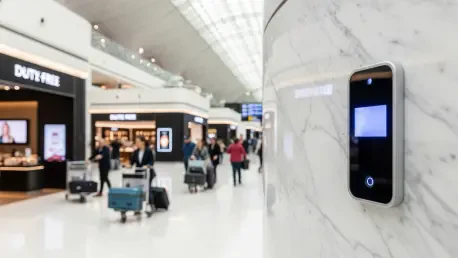
High-resolution optical sensors and deep learning algorithms have effectively replaced the need for physical passports or boarding passes at various touchpoints throughout the airport. These systems utilize advanced facial recognition and iris scanning technology to verify identity in under five seconds, allowing travelers to walk through “Smart Gates” without breaking their stride or interacting with a human official. The underlying infrastructure relies on a vast, secure database that cross-references biometric data against government records in real-time, ensuring that security remains airtight while the passenger experience remains frictionless. This approach drastically reduces the physical footprint required for check-in counters and security queues, allowing the airport to reclaim valuable space for lounge areas and passenger amenities. As the system learns from each interaction, its ability to differentiate between subtle physiological changes increases, ensuring that even minor variations in lighting or appearance do not disrupt the flow.
Real-Time Crowd Management and Spatial Optimization
Beyond the initial check-in process, these biometric tokens follow the passenger throughout their entire journey within the terminal, from duty-free purchases to the final boarding gate. This integrated digital identity means that a traveler’s face effectively becomes their wallet and their ticket, eliminating the frantic search for documents that often causes delays at the boarding bridge. The artificial intelligence managing this flow also monitors crowd density in real-time, redirecting staff to specific areas where congestion is predicted to occur based on incoming flight schedules and historical data trends. By analyzing the movement patterns of thousands of individuals simultaneously, the AI can optimize terminal layouts and signage to naturally guide travelers toward their destinations without the need for constant verbal announcements. This seamless integration of data and physical movement creates a highly personalized environment where the airport reacts to the individual traveler’s needs.
Operational Intelligence: The Foundation of Logistics
Historical Successes in Infrastructure Integration
The successful deployment of these technologies established a new global benchmark for how an international transit hub functioned in an increasingly digital world. Decision-makers moved toward a model where every asset was monitored and every passenger journey was supported by a layer of intelligent assistance that operated quietly in the background. The transition prioritized data privacy and security, implementing decentralized storage solutions that protected individual information while still allowing for the rapid verification required for high-speed transit. Operational teams found that the shift toward AI-assisted management allowed them to focus on high-level problem-solving rather than being bogged down by repetitive administrative tasks. As the system matured, it became clear that the integration of artificial intelligence was not merely about technological novelty but about fundamentally rethinking the relationship between the traveler and the physical space.
Strategic Roadmaps for Global Multimodal Connectivity
Looking toward the horizon from 2026 to 2030, the strategic focus shifted toward expanding these AI capabilities into a fully autonomous travel ecosystem that included multimodal transport links. Stakeholders in the aviation industry prioritized the standardization of biometric protocols to ensure that a digital identity created in one hub was recognized and honored in another, creating a truly global fast track for travel. Investment in edge computing became essential to process the massive amounts of data generated by 8K surveillance and sensor arrays without taxing the central network infrastructure. Furthermore, the development of ethical AI frameworks remained a critical priority to ensure that automated decision-making processes were transparent and unbiased in their treatment of a diverse international population. By focusing on these technical and ethical pillars, the aviation sector moved toward a reality where the airport was no longer a point of friction, but a seamless gateway.