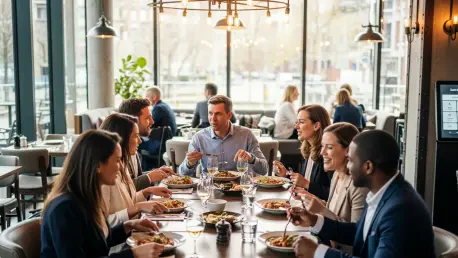

The current state of the American restaurant industry has reached a pivotal juncture where the cost of a standard dinner out often exceeds the discretionary budget of the typical middle-class household. What was once a routine celebration or a simple convenience has rapidly evolved into a significant financial commitment that requires careful planning and justification in the face of rising costs. This trend is not merely a reflection of temporary inflation but signals a deeper structural change in how culinary businesses must operate to survive in an era defined by high overhead and shifting consumer expectations. As menu prices continue to climb, the perceived value of the dining experience is being scrutinized more intensely than ever before, leading to a noticeable shift in how often people choose to eat away from home. The disappearance of affordable mid-range options has forced a polarization in the market, where consumers are increasingly pushed toward either ultra-fast convenience or high-cost experiences, leaving a void in the traditional social fabric.
The Economic Pressures: Labor Costs and Resource Scarcity
The primary catalyst for the escalating price of dining out remained the sustained increase in labor costs as workers demanded wages that reflected the true cost of living in urban environments. To attract and retain talent in a competitive market, restaurant owners had to implement significant pay raises and provide benefits that were previously reserved for corporate roles, such as health insurance and retirement plans. These essential improvements in worker welfare naturally led to a direct increase in the prices listed on the menu, as the thin margins of the hospitality industry could not absorb such substantial changes without adjustment. Furthermore, the cost of raw ingredients saw unprecedented volatility due to disruptions in the global supply chain and the increasing frequency of extreme weather events affecting major agricultural hubs. From specialized grains to high-quality proteins, every component of a professional dish now carries a premium that reflects the heightened risks and logistical hurdles of modern food production.
In addition to labor and food costs, the persistent rise in commercial real estate taxes and utility rates has placed an immense burden on brick-and-mortar establishments trying to maintain a physical presence. Many cities have seen a stagnation in commercial property values, yet the taxes associated with these locations have often increased to cover municipal budget shortfalls, leaving restaurant owners with few options but to raise prices. The energy required to run high-capacity kitchens and maintain climate-controlled dining rooms has also become a major expense, with electricity and gas rates reaching historic highs in several regions. To mitigate these overhead costs, some businesses have opted to shrink their physical footprints or transition toward “ghost kitchen” models that prioritize delivery over the traditional sit-down experience. This shift has altered the very nature of hospitality, as the costs associated with maintaining a welcoming environment for guests have become nearly prohibitive for all but the most successful high-end establishments.
Technological Solutions: The Rise of Automation and Algorithmic Pricing
Technological intervention has become the cornerstone of modern restaurant management, as operators seek to offset rising human labor costs through the implementation of automated systems. Self-service kiosks and sophisticated mobile applications have replaced traditional waitstaff in many casual and mid-range environments, allowing businesses to operate with a skeleton crew while still processing high volumes of orders. While this transition has improved order accuracy and speed, it has also fundamentally changed the social dynamics of dining out, moving the experience toward a more sterile and transactional interaction. The investment required to integrate these technologies is significant, often necessitating long-term financing that adds another layer of fixed costs to the business’s balance sheet. For many, the gamble on technology was seen as the only way to remain competitive in a market where consumers are increasingly sensitive to price but still expect a high level of efficiency and speed.
Ultimately, the survival of the restaurant industry depended on its ability to transform from a commodity service into a curated experience that justified its elevated price point. Business owners who embraced radical transparency regarding their pricing structures found that customers were more willing to pay higher rates when they understood the true costs of ethical labor and high-quality ingredients. The integration of community-focused events and collaborative pop-up kitchens allowed for a shared burden of costs while maintaining the cultural vibrancy of the local food scene. Educational initiatives that highlighted the craftsmanship behind every dish helped to reposition dining out as a specialized art form rather than a mere alternative to home cooking. By the time the market stabilized, the most successful establishments were those that had prioritized long-term relationship building over short-term profit maximization. These efforts ensured that the act of sharing a meal remained an accessible and cherished part of the human experience.