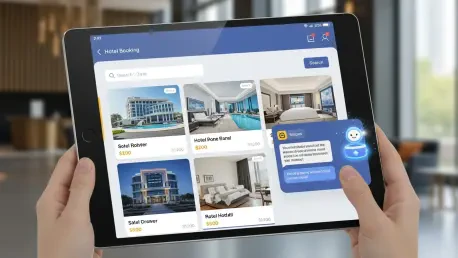

For decades, the process of booking a hotel has remained a fragmented and exhausting experience that forces travelers to juggle dozens of browser tabs while trying to reconcile contradictory reviews and fluctuating prices across multiple platforms. The current landscape of digital travel planning often feels more like a chore than the start of a vacation, as users frequently find themselves stuck in a loop of generic suggestions that lack real-time accuracy or transactional capabilities. Mindtrip is attempting to bridge this gap by introducing a sophisticated agentic AI framework designed to handle the complexities of the entire booking lifecycle. Unlike passive chatbots that merely retrieve information, these agents act with a degree of autonomy, understanding the nuances of a user’s specific preferences and the logistical constraints of a trip. This shift from information retrieval to active execution represents a significant milestone in the evolution of travel technology. By integrating deep reasoning with real-world inventory access, the platform aims to eliminate the friction that has long defined online hotel reservations for millions of global travelers.
The Evolution of Booking: From Search to Autonomous Agency
The architecture behind this new agentic AI differs fundamentally from the generative models of previous years which often hallucinated availability or provided outdated pricing data. At its core, the system utilizes a specialized reasoning engine that can interact with live Global Distribution Systems and private hotel APIs to verify every detail before presenting it to the traveler. This means that when an agent suggests a boutique hotel in Tokyo, it has already confirmed that the specific room type is available and that the amenities match the user’s explicit requests for high-speed internet or pet-friendliness. Furthermore, the agentic nature of the AI allows it to perform chain-of-thought processing, where it evaluates trade-offs between different options. If a preferred hotel is sold out, the system does not just stop; it identifies comparable alternatives within a certain radius, considering factors like neighborhood safety scores and transit accessibility to maintain the integrity of the original plan. This ensures a high success rate for every query.
Looking back at the initial rollout of these autonomous booking systems, it became clear that the primary hurdle for widespread adoption was the establishment of trust between the user and the machine. Travelers who once spent hours cross-referencing sites eventually found that delegating these tasks to a reliable agent saved significant time without sacrificing the quality of their stay. The transition required a shift in mindset, moving away from micromanagement toward a goal-oriented interaction model where the traveler defined the objective while the AI determined the execution. For those looking to capitalize on this trend, the next logical step involved deeper integration with personal digital ecosystems to allow agents to anticipate needs based on calendar entries and past behavior. Industry stakeholders focused on refining the interoperability of their systems to ensure that data moved fluidly between the AI, the hotel, and the traveler. By prioritizing data accuracy and user agency, the hospitality sector moved into a new era.