
Travelers often find that their intuition regarding personal safety is triggered more by local surroundings than by the political climate of a host country. This psychological phenomenon stems from the immediacy of street-level threats compared to the abstract nature of governmental instability. While a coup or a mass protest might dominate international news cycles, a visitor walking through a dimly lit alleyway in a foreign city experiences a much more visceral sense of vulnerability. Data from the Global Travel Safety Index indicates that individuals are far more likely to cancel trips due to reports of rising petty theft or muggings than they are for civil demonstrations occurring in a capital city hundreds of miles from their intended resort. This preference for personal security over systemic stability highlights a disconnect between macro-level risks and micro-level perceptions. The human brain prioritizes immediate physical threats because they represent a direct lack of control over one’s environment.
The Perception Gap: Individual Safety Versus Systemic Change
The availability heuristic plays a significant role in how tourists evaluate danger, often leading them to overestimate the frequency of street crime while underestimating political turmoil. When a person sees a viral video of a smartphone being snatched in a popular square, that specific image remains vivid and easily accessible in their memory. In contrast, the complexities of constitutional shifts or legislative stalemates feel distant and difficult to visualize. Behavioral economists suggest that the fear of being a direct target of a crime creates a biological stress response that is far more intense than the intellectual concern for a nation’s democracy. This is particularly evident in high-traffic destinations like Barcelona or Rome, where the narrative of pickpockets often outweighs the reality of national political debates. Tourists perceive crime as a personal failure of the state to protect them, whereas political unrest is often viewed as an internal struggle that does not necessarily target the visitor.
Furthermore, the perceived predictability of a vacation environment is a primary driver for consumer choice in the leisure industry. Crime is seen as a random, chaotic element that could strike anyone at any moment, regardless of their behavior or affiliation. Political unrest, however, typically follows a more visible trajectory with predictable locations such as government buildings or central squares. This allows a savvy traveler to believe they can simply “opt out” of the unrest by avoiding specific neighborhoods. Crime does not offer the same courtesy of geographic confinement in the traveler’s mind. A tourist might feel that they can navigate around a protest march, but they cannot easily navigate around a hidden pickpocket or a predatory scammer. This distinction creates a hierarchy of fear where the potential for a negative personal interaction with a criminal carries more weight than the potential for a broader societal disruption. The lack of agency in the face of crime makes it a more daunting prospect.
Media Influence: The Impact of Real-Time Threat Awareness
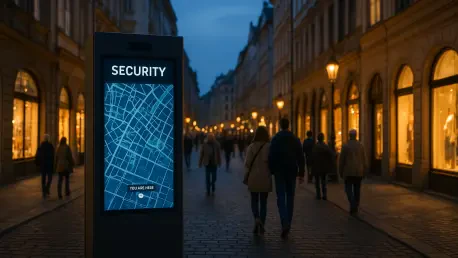
The proliferation of real-time safety technology and decentralized information has fundamentally shifted how travelers consume risk assessments. In the current landscape from 2026 to 2028, mobile applications provide instant notifications about neighborhood-level criminal activity, which often feels more urgent than broad travel advisories issued by state departments. These apps utilize crowdsourced data to pinpoint hotspots for theft or harassment, giving travelers a granular view of safety that was previously unavailable. While a government might issue a warning about political instability, a localized alert about a series of robberies in a specific shopping district will often prompt a more immediate change in a tourist’s itinerary. This reliance on hyper-local data reinforces the idea that the most relevant dangers are those that could occur during a daily walk to a café. Consequently, the focus shifts away from the political health of the nation toward the safety of the specific sidewalk or street.
Stakeholders in the travel sector focused on enhancing street-level security through smart city initiatives and transparent reporting to mitigate the fears of potential visitors. These efforts demonstrated that while political landscapes remained volatile, the consistent enforcement of public safety protocols significantly influenced destination choice. Future considerations pointed toward the use of artificial intelligence to predict and prevent crime in high-traffic tourist areas, providing a proactive layer of protection that addressed the core anxieties of the modern traveler. By shifting the focus toward tangible safety improvements, cities managed to maintain robust tourism numbers even during periods of national transition. The period from 2026 to 2028 proved that the human desire for personal security remained the most influential factor in the global tourism economy. Providing actionable data and visible safety infrastructure became the most effective way to bridge the gap between perceived risk and actual security for every traveler.