
Katarina Railko has spent years at the intersection of hospitality and large-scale event planning, honing an intuitive sense of what makes a traveler feel truly valued. As a respected voice in the expo and conference circuit, she has seen firsthand how shifting consumer expectations can make or break a brand’s reputation. In this discussion, we explore the findings of the latest ACSI Travel Study, which surveyed nearly 15,000 travelers to uncover how the industry is stabilizing after years of volatility. We delve into the rising influence of artificial intelligence in service recovery, the surprising parity between home-sharing platforms and luxury hotel chains, and the specific technological upgrades that are finally making air travel feel modern again.
Many travel brands are now using AI to reshape their business models and service delivery. How are these technological shifts specifically changing the customer experience, and what steps should companies take to ensure these innovations don’t overshadow the “nuts and bolts” of traditional customer service?
The integration of artificial intelligence is no longer just a futuristic concept; it is actively driving the industry toward an ACSI score of 76 across multiple sectors like airlines and rideshare. We are seeing a fundamental remaking of business models where AI handles the heavy lifting of data processing to offer more personalized service, but the danger lies in losing the human touch that defines hospitality. For instance, while automated systems can speed up interactions, companies must remember that the “nuts and bolts” of service—like a clean room or a friendly greeting—remain the foundation of a guest’s value proposition. To succeed, firms need to use AI to remove friction points, such as check-in delays, while ensuring that staff are empowered to handle the nuanced emotional needs that a machine simply cannot replicate. Balancing these high-tech innovations with high-touch service is the only way to capitalize on the current flux of consumer expectations and maintain long-term loyalty.
Business traveler satisfaction is currently outpacing other segments in the lodging industry. What specific amenities or service changes are driving this trend, and why are alternative accommodations now competing on an even playing field with legacy hotel giants for the top spot?
It is fascinating to see business traveler satisfaction jumping by 3 percent year over year, a trend fueled by a desire for efficiency and more tailored environments. We are currently seeing a statistical dead heat at the top of the lodging sector, with Airbnb rising 1 percent to tie Hilton with a score of 79. This parity exists because business travelers are no longer just looking for a standard desk and a coffee maker; they are seeking value propositions that offer a sense of “home” and flexibility, which alternative accommodations provide in spades. Meanwhile, legacy brands are struggling to maintain consistency, as seen with IHG’s 4 percent drop to a score of 76, largely due to declines in their Holiday Inn and Holiday Inn Express lines. The industry is in a state of flux where the reliability of a big brand name is being weighed against the unique, tech-integrated experiences of short-term rentals.
Massive jumps in satisfaction for in-flight internet and real-time flight information suggest a major shift in passenger priorities. How are airline loyalty programs being restructured to capitalize on these tech-heavy demands, and what metrics should carriers track to maintain this momentum?
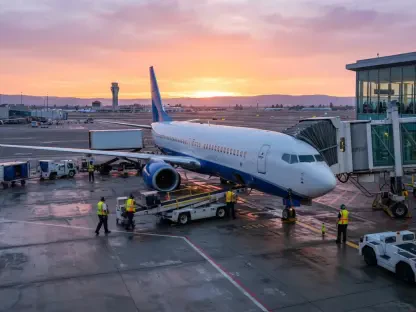
The most striking data point in the recent study is the 20 percent surge in satisfaction for in-flight internet access, coupled with a 15 percent increase in the perceived usefulness of flight information. Passengers now view connectivity as a right rather than a luxury, and airlines like Delta have leveraged this to reach the top spot with a score of 79. American Airlines has also seen a significant 7 percent improvement by specifically tailoring its loyalty program to reward these tech-heavy demands, which resonates deeply with the business traveler segment. Carriers need to move beyond simple mileage tracking and start measuring “digital engagement” and “real-time problem resolution” through their apps. When a traveler can track their bags or rebook a flight in the palm of their hand without the stress of a crowded gate, the emotional relief translates directly into those higher satisfaction scores we are seeing.
While some car rental brands have reached record satisfaction levels, others are struggling with high complaint volumes and poor service recovery. What are the step-by-step components of an effective complaint-handling strategy, and how does website functionality directly impact these customer perceptions?
Effective complaint handling starts with visibility and ends with speed, a lesson that brands like Alamo and Avis have mastered to reach their leading score of 79. A successful strategy requires a seamless transition from a digital interface to a human representative who has the authority to solve the problem immediately. This is where brands like Budget, which sits at a 73, are failing; their customers report high levels of frustration not just with the initial issue, but with the clunky website and unresponsive call centers that follow. When a website is difficult to navigate, it creates a “pre-trip friction” that lowers a customer’s patience, making them far more likely to lodge a formal complaint when a minor operational hiccup occurs. To turn this around, struggling brands must invest in their digital infrastructure to ensure that the “service recovery” begins the moment a user clicks for help, rather than forcing them through a gauntlet of outdated phone menus.
Rideshare platforms are increasingly focusing on niche improvements, such as safety features for female riders and AI-driven service recovery. What specific anecdotes illustrate the success of these initiatives, and how do companies balance automated service with the human element required for passenger safety?
The rideshare industry has reached a state of equilibrium, with Uber and Lyft now tied at a score of 76, but they are taking very different paths to get there. Uber has made significant strides in repairing its reputation by rolling out specific safety features aimed at female riders, which directly addressed years of negative press and helped boost their standing among that demographic. On the other hand, Lyft has leaned into the future by deploying AI-enabled customer service recovery, which allows for instant resolutions to common issues like fare disputes or lost items. The challenge remains the human element; while an AI can process a refund in seconds, the physical safety of a passenger still relies on the driver and the platform’s vetting processes. These brands are finding success by using automation to handle the transactional headaches while reserving human intervention for high-stakes safety concerns, creating a more secure and efficient environment for everyone.
Online travel agencies are seeing significant gains among travelers under the age of 42 by pivoting toward AI-enabled custom packages. What specific digital features attract this younger demographic, and how are loyalty programs evolving to prevent these customers from booking directly with hotels?
Online travel agencies are finally winning over the under-42 demographic by moving away from being simple search engines and becoming “experience architects.” By utilizing AI to curate customized travel packages, platforms like Tripadvisor and Booking.com—which are currently tied at 77—offer a level of convenience that appeals to the “I want it now” mentality of younger travelers. These digital features, such as predictive pricing and hyper-personalized itineraries, create a value-add that a single hotel website often can’t match. To keep these users from jumping ship and booking directly with a hotel, OTAs are evolving their loyalty programs to include cross-industry perks, such as car rental discounts or exclusive event access. Even though some brands like Orbitz still lag behind at 68, the overall trend shows that when an OTA can prove it saves both time and money through smart tech, the younger generation is more than willing to stay loyal to the platform.
What is your forecast for the travel industry?
I anticipate a period of sustained, “normalized” growth where the frantic energy of “revenge travel” is replaced by a more disciplined and tech-centric consumer base. With 14,910 surveys showing gains across almost every sector, it is clear that the industry has finally found its footing post-pandemic, but the brands that will dominate are those that don’t get complacent. My forecast is that we will see a widening gap between “tech-forward” companies that use AI to enhance the human experience and “legacy-stuck” firms that use technology as a barrier to hide from their customers. As inflation cools and operational challenges settle, the new battlefield will be the “value proposition”—travelers will be looking for the perfect blend of digital ease and physical comfort, and any brand that fails to deliver on both will likely see their scores slip toward the bottom, much like the 66 we see for Spirit or the 70 for Wyndham.