
The delicate balance between preserving historical identity and fostering economic growth has reached a pivotal turning point as Singapore officially relaxes its decade-long moratorium on new hotel developments within its most storied heritage districts. This strategic shift specifically targets the Upper Circular Road and Beach Road precincts, areas that were previously protected by rigid zoning laws designed to prevent the commercial saturation of the city’s architectural soul. By opening these zones to boutique hospitality projects, the government is testing a hypothesis that controlled commercial infusion can actually safeguard heritage by providing the necessary capital for high-quality restoration. This four-year trial, scheduled to run through May 2028, represents a calculated departure from the restrictive policies of the past decade, signaling a new era where conservation and modern utility coexist. Urban planners are now tasked with ensuring that these new establishments enhance the local atmosphere.
Adaptive Reuse: Transforming the 1930s Remittance House
A premier example of this strategy is the 21 Carpenter project, which involved the meticulous transformation of a 1930s remittance house into a high-end boutique hotel while maintaining its structural integrity. The architectural team focused on stripping away decades of accumulated paint and debris to reveal the original Shanghai plaster, a material synonymous with the city’s early 20th-century aesthetic. Instead of sealing the building off from the public, designers utilized floor-to-ceiling glass on the lower levels to foster a sense of transparency and engagement with pedestrians on the street. This approach demonstrates how historical preservation can move beyond static museum-like displays toward a more dynamic, lived-in experience that respects the past while serving the present. By repurposing such structures, the city avoids the environmental costs of demolition and builds a bridge between eras, ensuring that these landmarks remain relevant in a modern urban environment.
Architectural Narratives: Etching History into Modern Design
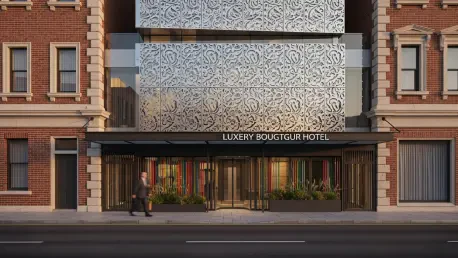
Beyond the physical restoration, these developments employ intricate artistic details to keep local history alive for contemporary guests and the surrounding community. At the 21 Carpenter site, the modern extension features a striking aluminum facade etched with excerpts from old letters once sent by Chinese laborers who used the building as a financial hub decades ago. This design choice transforms the hotel into a physical narrative, allowing the architecture to serve as a storyteller for the district’s social history. Such thoughtful integrations ensure that heritage is not merely a superficial aesthetic but a deeply embedded part of the guest experience and the neighborhood’s identity. By weaving these historical threads into the fabric of modern luxury, developers are creating spaces that offer more than just accommodation; they provide a connection to the cultural heritage of the area. This method of storytelling has set a new standard for how commercial projects can contribute.
Strategic Zoning: Balancing Professional and Cultural Hubs
Building on the success of individual projects, the current policy change is meticulously designed to leverage the unique commercial strengths of two very different urban environments. Upper Circular Road is being positioned to attract high-end professional travelers who require immediate proximity to the Central Business District and the vibrant recreational offerings of the riverfront. In contrast, the Beach Road area is undergoing a transformation into a cultural and shopping hub, providing a central base for tourists eager to explore the traditional charms of Kampong Gelam alongside the futuristic landmarks of Marina Bay. By diversifying the types of accommodations available in these specific zones, the Urban Redevelopment Authority aims to spread economic benefits more evenly across the heritage districts. This targeted approach prevents any single area from becoming overwhelmed by a specific demographic, maintaining a healthy mix of local residents and international visitors.
Regulatory Oversight: Managing Growth with Case-by-Case Reviews
To maintain the delicate character of these neighborhoods, the Urban Redevelopment Authority has replaced blanket approvals with a rigorous, case-by-case review process for every new proposal. This individualized assessment ensures that each development meets exceptionally high standards for conservation and architectural quality before being allowed to proceed. Officials are particularly focused on how new projects contribute to the local economy without displacing the existing community or disrupting the historical streetscape. This trial period, which continues through May 2028, provides a necessary buffer for the government to monitor the real-world impact of increased hotel density on urban infrastructure and social cohesion. By maintaining tight control over the development pipeline, authorities can adjust regulations in real-time to address any unforeseen negative consequences. This cautious yet progressive stance reflects a sophisticated understanding of urban management for the city.
Future Considerations: Sustainable Infrastructure and Community Impact
The four-year trial initiated by the government provided a critical framework for evaluating the coexistence of modern hospitality and historical preservation. Stakeholders prioritized the development of adaptive reuse projects that respected the original architectural language while introducing much-needed economic vitality to stagnant districts. It became clear that the success of these initiatives depended on the integration of smart infrastructure and a commitment to maintaining the social fabric of the neighborhoods. City planners recognized that future developments must go beyond mere aesthetics, focusing instead on how new structures can actively contribute to the street-level vibrancy. Moving forward, the lessons learned from this period suggested that a permanent shift toward flexible, case-by-case zoning would be the most effective way to manage urban growth. Authorities emphasized the importance of continuing to engage with local communities to ensure that revitalization efforts remained aligned with the public interest.