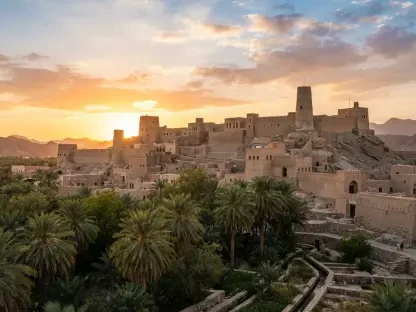

Cities like George Town and Vigan demonstrate that leveraging UNESCO World Heritage status can effectively catalyze a sustainable boutique economy for local communities. As the region moves through the middle of the decade, Southeast Asia finds itself at a critical juncture where the allure of its cultural past is increasingly overshadowed by the demands of an unprecedentedly booming tourism industry. With regional forecasts indicating an influx of over 200 million international visitors by 2030, the pressure to modernize infrastructure has reached a fever pitch across major capitals and provincial hubs alike. This rapid expansion frequently comes at the expense of the “built environment”—the very shophouses, colonial landmarks, and traditional neighborhoods that define the region’s soul. The central challenge for policymakers and urban planners lies in navigating the tension between the economic necessity of growth and the preservation of a unique cultural identity that serves as the foundation for the region’s global appeal.
The financial impact of tourism in Southeast Asia is undeniably massive, contributing nearly ten percent to the regional GDP and supporting tens of millions of jobs from Bangkok to Bali. However, this economic success creates a frustrating paradox: the infrastructure required to house and transport millions of guests often necessitates the destruction of the historic sites they are coming to see. When a city replaces its century-old markets and narrow streets with standardized glass towers and wide highways, it risks liquidating its cultural capital for short-term gains. This cycle of development threatens to turn vibrant, historic capitals into generic urban landscapes that lack a distinct sense of place, eventually eroding the very competitive advantage that drew visitors in the first place. Resolving this requires a fundamental shift in how heritage is valued within the broader context of national development strategies.
The Erosion of Urban Identity and Daily Heritage
Understanding the Vulnerability: The Everyday Environment
Modern conservation efforts are no longer just about protecting famous palaces or massive temple complexes, which usually benefit from state-of-the-art protection and international funding. The real crisis is concentrated on “everyday” heritage—the century-old clinics, neighborhood fire stations, and modest residential blocks that form the essential connective tissue of cities like Manila and Ho Chi Minh City. These structures provide the visual and social context for urban life, acting as the backdrop for local traditions and community interactions. Their loss leads to a homogenization of the travel experience where every destination begins to look the same, characterized by sterile shopping malls and indistinguishable apartment complexes. When these mundane yet historical buildings are erased, the narrative of the city becomes fragmented, leaving only isolated monuments that feel disconnected from the people who live around them.
The vulnerability of these everyday sites is exacerbated by the lack of formal recognition from national heritage registries, which often prioritize grand architecture over social significance. In many Southeast Asian urban centers, the aesthetic of the streetscape is being fundamentally altered as small-scale traditional vendors are pushed out to make room for modern retail chains. This displacement does more than change the architecture; it dissolves the intangible heritage associated with local craftsmanship and traditional commerce. To combat this, urban planners are beginning to recognize that preserving the “vibe” of a neighborhood is just as important as saving a cathedral. Protecting the mundane structures that house local bakeries or traditional workshops ensures that the city remains a living entity rather than a curated museum for tourists.
The Conflict: Land Value and Preservation
The primary driver of heritage loss across the region is the stark disparity between the historical value of a property and its potential real estate yield in an overheated market. In high-density urban centers like Jakarta or Bangkok, the economic logic of the private sector almost always favors demolition over restoration. A two-story colonial building, no matter how architecturally significant, cannot compete with the massive profit margins offered by a forty-story luxury hotel or a high-rise office complex. Without aggressive government intervention or significant financial incentives for property owners, the architectural records of the past are easily erased by the pursuit of higher property values and increased floor-area ratios. This economic pressure creates a hostile environment for preservationists who must argue for the long-term cultural value of a site against the immediate, quantifiable gains of new construction.
Furthermore, the legal frameworks in many Southeast Asian nations are often ill-equipped to deal with the nuances of private property rights versus public heritage interests. Property owners often view heritage designation as a financial burden rather than an asset, as it restricts their ability to modernize or sell to the highest bidder. To bridge this gap, some municipal governments are experimenting with “transfer of development rights” (TDR) programs, which allow owners of historic buildings to sell their unused air rights to developers in other parts of the city. This mechanism provides a financial lifeline for preservation while still allowing for urban density goals to be met elsewhere. However, the implementation of such sophisticated tools remains inconsistent, and the lure of quick redevelopment remains a constant threat to the integrity of historic districts.
Lessons From Across the ASEAN Region
Success Stories: Heritage-Led Economics
Cities like George Town in Malaysia and Vigan in the Philippines offer a clear blueprint for how preservation can actually fuel economic prosperity when managed correctly. By leveraging their UNESCO World Heritage status, these locations have successfully created boutique economies centered on restored architecture, local craftsmanship, and specialized hospitality. In these instances, heritage is treated as a renewable resource rather than a hurdle to be cleared for the sake of modernity. These success stories prove that integrating history into the modern economy can lead to more sustainable and authentic tourism growth that benefits local residents rather than just international hotel conglomerates. The restoration of traditional shophouses into high-end cafes and galleries has shown that there is a significant market for “slow tourism” that prioritizes quality over quantity.
The economic ripple effect in these cities extends beyond the tourism sector itself, revitalizing local trades that were once on the verge of extinction. In Vigan, the demand for traditional brick-making and timber-framing techniques has created a new generation of skilled artisans who are essential to the ongoing maintenance of the city’s historic fabric. This creates a circular economy where the money spent by visitors goes directly back into the upkeep of the environment they came to enjoy. Moreover, these cities have demonstrated that a well-preserved historic core can act as a brand for the entire region, attracting investment in other sectors by improving the overall quality of life and cultural prestige of the area. The key to their success was the early adoption of comprehensive management plans that balanced commercial growth with strict conservation guidelines.
Infrastructure Projects: The Risk of Erasure
Conversely, some nations illustrate the extreme fragility of civic memory when infrastructure goals take precedence over cultural sensitivity. The demolition of historic landmarks for road-widening projects or elevated expressways highlights a policy environment where transportation efficiency often overrides cultural significance. Even in highly regulated and wealthy environments like Singapore, the constant need for public utility expansion and land scarcity can lead to the difficult decision to lose historic hospital wards or older residential sites. These cases serve as a stern warning that without constant vigilance and a strong public mandate, even significant landmarks can fall to the bulldozer of progress. The drive to modernize can become a zero-sum game where the ghosts of the past are cleared away to make room for a faster future.
In many developing urban centers, the lack of integrated planning means that transportation departments and heritage bureaus rarely coordinate their efforts. This often results in “accidental” destruction where historical sites are paved over simply because they were not properly identified on infrastructure maps. The loss of these sites is often irreversible, and the “mitigation” offered—such as a commemorative plaque or a digital archive—rarely compensates for the physical loss of the site itself. True progress in these contexts would involve designing infrastructure that snakes around historical cores or utilizes underground tunneling to preserve the surface heritage. While more expensive, these engineering solutions recognize that the value of a city’s history cannot be calculated solely by the speed of its traffic flow.
Strategies for a Sustainable Urban Future
Adaptive Reuse: Regulatory Tools
To mitigate the ongoing conflict between urban growth and heritage preservation, planners are increasingly turning to “adaptive reuse” as a primary strategy. This approach involves repurposing old buildings for modern functions that are compatible with their structural integrity, such as converting a colonial-era warehouse into a contemporary art gallery or transforming a historic schoolhouse into a boutique hotel. When combined with strict height controls and mandatory Heritage Impact Assessments (HIAs), these tools allow a city to evolve without losing its distinctive skyline. Such measures ensure that new developments respect the scale and history of the existing environment, creating a layered urban fabric that tells the story of many different eras simultaneously. Adaptive reuse is often more environmentally sustainable than new construction, as it utilizes the “embodied energy” of existing materials.
The success of adaptive reuse depends heavily on the flexibility of building codes and the availability of technical expertise in restoration. In many Southeast Asian cities, outdated zoning laws can make it difficult to convert an industrial building into a residential or commercial space, leading many owners to choose demolition as the simpler path. Progressive municipalities are now updating these regulations to offer “building code variances” for historic structures, allowing them to meet safety standards without compromising their architectural character. Additionally, governments are providing tax breaks and low-interest loans specifically for restoration projects that follow strict conservation standards. These financial and regulatory levers are essential for making heritage preservation a viable option for the private sector, shifting the perception of old buildings from liabilities to premium assets.
The Importance: Community and Authenticity
Conservation is most effective and sustainable when it is rooted in the local community rather than being imposed as a top-down mandate from a central government. When residents are actively involved in the planning process and see the direct benefits of preservation, tourism remains authentic and prevents the creation of sterile, artificial “tourist zones” that feel like theme parks. Sustainable development relies on keeping neighborhoods lived-in and functional, ensuring that the local culture remains a vibrant part of the city’s fabric rather than a performative display for outsiders. This means prioritizing the needs of local residents—such as affordable housing and community services—within historic districts so that they are not priced out by the very tourism growth they help to generate.
Engagement with the community also helps in identifying the intangible heritage that might not be obvious to an outside architect or historian. This includes the oral histories, traditional festivals, and neighborhood rituals that give a physical space its meaning. By incorporating these elements into the urban plan, cities can ensure that their heritage is not just about the “bricks and mortar” but also about the living culture of the people. In many cases, community-led tourism initiatives have proven more resilient than large-scale corporate developments, as they are based on genuine hospitality and a sense of pride in local identity. When the community owns the narrative, the resulting tourism product is inherently more diverse and resistant to the fluctuations of global travel trends.
The Role of the Conscious Traveler
Influencing Conservation: Consumer Choice
The future of Southeast Asian heritage is also being shaped by the evolving behavior of the travelers themselves. As more people seek out “authentic” and “experiential” travel over mass-market packages, the market demand for preserved historic districts and heritage accommodations significantly increases. Travelers have the immense power to influence conservation by making deliberate choices, such as staying in restored heritage buildings instead of generic modern chains and supporting traditional local markets instead of globalized shopping malls. These consumer choices send a clear signal to developers and regional governments that the history and unique character of a destination are valuable economic assets worth protecting. The rise of social media has also played a role, as the aesthetic appeal of historic neighborhoods becomes a major driver for tourism interest.
Beyond where they stay, conscious travelers are also demanding higher standards of transparency regarding how tourism revenues are used for local heritage upkeep. This has led to the development of “heritage-positive” certification programs for tour operators and hotels that actively contribute to the preservation of their surroundings. By prioritizing these certified businesses, travelers can ensure that their presence in a region is a force for good rather than a cause of degradation. The shift toward a more mindful approach to travel suggests that the industry is beginning to move away from the “extractive” model of tourism toward one that is more regenerative. This trend provides a powerful incentive for local governments to double down on their preservation efforts as a way to attract high-value, respectful visitors.
Authenticity: A Competitive Advantage
In an increasingly globalized world where many modern cities are becoming indistinguishable, authenticity was recognized as a major competitive advantage in the international tourism market. The cities that managed to balance modern amenities with the retention of their historic architecture remained the most attractive and resilient destinations in the long run. Those that allowed indiscriminate redevelopment often found that they lost the very charm that originally fueled their economy, leading to a decline in visitor numbers as the “novelty” of new construction wore off. Protecting the architectural soul of Southeast Asia was not merely a matter of sentiment; it was a vital strategy for long-term economic resilience and cultural sovereignty. The lesson for the years between 2026 and 2030 was that heritage is not a static relic of the past but a dynamic platform for future innovation.
Moving forward, the focus shifted toward more integrated management models that viewed heritage as an essential component of urban health and social well-being. Governments that succeeded in this endeavor were those that provided the necessary legal protections while simultaneously empowering local communities to become the guardians of their own history. The actionable path for the future involved the widespread adoption of digital mapping to track endangered sites and the creation of regional heritage funds to support smaller towns. By treating cultural identity as a primary pillar of national development, Southeast Asian nations ensured that their rapid growth did not come at the cost of their unique history. The preservation of these spaces ensured that the region remained a diverse and compelling part of the global landscape for generations to come.