
Conservation efforts in Tanzania’s Ruaha National Park have evolved to provide tangible economic benefits to local communities, offering a viable alternative to the survival-driven bushmeat trade. This evolution marks a significant departure from older, exclusionary models of environmental protection that often prioritized wildlife over the human populations living alongside it. In the current landscape of 2026, global conservationists have recognized that the most effective way to safeguard fragile ecosystems is to address the underlying socio-economic drivers of destruction. By viewing local hunters, loggers, and fishermen not as adversaries but as potential allies, innovative projects are successfully repurposing specialized skill sets for the benefit of biodiversity. These individuals possess an intimate knowledge of the land and sea that no outsider can replicate. When this expertise is coupled with stable income and a sense of stewardship, it creates a powerful defense against the illegal exploitation of natural resources.
Maritime Transformations: Redefining Livelihoods in Coastal Regions
In the turquoise waters of Indonesia, the initiative known as Project Hiu serves as a prime example of how tourism can dismantle the global shark fin trade from the inside out. Indonesia remains a critical hub for the supply of shark products, with many coastal communities in East Lombok historically dependent on this harvest for survival. Rather than enforcing strict bans that would leave families without food, the project engages these fishermen directly by hiring their vessels for snorkeling trips and scientific research. Since the expansion of these efforts from 2026 to 2028, over eighty fishermen have traded their harpoons for cameras and tracking equipment. This shift has effectively converted a predatory fleet into a conservation force that assists in high-level research, including the tagging of tiger sharks. The result is a stable economy where a living shark provides more long-term value to the community than one caught for a single payout in the marketplace.
Similar transformations are occurring across the Coral Triangle and the Philippine archipelago, where former extractors now serve as the front line of environmental defense. At the Misool Resort in Raja Ampat, the local ranger force is comprised largely of individuals who once engaged in destructive dynamite fishing. These rangers now patrol a sprawling marine reserve, utilizing their seafaring skills to deter encroaching poachers and monitor reef health. In the Philippines, the Masungi Georeserve employs veteran loggers like Ruben Gianan, whose deep familiarity with the limestone terrain makes him an invaluable guide and protector. This transition has led to measurable ecological recovery; for instance, shark populations in the Misool reserve have seen a significant increase over the years leading up to 2026. These projects demonstrate that when local residents are given the agency to manage their own natural heritage, the “villain” narrative is replaced by one of empowerment and pride.
Terrestrial Guardians: Utilizing Local Expertise for Wildlife Protection
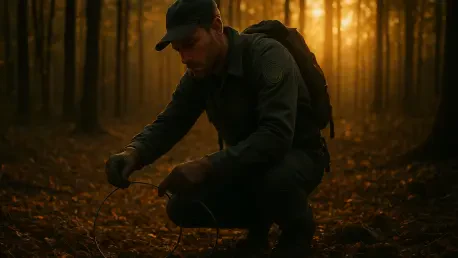
The dense jungles of Cambodia’s Cardamom Mountains offer another compelling case for the integration of former poachers into formal conservation frameworks. Shinta Mani Wild, in partnership with the Wildlife Alliance, specifically recruits former snare-setters who once targeted vulnerable species like the Malayan sun bear and the clouded leopard. These individuals possess an unparalleled ability to track movement through thick undergrowth and identify the subtle signs of illegal activity. By utilizing these skills to intercept loggers and remove thousands of traps, they have fundamentally shifted the power dynamic within the forest. Their work has resulted in the removal of roughly 350,000 snares, allowing wildlife populations to recover in a critical biological corridor. This approach acknowledges that those who are best at navigating the wilderness are also those best equipped to save it, provided they are offered a wage that matches or exceeds what they could earn through illegal extraction.
In Tanzania, the narrative of Anderson Mgesi reflects the complex relationship between park expansion and community displacement. Growing up in a village where bushmeat was a primary source of protein, Mgesi faced the dangers of poaching firsthand before finding a path toward professional guiding. Through targeted educational sponsorship and training at specialized wildlife schools, he transitioned into a role at the Usangu Expedition Camp. This career path allowed him to provide for his family without the risks associated with illegal hunting. His success highlights a broader trend: for conservation to be sustainable in the long term, neighboring communities must receive direct benefits that offset the loss of ancestral lands. When local people see themselves as beneficiaries of the tourism industry, they become the most vocal advocates for the park’s protection. This synergy ensures that the local workforce is not just employed, but is deeply invested in the continued health of the ecosystem.
The Future Path: Strategies for Scalable Human-Centric Conservation
The economic foundation of these initiatives is built on the realization that environmental neglect is rarely a choice made out of malice, but rather a response to poverty. By providing fair, steady wages and career advancement opportunities, eco-tourism projects create a “hero” narrative that resonates throughout entire villages. This shift is reinforced by educational outreach programs that target the younger generation, illustrating that hospitality, marine biology, and park management are viable and prestigious career paths. When children see their parents being honored as protectors of the land rather than being arrested as poachers, it fundamentally alters the community’s perception of nature. Educational scholarships, often funded by tourism levies, ensure that this transition is not a temporary fix but a permanent cultural shift. This long-term investment in human capital is what allows conservation efforts to withstand economic fluctuations and maintain their momentum into the coming years.
Successful programs demonstrated that the future of global conservation required a human-centric focus where local populations were integrated into the very fabric of the tourism industry. By repurposing the skills of former hunters and fishermen, organizations created a sustainable loop that rewarded the preservation of biodiversity rather than its depletion. Moving forward, it became clear that scaling these models required closer collaboration between private developers, government agencies, and community leaders to ensure that profits were distributed equitably. Stakeholders needed to prioritize the establishment of permanent community trusts and vocational training centers to solidify these gains. The most effective strategy involved treating the environment as a shared asset that provided lasting value through observation rather than extraction. Ultimately, the transition from poacher to guardian served as a blueprint for modern environmentalism, proving that the protection of the planet was inextricably linked to the prosperity of its people.