
The rapid disappearance of the Aral Sea stands as one of the most poignant symbols of environmental instability, yet it is currently serving as a focal point for a new era of climate resilience within Karakalpakstan. This autonomous republic in Uzbekistan has moved beyond the shock of ecological collapse to establish a sustainable model that integrates tourism with mitigation. While the legacy of the region was once defined by its bustling ports and diverse maritime ecosystems, the modern landscape is dominated by the Aralkum desert, a terrain that offers unique challenges for survival and growth. By transforming this disaster into an opportunity for international engagement and ecological education, the region is demonstrating how degraded landscapes can be repurposed for the global good. This approach is not merely about surviving the current climate crisis but about creating a vibrant economy that funds restoration. Visitors are now flocking to the region to learn how communities adapt to extreme shifts, turning Karakalpakstan into a living laboratory for the rest of the world.
Educational Transformation: Witness Tourism and Economic Revitalization
The Aralkum Desert: A Global Laboratory for Climate Adaptation
The emergence of “witness tourism” has provided a necessary bridge between global environmental awareness and the practical financial needs of regional conservation efforts. International organizations like the UNDP have recognized that the visual impact of the Aralkum desert provides a powerful narrative that motivates travelers to contribute to long-term climate adaptation strategies. This form of tourism encourages visitors to move past the role of passive observers and instead become active stakeholders in the preservation of the surrounding ecosystems. By charging entry fees and promoting high-value, low-impact travel packages, local authorities are generating the revenue required to maintain infrastructure in an increasingly hostile environment. This economic influx is vital for funding the ongoing transition from a fishing-based economy to one centered on desert management and sustainable land use. The goal is to ensure that the desert does not expand further while providing a stable livelihood for the people who remain in the territory.
Nukus and the Ustyurt Plateau: Immersive Educational Journeys
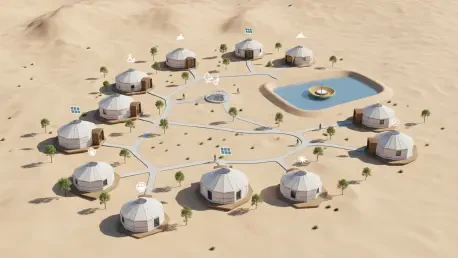
Travelers seeking these educational insights often begin their journeys in the capital city of Nukus before venturing into the rugged expanses of the Ustyurt Plateau. Facilities such as the BesQala yurt camp offer a unique combination of traditional Karakalpak hospitality and off-grid living, allowing guests to experience the reality of limited water resources firsthand. These immersive stays help bridge the gap between abstract climate data and the tangible difficulties of daily life in a water-stressed region. By visiting the former seabed and exploring the rusting hulls of abandoned ships, tourists gain a profound understanding of the speed at which environmental shifts can occur. This proximity to the crisis fosters a sense of global responsibility, as visitors see the direct connection between industrial activity and local ecological consequences. The resulting dialogue between locals and international visitors often leads to the development of new grassroots initiatives aimed at improving irrigation and sustainable farming techniques across the northern districts.
Ecological Stewardship: Preserving Biodiversity and Scaling Reforestation
Wetland Conservation: Protecting Migratory Species and Habitats
Despite the harshness of the Aralkum desert, Karakalpakstan remains a critical sanctuary for biodiversity through the maintenance of complex wetland systems and managed nature reserves. The Sudochye Lake system, which is recognized under the Ramsar Convention, continues to support significant populations of migratory birds, including spectacular flocks of pink flamingos. This ecological success is maintained through an intricate network of dams and pumps designed to regulate water levels and salinity in an area where natural inflow is increasingly scarce. These conservation efforts demonstrate that even the most damaged environments can be supported through targeted human intervention and engineering. By protecting these avian stopover points, the region preserves a vital link in global migratory patterns, ensuring that species do not disappear along with the sea. These wetlands serve as a reminder that biodiversity is not lost once the landscape changes; it simply requires more sophisticated and dedicated management to survive in a warming world.
Participatory Restoration: Cultivating Resilience through Saxaul Planting
Past initiatives like the Yashil Makon project successfully integrated cultural pride with environmental action by mobilizing local communities to plant millions of hectares of saxaul shrubs. These drought-resistant plants were selected to stabilize the shifting sands of the Aralkum desert and reduce the frequency of toxic salt storms that once plagued the region. Regional authorities recommended that future strategies focus on expanding these carbon offset programs by allowing travelers to directly fund or participate in reforestation efforts during their stay. This transition from simple observation to active participation turned tourists into global ambassadors for the Aral Sea restoration mission. To ensure continued progress, it was suggested that policymakers prioritize decentralized solar power for remote tourism hubs and expand the use of digital monitoring tools to track the health of newly planted forests. By adopting these actionable steps, Karakalpakstan established a framework where sustainable travel became the primary driver for long-term ecological stability and regional economic renewal.