
Katarina Railko is a distinguished authority in the hospitality sector, having honed her expertise through years of high-level engagement in the travel, tourism, and entertainment industries. Her deep-seated affinity for large-scale events, expos, and conferences has positioned her as a key voice in understanding how guest experiences are crafted and delivered. With a background that bridges the gap between operational logistics and consumer psychology, Katarina provides a nuanced perspective on the shifting trends that define modern hospitality. Today, she joins us to discuss the evolving landscape of domestic travel and the strategic role that beverage programs play in enhancing the guest journey.
In this discussion, we explore the significant rise in domestic tourism and how it is creating a prime environment for beverage suppliers to build brand loyalty. We delve into the specific consumption patterns of hotel guests, ranging from the high demand for non-alcoholic staples to the celebratory appeal of craft cocktails and beer. Our conversation also examines the “bleisure” trend, where business and leisure travel intersect, and the critical importance of complimentary perks and loyalty programs in securing guest satisfaction in a competitive market.
Domestic travel demand is currently outpaced by interest in international trips, which suggests a major shift in where Americans are spending their time and money. In your view, how should beverage suppliers and hotel operators pivot their strategies to capitalize on this surge in local tourism?
The current surge in domestic tourism represents a golden window for beverage suppliers to treat hotels as powerful laboratories for brand trial and discovery. Because the demand for domestic travel is now sharper than interest in international trips, there is a captive audience of 5,000 U.S. hotel visitors across 50 dominant brands who are looking for familiar yet elevated experiences. To capitalize on this, suppliers must be incredibly nimble, recognizing that while spending remains tight, the desire for quality stays high. We are seeing that 73 percent of these guests are visiting for vacations, while another 45 percent are there for celebrations or functions, meaning the beverage service needs to match that festive, high-energy mood. By focusing on these specific domestic “missions,” operators can create targeted beverage activations that resonate with the local traveler’s desire for comfort and celebration.
The data shows a fascinating split between non-alcoholic and alcoholic preferences, with soft drinks leading at 47 percent and beer following as the top alcoholic choice. What does this variety tell you about the modern guest’s palate, and how can hotels design menus that satisfy these diverse cravings throughout the day?
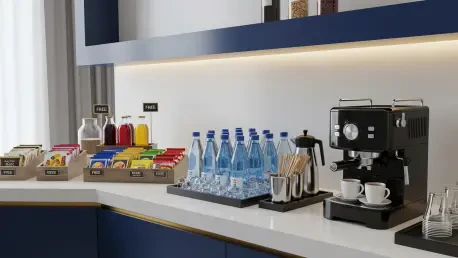
The modern guest’s palate is incredibly diverse, requiring a menu that transitions seamlessly from the morning rush to the evening wind-down. It is striking that nearly half of travelers, about 47 percent, expect to purchase soft drinks, while 40 percent are looking for that essential cup of hot coffee to start their day. This tells us that the “basics” are actually the biggest drivers of volume, but there is also a significant appetite for indulgence, with 32 percent wanting beer and 27 percent looking for cocktails. To balance these, hotels should focus on an assortment that feels curated rather than cluttered, paying close attention to “walkaway pricing” where a guest might decide against a drink if the value isn’t clear. Success lies in providing high-quality bottled water for the 31 percent who prioritize hydration, while offering sophisticated fruit juices for the 29 percent who want a refreshing, non-alcoholic alternative during brunch or meetings.
We are seeing a significant trend where seven in ten business travelers are extending their stays for leisure. How does this blending of work and play change the requirements for beverage services, and what should hotels do to accommodate this “bleisure” guest?
The fact that seven in ten business travelers are now adding a vacation component to their trips completely changes the rhythm of hotel beverage operations. These guests might start their day in a “business” mindset, requiring quick access to premium coffee, but by the afternoon, they transition into a “leisure” mode where they want to celebrate their successful day with a glass of wine or a craft beer. Since 34 percent of stays are tied to specific events, the beverage program must be flexible enough to handle both a professional networking hour and a relaxed family dinner. This “bleisure” guest is looking for a seamless experience where they don’t have to leave the property to find a high-quality drink that fits their changing mood. Operators who understand this hybrid behavior can use beverage offerings to encourage these guests to spend more time—and money—on-site rather than heading to a local bar or restaurant.
With nearly 80 percent of visitors emphasizing the importance of free enhancements like bottled water, how can hotels use these perks as a strategic tool to drive loyalty and re-engage lapsed members?
In a market where competition is fierce, the “little things” like free bottled water or a complimentary breakfast have a massive impact, with 78 percent of guests stating these enhancements are important to them. These perks are not just “nice-to-haves”; they are essential tools for loyalty, especially considering that 61 percent of visitors are already part of a scheme and another 17 percent are open to joining. For the 12 percent of guests whose membership has lapsed, a well-timed complimentary snack—which 32 percent of guests say would increase their satisfaction—could be the catalyst that brings them back into the fold. By integrating these beverage-related perks into the guest experience, hotels demonstrate that they value the guest’s comfort, which builds the emotional connection necessary for long-term loyalty. It is about creating a sense of generosity that makes the guest feel like they are getting more than just a room, but a fully supported stay.
What is your forecast for the hotel beverage industry as we move toward 2026?
My forecast for 2026 is that the hotel beverage landscape will become increasingly data-driven and personalized, with a focus on high-margin, high-satisfaction categories that cater to the domestic traveler. We will see a more sophisticated integration of non-alcoholic “premium” options, as the 47 percent demand for soft drinks evolves into a desire for functional and craft sodas. I anticipate that hotel operators will move away from static menus and toward dynamic “assortment strategies” that change based on whether the hotel is hosting a major event or a quiet mid-week business crowd. Ultimately, the winners in this space will be the ones who use research to navigate “walkaway pricing” effectively, ensuring that guests feel they are receiving a premium experience that justifies their spend even in a tight economy. The collaboration between suppliers and hotel brands will only deepen, turning every lobby bar and in-room fridge into a strategic touchpoint for consumer engagement.