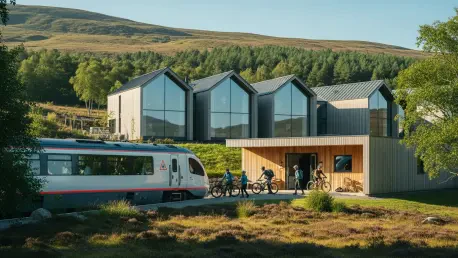

The landscape of the United Kingdom hospitality industry is currently undergoing a profound metamorphosis as the traditional concept of sustainable tourism gives way to a more ambitious and restorative paradigm known as regenerative travel. For decades, the travel sector focused on damage limitation, essentially trying to slow the rate of environmental degradation while continuing to operate under traditional growth models. This approach, often criticized as sustainability theater, prioritized optical improvements such as banning plastic straws or encouraging guests to reuse towels without addressing the underlying systemic issues. Today, however, a fundamental shift is occurring across the British Isles. Businesses and local governments are moving beyond the goal of being net-zero to becoming net-positive, meaning that every visitor arrival and every pound spent must leave a destination in a demonstrably better state than it was found. This transition is not merely a marketing pivot but a comprehensive restructuring of the economic and social relationship between tourists, the land they traverse, and the communities that host them.
- Shifting the Focus Toward Tangible Ecological and Social Restoration
For many years, the primary metric for success in tourism was volume, but the industry has finally acknowledged that Corporate Social Responsibility and traditional frameworks often overlooked the erosion of local culture and biodiversity loss. While these older systems managed to reduce the carbon footprint of individual hotels, they rarely contributed to the health of the surrounding ecosystem or the well-being of the residents living in high-traffic areas. Regenerative tourism flips this script by viewing travel as a tool for repair rather than just a source of revenue. Instead of simply aiming to leave no trace, the new objective is to leave a positive footprint that actively restores natural habitats and directly invests capital back into the social fabric of local neighborhoods. This methodology ensures that the wealth generated by tourism does not simply leak out to international corporations but stays within the community to fund schools, healthcare, and conservation.
The practical application of these principles involves a deep commitment to protecting and celebrating cultural heritage in ways that were previously neglected by mass market strategies. Local authorities are now partnering with environmental scientists to identify specific areas where tourism can fund the rewilding of native species and the restoration of peatlands, which are critical for carbon sequestration. Socially, the focus has moved toward ensuring that tourism serves the locals first. This means that infrastructure improvements, such as better public transport or high-speed internet in rural regions, are designed to benefit the permanent population as much as the temporary visitor. By integrating tourism into the broader goals of regional development, the United Kingdom is creating a more resilient model that can withstand economic fluctuations while simultaneously improving the quality of life for its citizens and the health of its varied landscapes.
- The PLANT Framework: A Systematic Methodology for Hospitality Transformation
To facilitate this massive transition, VisitBritain has spearheaded the implementation of the PLANT framework, which provides a five-step roadmap for hospitality businesses seeking to adopt regenerative practices. The first phase, known as readying the foundation, requires companies to perform exhaustive audits of their current operations to establish a baseline. This involves measuring every aspect of the business, from water consumption and waste production to the diversity of their supply chain and their total carbon emissions. Without this data-driven starting point, it is impossible to set realistic goals or track the progress of restorative initiatives. The second phase, cultivating expertise, moves the focus toward education. Management teams and staff members engage in rigorous training to understand their specific environmental impacts and learn how to implement the best sustainability practices within their unique niche, whether they operate a city-center hotel or a rural bed and breakfast.
Once the internal knowledge is established, businesses move into the execution phase, where they create concrete and measurable action plans tied to strict deadlines. These plans are not vague aspirations but are instead integrated into the company’s core financial and operational goals, ensuring high levels of accountability. The fourth stage involves fostering connections, which is perhaps the most critical component of the regenerative model. In this phase, businesses work to build deep, mutually beneficial relationships with local suppliers and community stakeholders, ensuring that the entire local economy is lifted by the business’s success. Finally, the framework addresses the importance of reshaping perception. Companies are encouraged to share their progress with the public through honest and transparent communication. By reporting their achievements accurately and admitting to ongoing challenges, businesses can build trust with a skeptical public and effectively eliminate the risk of greenwashing.
- Regional Leaders: Innovation in Scotland and Wales
Specific regions within the United Kingdom have already established themselves as global pioneers in the application of regenerative principles through tailored local strategies. Scotland, for instance, has successfully implemented its Outlook 2030 initiative, which prioritizes community wealth and the promotion of fair wages across the tourism sector. One of the most visible successes of this strategy has been the development of extensive, car-free cycling networks that connect major urban centers to the remote countryside. This infrastructure encourages slow travel, allowing visitors to experience the landscape at a human pace while significantly reducing the carbon footprint of their journey. By investing in these networks, Scotland has not only made it easier for tourists to explore without a vehicle but has also provided residents with healthy, carbon-neutral transportation options that improve their daily lives and access to nature.
Similarly, Wales has introduced the Addo initiative, which fosters a shared commitment between visitors and residents to protect the land and respect local traditions. This cultural contract is supported by the Green Dragon certification, which has become the gold standard for eco-friendly lodging across the country. To earn this certification, accommodation providers must prove they are actively improving their local environment, such as by sourcing one hundred percent of their food from within a thirty-mile radius or by installing advanced renewable energy systems. These regional successes demonstrate that regenerative travel is most effective when it is rooted in the specific needs and assets of a local area. By focusing on local food security and community-led conservation, these nations are ensuring that their tourism industries serve as a powerful engine for both environmental recovery and economic sovereignty, setting a precedent for the rest of the world.
- Decoding the Psychology of the Modern British Traveler
The success of regenerative tourism depends heavily on the shifting preferences of the modern traveler, and market research indicates a widening generational divide in priorities. Travelers aged sixteen to thirty-four are currently the demographic most likely to seek out and pay a premium for verified eco-friendly and restorative travel options. For these younger consumers, the environmental and social impact of their vacation is a primary decision-making factor rather than an afterthought. In contrast, travelers over the age of fifty-five tend to remain more focused on price and convenience, often viewing sustainable options as a luxury rather than a necessity. This disparity highlights the need for the industry to tailor its messaging and product offerings to cater to these different values, ensuring that the benefits of regenerative travel are communicated effectively to all age groups regardless of their starting point.
Market analysts have identified three distinct traveler profiles that now define the landscape of British tourism: the conscientious, the pragmatic, and the passive. Conscientious travelers are those who perform extensive research and are willing to change their habits or pay more to ensure their visit has a positive impact. Pragmatic travelers are open to sustainable choices but only if those choices also offer personal benefits, such as increased comfort, better health, or long-term cost savings. Finally, passive travelers represent a large segment of the market that prefers sustainability to be built into the experience automatically. They do not necessarily want to change their behavior but are happy to stay in hotels or use transport services that have already optimized for regenerative impact. Understanding these profiles allows businesses to design experiences that meet people where they are, slowly nudging the entire market toward more responsible and restorative behaviors.
- Mobility Infrastructure and the Challenge of Connectivity
To truly support the rise of slow travel, the United Kingdom has invested heavily in low-carbon transportation infrastructure designed to make the journey as important as the destination. The national government has set an ambitious target for more than half of all short-distance trips to be made by walking or cycling within the next few years. This push for active travel is supported by significant urban planning changes, such as the creation of dedicated bike lanes and pedestrianized zones in major tourist hubs. Additionally, rail integration projects are turning train travel into a central part of the vacation experience. New initiatives are linking major rail lines with local electric bus services and hiking trails, allowing travelers to reach even the most remote areas without ever needing a private car. This integrated approach reduces congestion and pollution while encouraging visitors to linger longer in each location they visit.
Despite these advancements, significant challenges remain in addressing what are known as transport deserts in certain rural areas of the country. These regions often lack the high-frequency public transit needed to support large volumes of eco-conscious tourists, creating a bottleneck that forces many visitors back into private vehicles. Solving this problem requires creative solutions, such as on-demand community shuttle services or the expansion of electric vehicle sharing programs tailored specifically for rural tourism. By focusing on closing these connectivity gaps, the industry can ensure that the benefits of regenerative travel are distributed more evenly across the country, preventing over-tourism in well-connected areas while revitalizing more isolated communities. Developing a truly national, low-carbon transit network is the final hurdle in making regenerative travel the standard mode of operation for all visitors to the United Kingdom.
- Securing Local Economic Sovereignty and Community Wealth
The transition toward regenerative tourism successfully restructured the financial dynamics of the British travel industry by ensuring that wealth remained within the hands of local citizens. By shifting the focus away from international hotel chains and toward locally-owned boutiques and regional food networks, the industry prevented the drainage of profits that previously characterized the tourism sector. This shift allowed small businesses to thrive, fostering a sense of economic independence that empowered communities to invest in their own futures. The widespread adoption of these practices proved that tourism could be more than just a seasonal revenue stream; it became a consistent tool for long-term regional development. Communities that once felt exploited by mass visitor numbers began to see tourism as a vital partner in their growth, leading to a more harmonious relationship between the public and the private sectors.
Moving forward, the focus must remain on the continuous refinement of these regenerative models to ensure they remain adaptable to changing environmental conditions. Stakeholders should prioritize the development of more sophisticated metrics to measure the health of social and natural capital, moving beyond simple carbon counting. It is recommended that tourism boards continue to incentivize businesses that achieve high levels of local procurement and community engagement. Furthermore, travelers must be encouraged to become active participants in the restoration of the places they visit, perhaps through volunteer programs or direct contributions to local conservation funds. By maintaining this commitment to collective responsibility, the British tourism industry will continue to serve as a global leader in demonstrating how travel can be a powerful force for global healing and economic justice.