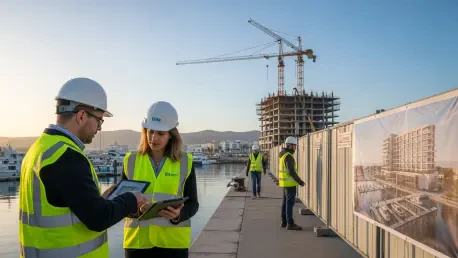

Boardrooms, construction sites, seafront promenades, and revenue dashboards all converged on one question: how Hilton’s Morocco surge would reorder value, talent pipelines, and travel flows across MENA. This roundup gathers views from owners, developers, investors, operators, and destination marketers to parse what the expansion signals, who stands to gain, and how competitors might counter.
From Rabat’s Skyline to Coastal Hubs: Why Hilton’s Morocco Bet Matters Now
Operators framed Morocco as the region’s missing middle: stable governance, diversified demand, and growing airlift, but underweighted by global brands outside Marrakech and Casablanca. To them, Hilton’s plan to add 15 hotels across ten brands did more than increase keys; it reset expectations for quality and consistency in markets where independent supply still dominated.
Developers took a different angle, focusing on the catalytic effect of brand layering along a north–south spine from Rabat to Nador and Tetouan. Where some saw risk in clustering openings, others argued that synchronized debuts concentrate marketing reach, lift rate ceilings, and compress ramp-up periods through shared visibility.
Inside Hilton’s Multi-Brand Playbook for Morocco and MENA
Waldorf Astoria Rabat Salé as the Signal Tower: Luxury Magnetism with Development Spillovers
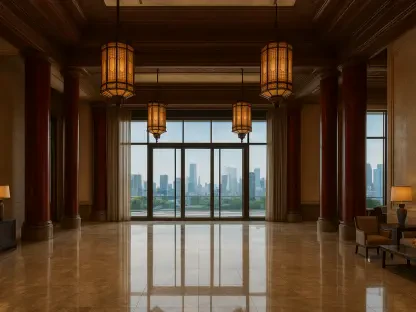
Luxury specialists highlighted the Waldorf Astoria in the Mohammed VI Tower as a brand beacon that anchors rate leadership. With 55 rooms and suites, curated dining, a spa, a notable art collection, and event space, they viewed its small scale as intentional scarcity that drives premium positioning.
Urban planners added that a trophy flag in Rabat refocuses investment from Marrakech alone, encouraging mixed-use developments and cultural programming nearby. The spillover, they said, travels through supplier networks, training academies, and destination branding far beyond the hotel’s footprint.
Lifestyle Meets Efficiency: How Curio, Tapestry, DoubleTree, and HGI Rebalance the Market
Brand strategists saw Curio and Tapestry as the bridge between boutique flavor and chain assurances. The Eden Palm Marrakech, Curio Collection (slated for 2029), and two Tapestry debuts in 2028—Casablanca’s Gauthier district and a resort-style escape in Chefchaouen—were read as responses to travelers mixing wellness, dining, and small events in one stay.
In contrast, asset-light investors favored DoubleTree and Hilton Garden Inn for reliable margins and scalable operations. They argued that familiar service scripts, flexible meeting spaces, and family-friendly amenities create repeatable playbooks in markets where demand splits between business midweek and leisure on weekends.
Secondary Cities and Shorelines: Nador, Tetouan, and Chefchaouen Rewire Demand Patterns
Coastal analysts called DoubleTree by Hilton Nador Marina (2028) and Hilton Garden Inn Tetouan City Center (2029) the quiet revolution. By pairing leisure features with business-ready spaces, they saw midscale-to-upscale formats unlocking year-round utility rather than seasonal peaks.
Tourism boards, meanwhile, pointed to Chefchaouen’s Tapestry as a test of experience-led travel beyond sun-and-sand. If wellness rooms, rooftop venues, and mixed indoor–outdoor pools perform, they contended, itinerary design shifts inland, distributing spend and easing pressure on saturated corridors.
Partnership Economics and a 2028–2029 Build Cycle: Local Alliances, Jobs, and Competitive Heat
Financial advisors emphasized the role of local partners—Les Résidences Hôtelières du Nord, Four AS Invest SARL, and Maroc SAS HOL Nador SAS—in accelerating entitlements and calibrating product to micro-markets. They viewed the 2028–2029 cluster as a de-risking move that smooths procurement and concentrates pre-opening talent pipelines.
Labor advocates noted that over 2,000 new jobs would deepen skills across engineering, F&B, revenue management, and wellness. However, they warned that competitors would likely raise compensation and benefits in response, tightening margins for owners who underinvest in training.
Turning Insight into Action: Playbooks for Owners, Brands, and Destinations
Owners distilled three takeaways: program lifestyle elements even in efficient-service assets, design meeting spaces for hybrid events, and pre-wire wellness to capture incremental rate. They also urged due diligence on rooftop acoustics, pool heating, and spa throughput to avoid costly retrofits.
Brand leaders pushed for cross-selling between Waldorf, Curio, Tapestry, DoubleTree, and HGI to lift stay length and total spend. Destination marketers advocated coordinated calendars—sports, culture, MICE—to stabilize shoulder periods, supported by airlift campaigns that tie coastal and inland routes.
Beyond the Openings: Morocco’s Role in MENA’s New Hospitality Map
Region-watchers concluded that Morocco had become a strategic node within a MENA portfolio that targeted more than 300 hotels across 15 brands and over 40,000 rooms. Hilton’s mix—luxury flagships, lifestyle boutiques, and efficient-service workhorses—had positioned the country as both demand generator and distribution hub.
For readers pursuing next steps, the consensus had centered on three moves: map brand adjacencies city by city, align product with wellness and small-event demand, and structure local partnerships that speed decisions without diluting standards. Those who acted on these insights had moved faster on permits, captured early talent, and staged openings that fed one another across the 2028–2029 window.