
Katarina Railko is a distinguished hospitality expert who has spent years refining her craft within the high-stakes world of international travel and luxury tourism. With a background that spans from managing exclusive events to advising on major industry expos, she has become a leading voice for how heritage properties can transition into the modern era without losing their soul. In this discussion, we delve into the recent evolution of Inverlochy Castle and its partnership with the Accessible Hospitality Alliance. We explore the delicate balance of maintaining 19th-century architectural integrity, the philosophical shift toward inclusive guest care, and how luxury operators across the United Kingdom are aligning their standards to ensure that world-class service is truly available to everyone.
Inverlochy Castle is a 19th-century estate in the Highlands known for refined, five-star service. How do you modernize such a historic property to meet accessibility standards while preserving its architectural integrity, and what specific steps ensure these updates feel intuitive rather than intrusive to the guest experience?
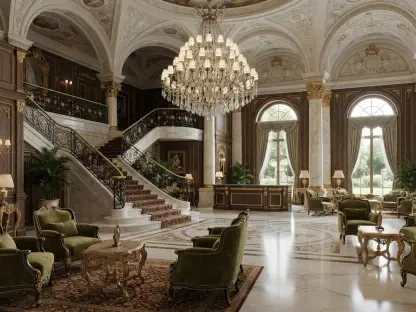
The modernization of a 19th-century estate like Inverlochy Castle requires a philosophy of stewardship rather than just renovation. When dealing with the dramatic backdrop of the Scottish Highlands, every physical adjustment must be handled with extreme discretion to ensure the castle’s five-star prestige remains untouched. We approach these updates by focusing on “refined assurance,” where accessibility features are integrated so seamlessly into the existing fabric of the property that they feel like a natural part of the design. For example, instead of overt signage or clinical modifications, the focus is on precision and intuitive service that anticipates a guest’s needs before they have to ask. By preserving the character of the property while subtly enhancing the layout, we ensure the immersive guest experience remains consistently exceptional for every visitor.
Management philosophies often emphasize protecting the individuality of a property while enhancing performance. How do you integrate accessibility into the broader discipline of guest care, and what specific training methods help your team treat inclusive service as a natural extension of luxury hospitality?
At the heart of the ICMI philosophy is the drive to enhance performance while protecting the individuality of the property and the integrity of the people who deliver the service. We don’t view accessibility as a standalone checklist or a separate initiative; instead, it is treated as an essential part of the broader discipline of understanding our guests. Our training focuses on responding with care and precision, teaching staff that inclusive hospitality is simply an extension of the high-level service they already provide. By framing accessibility as a way to allow more people to experience the castle with confidence, the team learns to deliver support that is both invisible and omnipresent. This approach ensures that the warmth and world-class comfort of the estate are never compromised by the technicalities of the accommodations.
Hospitality operators across the United Kingdom, from rural Yorkshire estates to City of London hotels, are engaging with accessibility in unique ways. How does this shared recognition of inclusive service strengthen long-term reputation, and what metrics do you use to measure the impact of these initiatives on performance?
There is a growing movement across the United Kingdom where consistency lies in intent rather than uniform implementation, allowing each property to maintain its unique character. From the Swinton Estate on the edge of the Yorkshire Dales to the Pan Pacific in the City of London and the Marsham Court Hotel on the south coast, operators are proving that inclusive hospitality strengthens long-term reputation. We measure the success of these initiatives through guest confidence and the sustained excellence of our service delivery metrics. When a guest feels that their needs were met with “refined assurance” and without friction, it reflects directly in our performance and our ability to attract a wider, more diverse demographic. This shared commitment among Accessible Hospitality Alliance members creates a powerful industry standard that prioritizes how a guest feels above all else.
The upcoming forum at Barings in London brings together diverse industry leaders to discuss the evolution of hospitality. What specific benchmarks or collaborative goals are being prioritized for the coming years, and how will these partnerships shape the way guests of all abilities experience world-class comfort?
The forum scheduled for June 9, 2026, at 20 Old Bailey in the City of London, represents a pivotal moment for the industry to align on thoughtful, well-executed hospitality goals. One of the primary benchmarks we are prioritizing is the “direction of travel” for inclusive service, moving away from reactive fixes toward proactive, integrated designs. In partnership with organizations like Thomas Franks, we are looking at how collaborative efforts can create a more cohesive experience across different types of luxury properties. These partnerships allow us to share best practices on how to deliver world-class service that makes guests of all abilities feel genuinely welcome. By convening leading operators in one space, we are establishing a roadmap where the comfort of the guest is the ultimate measure of luxury, ensuring that our industry remains both prestigious and accessible.
What is your forecast for accessible hospitality?
I believe the future of our industry lies in a measured and considered step toward universal design where accessibility is no longer a “feature” but a fundamental standard of luxury. We will see more historic assets follow the lead of the Accessible Hospitality Alliance, realizing that inclusivity actually reinforces their heritage by opening their doors to a global audience. The “refined assurance” we see at properties like Inverlochy Castle will become the benchmark for success, where the highest form of service is defined by how effortlessly a guest can navigate and enjoy a space. Ultimately, my forecast is that the distinction between “standard” and “accessible” hospitality will vanish, leaving only a unified commitment to exceptional care for every individual. This evolution will ensure that the beauty of our world’s most prestigious locations can be shared by everyone with dignity and ease.