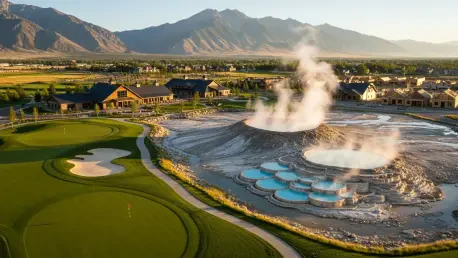

Under a dome of mineral-rich steam in Midway, Utah, a 10,000-year-old crater now anchors the state’s most audacious resort reinvention, and the stakes stretch well beyond hotel walls. The Crater, singular in the Mountain West, offers warm-water diving and soaking that feel more like a pilgrimage than a pastime.
That rarity reframes a bigger question: can a geothermal anchor, paired with modern amenities, outshine ski-famous Park City and national-name brands? Homestead’s bet is bolder than a marketing pivot; it is a property in motion, with upgrades rolling from 2026 to 2027 to reset expectations.
Why This Story Matters: Context for Utah and Investors
Utah’s visitor numbers have surged on the back of outdoor access and airport connectivity, but seasonality still punishes margins. Resorts that solve for year-round wellness, sport, and social energy win steadier occupancy and higher spend.
Davidson’s expanding Mountain West footprint—Alta’s Snowpine Lodge and Salt Lake City’s Asher Adams—adds operational muscle and local insight. Ownership frames the ethos as stewardship of a 140-year legacy, signaling that heritage is strategy, not décor.
The Property: Assets, Programming, and Position
Across 190 acres, Homestead operates 123 keys today with 85 residences in development, layering six pools, outdoor pickleball, and storied dining spaces like the original Milk House and the Virginia House Sunroom. The proposition is breadth with character, not bulk amenities.
Programming does the heavy lift: Troon-managed championship golf with an indoor simulator, The Spa at Homestead, and 17,600 square feet at The Barn & Carriage House for indoor–outdoor events. New F&B—Simon’s Tavern and the open-air 1886 Grill—aims to root taste in place.
Signals and Insight: Voices and Trendlines
Company statements emphasized operational excellence and value creation, while ownership centered on honoring history without freezing it in amber. Industry analysts broadly point to wellness and sport as the new stabilizers that smooth shoulder seasons.
Regional expertise matters in labor pipelines, vendor networks, and demand rhythms. Moreover, case studies show unique natural assets routinely beat generic amenity arms races, a lesson Davidson leveraged at Snowpine with terrain-forward experiences.
Playbook to Watch: Practical Steps and Strategies
Homestead’s scorecard hinges on asset uniqueness (The Crater and historic venues), balanced year-round programming, flexible group flow, and F&B concepts that reinforce identity. Clear KPIs tied to Davidson’s playbook—guest satisfaction, capture rates, mix shift—keep the story accountable.
Stakeholders have moves to make. Travelers can time stays around phased openings; planners can test The Barn & Carriage House for retreats and weddings; owners can track phasing risk, capex pacing, and early ROI signals from spa, golf, and dining.
The Scoreboard Ahead: Metrics and What Comes Next
Watch RevPAR versus Park City and Heber Valley comps, post-renovation group mix, and the lift from spa, F&B, and activities. Also key: how 85 residences shape a resident–guest ecosystem that lengthens stays and pads ancillary spend.
If the Crater-driven identity, Troon-caliber sport, and heritage-rich F&B held together through the 2026–2027 cadence, Homestead’s rise looked less like a rebrand and more like a reset of Utah’s resort hierarchy.