
The quiet rustle of a forest canopy and the rhythmic pulse of a nearby river now hold more value for the elite traveler than the choreographed service of a traditional five-star metropolitan hotel. Travelers no longer equate luxury with excessive consumption or ostentatious displays of wealth; instead, they seek out properties that demonstrate a profound respect for the natural world while maintaining uncompromising standards of comfort. This fundamental shift has birthed a new generation of eco-lodges that blend high-end hospitality with regenerative environmental practices, proving that the two can exist in perfect harmony. In the current landscape of 2026, the discerning voyager prioritizes the story behind their stay, valuing the preservation of a remote ecosystem as much as the quality of the linens. As global awareness regarding climate impact deepens, these sophisticated retreats serve as laboratories for sustainable living, offering guests a glimpse into a future where travel nourishes both the soul and the earth itself.
Architectural Harmony: The Integration of Localized Design
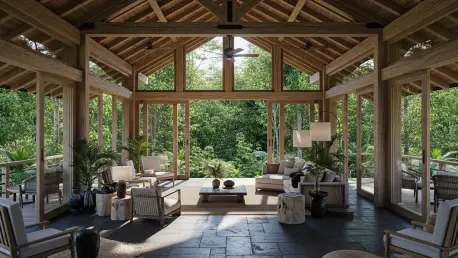
The evolution of sustainable hospitality is most visible in the physical structures that house modern travelers, where the goal is to disappear into the landscape rather than dominate it. Architects are increasingly employing biophilic design principles that prioritize the use of site-specific materials such as rammed earth, volcanic stone, and reclaimed timber from the surrounding region. These choices are not merely aesthetic; they provide essential thermal mass that naturally regulates indoor temperatures, reducing the reliance on energy-intensive air conditioning systems. By mirroring the contours of mountain ridges or nesting villas within the dense undergrowth of tropical jungles, these properties maintain the visual integrity of the horizon. This approach ensures that the human presence remains a quiet addition to the environment. When building materials are sourced within a thirty-mile radius, the carbon footprint associated with construction drops dramatically, grounding the luxury lodge in its specific geographical context.
Beyond the primary structure, localized design extends into the interior finishes, where traditional craftsmanship is celebrated as the ultimate form of exclusivity. Master weavers, stone carvers, and woodworkers from nearby villages are often commissioned to create bespoke furniture and art, ensuring that the wealth generated by the lodge stays within the local economy. This method of construction creates a living museum of regional culture, allowing guests to interact with the history of the land through the textures of their surroundings. Furthermore, the use of indigenous building techniques often incorporates natural ventilation pathways and solar orientation that modern engineering is only now beginning to fully replicate. The result is a structure that breathes with the environment, offering a level of comfort that feels organic and effortless. By rejecting the “cookie-cutter” approach of international hotel chains, these eco-lodges provide a rare architectural sincerity that resonates with travelers.
Innovative Resource Management: The Sophistication of Off-Grid Living
Achieving a zero-emission footprint while providing high-end amenities requires a sophisticated technological infrastructure that operates silently behind the scenes. Many of the world’s leading eco-lodges now utilize advanced microgrid systems powered by bifacial solar panels and long-duration battery storage to provide consistent electricity in the most remote corners of the globe. This transition to renewable energy is often paired with a conscious design of the guest experience, such as “dark sky” policies that limit artificial lighting at night to protect local wildlife and offer unparalleled stargazing. In these settings, the absence of humming generators and the glow of traditional city lights is transformed into a luxury feature, providing a meditative atmosphere that encourages deep relaxation. These systems are monitored by smart building management software that optimizes energy distribution based on occupancy and weather patterns, ensuring that the property remains self-sufficient.
Water management represents another critical frontier in the quest for total sustainability, particularly in arid climates or sensitive coastal regions. High-end lodges are implementing closed-loop greywater systems that treat and reuse every drop of water on-site for irrigation and landscape restoration projects. In some mountainous terrains, micro-hydroelectric turbines installed in small streams generate a constant supply of power without damming or disrupting the natural flow of the water. Furthermore, the elimination of single-use plastics and the implementation of sophisticated on-site composting facilities mean that even the most isolated retreats can maintain a strict zero-waste-to-landfill policy. These circular resource systems prove that independence from municipal infrastructure is not a limitation but an opportunity for greater resilience and environmental stewardship. When a guest realizes that their morning shower was heated by the sun, the luxury experience becomes a demonstration of responsibility.
Community Engagement: Social Sustainability as the New Standard
A truly modern eco-lodge understands that the health of the surrounding wilderness is inextricably linked to the prosperity of the human communities that reside there. Social sustainability has moved to the forefront of the luxury sector, with properties establishing deep-rooted partnerships with local residents to ensure mutual growth. For example, several premier lodges in Africa and Southeast Asia have pioneered programs that transition former poachers or illegal loggers into highly skilled conservation rangers and wildlife guides. By providing stable, high-paying jobs that leverage their intrinsic knowledge of the terrain, these resorts turn potential threats to the environment into its most passionate defenders. This model creates a virtuous cycle where the success of the tourism venture directly funds education, healthcare, and infrastructure for the village. Guests are often invited to participate in these community-led initiatives, providing a level of engagement that goes far beyond a typical tour.
The shift toward “intentional immersion” ensures that travelers are not merely passive observers of a beautiful landscape but active participants in its preservation. Curated experiences, such as assisting marine biologists with coral reef restoration or joining foresters in reforestation efforts, provide a sense of purpose that traditional luxury vacations often lack. These activities are designed to be educational and transformative, leaving the guest with a nuanced understanding of the delicate balance required to maintain biodiversity. In the quiet moments between these excursions, the luxury is found in the stillness—the sound of the wind through the grass or the distant call of a rare bird—undisturbed by the noise of modern life. This focus on sensory authenticity allows travelers to reconnect with their own nature while supporting the protection of the world around them. By prioritizing these meaningful exchanges, eco-lodges are redefining what it means to be a “well-traveled” individual today.
Ethical Evolution: Strategic Steps for Sustainable Hospitality
The refinement of the travel industry has moved toward a model where ethical considerations are as vital as the aesthetic appeal of a destination. Luxury is now measured by the rarity of access to pristine environments and the peace of mind that comes from knowing one’s presence is not causing harm. High-touch hospitality has evolved to include “invisible service,” where the needs of the guest are met with incredible precision while the ecological footprint remains nearly non-existent. This requires a level of operational excellence that exceeds the capabilities of standard hotels, as it involves balancing complex environmental data with the high expectations of a demanding clientele. From the organic, farm-to-table meals grown in on-site permaculture gardens to the chemical-free cleaning protocols used in the guest suites, every detail is scrutinized for its impact. This holistic approach ensures that the luxury experience is not a separate entity from the environment but a celebration of it.
The transition toward these regenerative models suggested that the future of travel belonged to those who embraced radical transparency and environmental integrity. Industry leaders recognized that maintaining the status quo was no longer viable and took decisive action to integrate sophisticated technology with indigenous wisdom. This movement established that true exclusivity was found in the protection of the rare and the remote, rather than in the accumulation of material objects. For the traveler, the next steps involved seeking out properties with verifiable third-party sustainability certifications and prioritizing stays that demonstrated a clear commitment to local rewilding. Developers were encouraged to adopt modular construction techniques and passive cooling strategies to minimize site disturbance from the outset. By viewing every guest stay as an opportunity for ecosystem restoration, the hospitality sector successfully moved beyond the concept of “doing no harm” and into the realm of active healing.