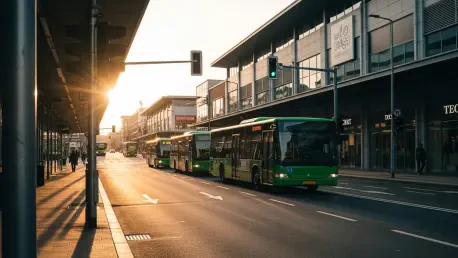

The shifting landscape of urban transportation in Nottinghamshire has reached a critical juncture where traditional transit models no longer align with the evolving habits of a post-pandemic population. Nottingham City Transport is currently implementing a comprehensive transformation of its bus network across West Bridgford and Rushcliffe, a project meticulously designed to modernize the existing Green line services starting this June. This initiative addresses the fundamental changes in how residents move through the region, moving away from outdated schedules toward a system that reflects contemporary travel patterns. By refining route paths and introducing new service links, the municipal operator seeks to establish a more dependable and direct network that serves the local community with greater efficiency. The strategy prioritizes the creation of a resilient infrastructure capable of withstanding external pressures while providing a seamless experience for the thousands of daily commuters who rely on these vital public links.
Economic Landscape and Strategic Network Objectives
A significant catalyst for this network overhaul is the sharp decline in bus patronage, with data indicating that approximately ten percent of former passengers have transitioned to alternative transportation modes since the start of the decade. The widespread adoption of remote work and the sustained growth of digital retail platforms have permanently altered the volume of commuters traveling into the city center for employment or leisure activities. This structural shift in behavior has rendered some previous routes underutilized, necessitating a pragmatic reassessment of how resources are allocated across the broader transit map. Furthermore, ongoing road construction projects have frequently disrupted service schedules, contributing to a sense of unreliability that has further discouraged potential riders. The recent increase in bus fares at the beginning of the year adds another layer of complexity, placing additional pressure on the company to demonstrate the tangible value and efficiency of its public transportation offerings.
To address these multifaceted challenges, strategic objectives have been defined centered on long-term viability and operational excellence rather than just maintaining broad geographic coverage. The primary focus of the restructuring involves enhancing punctuality by simplifying transit paths that have historically been vulnerable to significant delays caused by urban congestion and infrastructure repairs. This move is not merely a reduction of service but a realignment intended to satisfy long-standing community requests that were previously overlooked by the existing route architecture. For instance, the demand for a direct connection between the residential areas of Ruddington and the commercial hub of the West Bridgford shopping district has finally been prioritized. By synchronizing service frequencies with current demand levels, the company aims to foster a sustainable model that emphasizes reliability and speed, ensuring that the network remains a competitive choice for residents who might otherwise choose private vehicles.
Systemic Route Restructuring: Enhancing Regional Connectivity
One of the most transformative elements of the redesign involves the dissolution of the Green 8 and 9 circular services in favor of two distinct, linear routes that offer greater clarity for passengers. The newly configured Green 8 will maintain a streamlined path through West Bridgford and Musters Road, reducing the confusion often associated with circular loops and providing a more direct commute for local residents. Simultaneously, the Green 9 will undergo a significant extension to serve the communities of Ruddington and Clifton, effectively absorbing the territory formerly covered by the Navy 3 service. This specific modification directly addresses local feedback by providing a much-needed link to Central Avenue, with departures scheduled every thirty minutes during the standard work week. This shift toward linear routing is expected to minimize the ripple effects of traffic delays, as drivers will no longer be trapped in the continuous loops that once compromised the entire schedule during peak hours.
The pursuit of operational reliability led to the decision to scale back the Green 11 to its original footprint, focusing on the City, the Meadows, and Lady Bay. By “right-sizing” the service to these high-traffic neighborhoods, the operator ensures that the schedule remains predictable for the dense population of daily commuters who depend on this corridor for access to essential services. To ensure that no community is left behind, the Green 12 is being launched as a dedicated service to cover the regions previously served by the extended Green 11. This brand-new route will establish a direct connection between Tollerton, Cotgrave, and the Cropwells, linking these growing villages directly to the commercial center of West Bridgford. This service also maintains essential Sunday coverage for these outlying areas, demonstrating a commitment to providing high-frequency transit where the demand is most concentrated, while decoupling village services from the core inner-city routes.
Following the implementation of these changes, the success of the overhaul was measured by a significant stabilization in ridership and a marked improvement in punctuality across the West Bridgford corridors. Transport authorities recognized that the transition to linear routing and the introduction of the Green 12 were essential steps in adapting to the economic shifts that defined the early part of this decade. Actionable next steps included the further optimization of traffic signaling to prioritize bus movements at key intersections and the expansion of digital real-time tracking for all village services. Future considerations involved exploring the potential for hydrogen-powered vehicles on these streamlined routes to meet local environmental targets. By focusing on direct connectivity and reliable scheduling, the network provided a robust solution to the challenges of modern urban mobility. This strategic shift ensured that public transportation remained a viable and attractive alternative for residents throughout the entire Rushcliffe region.