
The misty peaks of Sapa and the neon-lit corridors of Singapore are no longer just destinations for leisure; they have become the testing grounds for a radical new philosophy in global travel management. As international arrivals surge across the continent, a structural pivot is taking place that replaces the traditional focus on raw visitor numbers with a sophisticated commitment to ecological and social health. This transformation is driven by a collective realization among policy makers that the natural and cultural assets which fuel the economy are finite and increasingly vulnerable to the pressures of mass tourism. From the sprawling archipelagos of the south to the high-tech urban centers of the north, nations are re-evaluating their growth models to ensure that tourism acts as a regenerative force. This new approach does not merely aim to reduce harm but actively seeks to improve the environments it touches, signaling a profound departure from the exploitative practices of previous decades. By prioritizing the long-term integrity of their landscapes, Asian nations are currently redefining what it means to be a global travel leader in a resource-constrained world.
Vietnam and the Strategic Pursuit of Net-Zero Operations
Vietnam has emerged as a regional frontrunner by embedding ambitious net-zero operational goals directly into its national development framework for the period starting in 2026. This is not merely a symbolic gesture but a comprehensive overhaul of the country’s infrastructure, where the government incentivizes the construction of eco-lodges that utilize passive cooling and renewable energy grids. By weaving environmental preservation into the core of its economic planning, the nation has created a blueprint that demonstrates how rapid development can coexist with conservation. This proactive stance has attracted a new demographic of high-spending travelers who are willing to pay a premium for destinations that can prove a minimal carbon footprint. Consequently, the hospitality sector is rapidly moving away from carbon-heavy operations, focusing instead on circular economy principles that reduce waste at the source. This shift ensures that the natural beauty of locations like Ha Long Bay remains protected while providing a stable foundation for steady, high-quality economic growth over the coming decade.
The success of these national initiatives is heavily dependent on the active participation of local communities who act as the primary stewards of the land. In rural provinces, the government has facilitated the growth of community-based tourism models that prioritize the well-being of residents over the interests of large-scale international corporations. By keeping travel revenue within these local economies, Vietnam empowers farmers and artisans to maintain their traditional ways of life while offering travelers authentic agricultural stays and workshops. This approach effectively prevents the cultural dilution that often accompanies mass tourism, ensuring that the heritage of ethnic minorities is both respected and celebrated. Furthermore, the integration of advanced waste management systems in these remote areas has mitigated the environmental degradation often seen in rapidly developing regions. This holistic strategy turns every citizen into a stakeholder in the tourism industry’s success, creating a resilient network that can withstand global market fluctuations. As a result, the country is now seen as a primary example of how localized empowerment can drive a national sustainability agenda.
Urban Efficiency and Cultural Integrity in Singapore and Japan
While Vietnam focuses on its sprawling natural landscapes, Singapore serves as a global model for integrating high-density urban living with ecological health. The city-state has implemented some of the world’s most stringent energy-efficient building codes, requiring that new developments incorporate significant green space and carbon-capture technology. This commitment to green infrastructure has transformed the urban experience, proving that a metropolis can be both a global financial hub and a sanctuary for biodiversity. Advanced water recycling plants and solar-integrated transport systems are now standard features of the city’s tourism offering, appealing to tech-savvy travelers who value efficiency and environmental responsibility. Singapore’s ability to maintain high visitor satisfaction while strictly managing its resource consumption provides vital lessons for other crowded Asian hubs. The integration of data-driven management tools allows for real-time monitoring of pedestrian flow and energy usage, ensuring that the city remains liveable for residents and visitors alike.
Japan complements this urban innovation by utilizing its deep-rooted cultural heritage to drive environmental protection across its diverse prefectures. The country has successfully leveraged its traditional Satoyama landscapes—areas where humans and nature coexist in a balanced ecosystem—to promote a form of tourism that supports rural revitalization. By encouraging visitors to explore historical sites and participate in traditional farming techniques, Japan ensures that ancient customs remain functional and economically viable despite the influx of international tourists. This model of cultural sustainability prevents the abandonment of rural villages and keeps the nation’s unique history alive in a way that feels organic rather than performative. Moreover, the Japanese hospitality sector has long embraced the concept of omotenashi, which now includes a commitment to zero-waste practices and the use of locally sourced materials in traditional inns. This blend of cultural pride and modern environmental science creates a travel experience that is deeply meaningful and low-impact, setting a high standard for cultural preservation.
Community Empowerment and Habitat Protection in Southeast Asia
Southeast Asia’s varied geography has led to specialized preservation strategies, such as the focus in Malaysia on protecting its ancient rainforests through eco-certified lodging. These initiatives are designed to ensure that the economic benefits of travel reach the indigenous communities who live near biodiversity hotspots, providing them with a viable alternative to logging or mining. By granting these communities a central role in the tourism value chain, the government has created a powerful incentive for forest conservation that transcends traditional regulatory measures. Travelers who visit these regions are often required to engage in educational programs that highlight the importance of protecting endangered species like the orangutan. This focus on education turns every visitor into an advocate for the rainforest, creating a global network of support for Malaysia’s environmental goals. The use of low-impact construction techniques in these sensitive areas ensures that the presence of tourists does not disrupt the delicate balance of the forest floor, maintaining the integrity of the ecosystem for future generations.
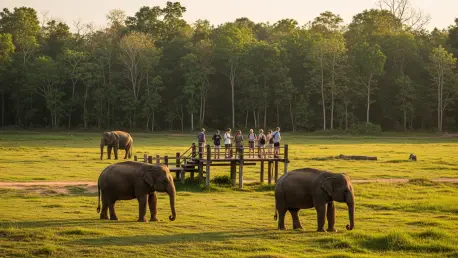
In Thailand, the Sufficiency Economy Philosophy has been adapted to the tourism sector to encourage a balanced approach to growth that prioritizes animal welfare and habitat health. This philosophy moves away from the pursuit of sheer visitor volume, focusing instead on creating high-value experiences that benefit both the traveler and the local environment. National parks have been transformed into sanctuaries where wildlife can thrive without the constant intrusion of mass crowds, thanks to strict daily visitor caps and mandatory guided tours. This shift has been particularly visible in the management of elephant sanctuaries, which have transitioned from entertainment-based models to observation-led conservation centers. By prioritizing the needs of the animals over the demands of the tourists, Thailand has rehabilitated its image as a destination for ethical travel. These measures represent a broader regional trend toward recognizing that the health of the natural world is the most valuable asset any nation possesses. Consequently, the industry is seeing a rise in repeat visitors who appreciate the quality and integrity of these managed environments.
Marine Conservation and the High-Value Island Model
Maritime nations like Indonesia face the unique challenge of protecting fragile coral reefs and island ecosystems from the mounting pressures of international travel. To address this, the Indonesian government has shifted its focus toward conservation-led tours that educate visitors on the extreme fragility of marine life. In areas like Raja Ampat, strict entry permits and mooring fees are used to fund reef restoration projects and coastal patrols, ensuring that the very attractions tourists come to see are adequately maintained. This model of high-value, low-impact tourism targets a smaller number of visitors who are willing to contribute more to the local economy and environmental protection efforts. By limiting the number of divers and snorkelers allowed on the reefs, the nation has seen a significant recovery in fish populations and coral health in just a few years. This approach demonstrates that a well-regulated tourism sector can be a powerful tool for marine conservation rather than a threat to it. The success of these programs has encouraged other island nations to adopt similar fee-based conservation models.
The Philippines has implemented similarly rigorous regulation systems in iconic destinations like Boracay to prevent the return of the environmental degradation seen in the past. These systems include mandatory sewage treatment connections for all hotels and a total ban on single-use plastics across many island resorts. By enforcing these rules with significant penalties, the government has successfully cleaned up its coastal waters and restored the white sands that draw millions of visitors. This shift toward a more regulated model has also involved diversifying the tourism offering to include inland activities, which reduces the physical pressure on the shorelines. This strategy of spatial distribution ensures that no single ecosystem is overwhelmed by the presence of tourists, allowing for natural regeneration to occur. The transformation of Boracay from a case study in over-tourism to a model of sustainable management has become a point of national pride. It serves as a reminder that even the most damaged environments can be restored through decisive policy action and a commitment to long-term sustainability over short-term financial gain.
Traveler Psychology and the Future of Economic Viability
This industry-wide transformation is largely driven by a significant change in consumer behavior, with the vast majority of tourists now prioritizing sustainability during the planning phase. Modern travelers are moving away from traditional, isolated luxury, seeking instead the authenticity of local food, meaningful cultural exchange, and a lower carbon footprint. This shift has turned environmental transparency into a major competitive advantage for destinations that can prove their green credentials through third-party certifications. In response, travel platforms and hotel groups are increasingly providing detailed information about their water usage, energy sources, and community engagement scores. This level of accountability was once considered a niche requirement but has now become a standard expectation for the global middle class. Destinations that fail to provide this information risk being excluded from the itineraries of the world’s most lucrative traveler segments. The demand for ethical travel is not a passing trend but a permanent shift in the psychology of the global consumer, who now views travel as an extension of their personal values.
The shift toward a sustainable framework proved to be the most critical economic decision of the decade, as it insulated the market against the volatility of climate-related disruptions. Moving forward, the industry must prioritize the implementation of universal carbon-accounting standards that allow travelers to see the real-time impact of their choices. Governments should also consider tax incentives for hospitality providers that achieve platinum-level green certifications, effectively lowering the barrier to entry for smaller operators. Investing in localized vocational training for sustainable management will ensure that the workforce is prepared to maintain these new standards without relying on external consultants. Ultimately, the success of the Asian tourism sector will depend on its ability to remain transparent and adaptable to the evolving expectations of a global audience that now demands accountability. By treating conservation as a capital investment rather than a cost, the region is securing a future where travel enriches both the visitor and the host. The lessons learned during this period of transition provided a necessary foundation for a more resilient and ethically grounded global industry.