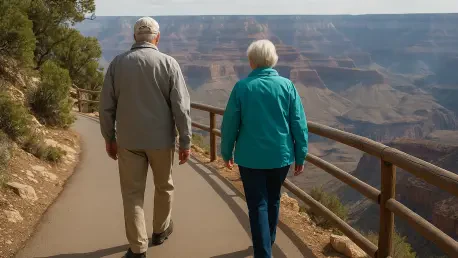

A significant shift in park management has elevated the scenic drive from a simple transit corridor to a curated experience that allows seniors to hike with their eyes rather than their feet. The American National Park System, traditionally celebrated for its rugged peaks and demanding backcountry expeditions, is undergoing a profound transformation to accommodate the needs of an aging population. This evolution is not merely a response to changing demographics but a reimagining of what it means to experience the wilderness. For decades, the narrative of the national parks was one of physical conquest, yet today, the focus is shifting toward universal design and seamless integration. By implementing sophisticated infrastructure projects, the National Park Service is ensuring that the majesty of the Grand Canyon or the tranquility of the Olympic rainforest remains accessible to those who may face mobility challenges. This comprehensive approach recognizes that the desire for natural connection does not diminish with age; instead, it evolves into a preference for stability, safety, and curated perspectives that emphasize visual splendor over physical exertion. Through the expansion of ADA-compliant pathways and the integration of diverse transit options, the wilderness has become a shared space that honors the physical limitations of the traveler while expanding their visual and emotional horizons.
The Architecture of Accessibility: Engineering Inclusive Nature
Central to this transformation is the strategic move away from verticality, which often serves as a primary barrier for older travelers. In many iconic locations, the traditional goal was to reach the valley floor or summit a peak, but contemporary management now prioritizes rim-based exploration. This philosophy allows visitors to experience the full scale of a landscape from elevated, stable platforms without the risks associated with steep descents or grueling climbs. For instance, the development of continuous, level paths along canyon rims or mountain crests provides a panoramic experience that is technically accessible but emotionally resonant. Engineers are now focusing on the use of crushed greenstone and compacted gravel surfaces that offer the tactile feel of a trail while maintaining a firm base for walkers or wheelchairs. These materials are chosen specifically for their durability and high friction, significantly reducing the probability of slips or falls. By maintaining running slopes below a three-and-a-half percent grade, these trails allow for a sustained journey through diverse habitats without causing the rapid fatigue often induced by more traditional, rugged hiking routes.
In conjunction with improved trail surfaces, the modernization of park infrastructure has seen a massive expansion of shuttle networks and digital accessibility tools. High-frequency shuttle systems are now the backbone of mobility in heavily visited areas, effectively shrinking the vast distances between viewpoints. These transit options are designed with low-floor boarding and ample space for mobility aids, ensuring that a visitor can hop between highlights without exhausting their physical energy. Beyond physical transport, the integration of interpretive centers and climate-controlled rest areas at frequent intervals has become a non-negotiable standard. These facilities provide necessary breaks from the elements and essential amenities, making long-duration stays feasible for seniors with varying health requirements. The presence of these hubs creates a safety net, allowing visitors to venture further into the park knowing that a supportive environment is always within reach. This structural reliability transforms the park experience from a high-stakes adventure into a manageable, dignified exploration of America’s natural heritage.
Strategic Mobility: Navigating the Grand Canyon and Acadia
Grand Canyon National Park serves as a premier model for senior-friendly navigation, particularly along its storied South Rim. The Grand Canyon Village functions as a central hub where accessibility is prioritized through a network of paved paths and coordinated transit. The primary attraction is the paved Rim Trail, which connects major landmarks like the Yavapai Museum of Geology and Mather Point, offering a stable and level surface for miles. To further enhance accessibility, the park’s free shuttle system allows seniors to bypass long walking distances between various viewpoints. By utilizing specific routes like the Kaibab or Hermit Road lines, visitors can reach remote overlooks that would otherwise require significant physical exertion. This system allows for a modular experience where seniors can choose to walk short segments of the trail and rely on the shuttle for longer transitions. The result is a highly customizable visit that focuses on the grandeur of the canyon rather than the logistical challenges of traversing its vast perimeter on foot.
On the East Coast, Acadia National Park provides a unique synthesis of maritime scenery and historical infrastructure that specifically benefits older visitors. The hallmark of Acadia’s accessibility is the legacy of the carriage roads, a 45-mile network of motor-free paths built with gentle grades and wide, consistent surfaces. These roads follow the natural contours of the landscape, allowing seniors to enjoy deep forest canopies and lake views without the unpredictability of rocky or root-filled trails. For those who prefer a purely vehicular experience, the Park Loop Road and the drive to the summit of Cadillac Mountain offer high-reward vistas of the Atlantic coastline and inland mountains with minimal walking required. The summit of Cadillac Mountain, in particular, is accessible via a paved road that leads to several accessible viewing platforms, providing a breathtaking perspective on the sunrise and the surrounding archipelago. This combination of historical preservation and modern accessibility ensures that the rugged Maine coast remains an inviting destination for travelers of all mobility levels.
Forest Sanctuaries: Innovative Trails in Shenandoah and Redwoods
Shenandoah National Park is designed around the ridge-top experience, centered on the 105-mile Skyline Drive which serves as the park’s primary artery. This road allows seniors to curate their own pace, stopping at numerous milepost-marked overlooks that provide sweeping views of the Blue Ridge Mountains. A standout feature of the park’s commitment to inclusion is the Limberlost Trail, which is frequently cited as a national model for ADA-accessible forest paths. With a very slight elevation gain and a smooth, crushed greenstone surface, the trail allows seniors to immerse themselves in a high-altitude forest environment safely. The path is wide enough to accommodate wheelchairs and features frequent benches for resting, making it possible for those with limited endurance to complete the full loop. This thoughtful engineering provides a sensory-rich experience, where the sounds of the mountain forest and the scent of the hemlocks are available to everyone, regardless of their physical ability to hike the more strenuous sections of the Appalachian Trail.
In the Pacific Northwest, Redwood National and State Parks address the challenge of uneven forest floors and dense undergrowth through specialized trail design. The Revelation Trail is a prime example of this effort, featuring a level, engineered surface and interpretive elements that engage multiple senses. This trail allows seniors to stand amongst the world’s tallest trees without having to navigate the mud and debris that characterize most old-growth forests. Furthermore, a partnership with the Yurok Tribe has led to the development of the ‘O Rew Redwoods Gateway, which includes a flat, paved section of the California Coastal Trail. This site emphasizes the importance of cultural history alongside natural beauty, providing picnic facilities and educational displays that encourage a slower, more sedentary appreciation of the ancient groves. By focusing on these localized, high-quality accessible segments, the park ensures that the awe-inspiring experience of standing beneath a giant redwood is a universal right rather than a privilege reserved for the most athletic visitors.
Landscape Diversity: Exploring the Smokies and Olympic Coast
Great Smoky Mountains National Park, consistently one of the most visited locations in the system, has developed a robust infrastructure that caters to high volumes of senior travelers. The park’s riverine landscape is showcased through level paths like the Gatlinburg and Oconaluftee River Trails, which provide peaceful walks along the water without the need for mountain climbing. However, the most popular senior-friendly feature is Cades Cove, an 11-mile loop road through a historic valley. This area allows for the observation of black bears, white-tailed deer, and 19th-century cabins from the comfort of a car, with the option to step out for short, manageable strolls at various interpretive stops. The valley’s flat terrain and open vistas make it an ideal location for those who want to experience the pastoral beauty of the Appalachians without the physical strain of ascending the surrounding peaks. The availability of adaptive mobility equipment at major visitor centers further reinforces the park’s commitment to making its diverse ecosystems reachable for all.
Olympic National Park in Washington is a land of extreme environments, yet it offers micro-experiences that capture the essence of the Pacific Northwest for those with limited mobility. The Hoh Rain Forest Mini-Trail is a notable success, providing a short, gravel loop with almost no elevation change that leads visitors into the heart of the moss-draped forest. This allows seniors to witness the iconic “Hall of Mosses” atmosphere without having to commit to a long, potentially slippery backcountry trek. Similarly, the path to Madison Falls is a fully paved route that leads directly to a 60-foot waterfall with very little physical effort required. These short, high-impact trails provide a significant return on investment, delivering spectacular natural sights within a few hundred feet of a parking area. By creating these accessible pockets within a largely wild and rugged park, Olympic National Park ensures that its unique rainforests and waterfalls remain a vital part of the senior travel itinerary.
Proven Success Strategies: Navigating the Modern Park System
Travelers who successfully navigated the national park system during this period of expansion prioritized several key logistical strategies to maximize their enjoyment. One of the most effective solutions involved the use of real-time digital accessibility maps, which allowed visitors to identify the least congested accessible trails and verify the status of shuttle services before arriving at the park. Managers at various locations reported that seniors who utilized these tools felt more confident in their ability to manage their daily energy levels. Furthermore, the selection of lightweight, carbon-fiber trekking poles became a standard practice, providing essential stability on gravel surfaces that might otherwise feel insecure to those with balance concerns. By timing their visits to coincide with the shoulder seasons, many travelers also avoided the high-temperature extremes and dense crowds that often make accessibility features more difficult to navigate. This proactive approach to planning transformed the national park visit from a series of physical challenges into a well-coordinated cultural and natural immersion.
The implementation of these diverse accessibility features ultimately provided a sustainable roadmap for global conservation and recreation efforts. Historical data and recent usage patterns confirmed that the transition toward universal design was the most effective way to preserve the relevance of public lands for all generations. By focusing on high-quality materials and the proximity of essential facilities to trailheads, the National Park Service successfully bridged the gap between wilderness preservation and inclusive recreation. These efforts resulted in a record number of multi-generational groups reporting that they were able to experience the parks together, regardless of the differing physical abilities of family members. Looking back, the integration of high-visibility signage and sensory-rich interpretive displays did more than just assist those with physical needs; it enhanced the cognitive and emotional experience for every visitor. This synthesis of modern engineering and thoughtful management ensured that the American wilderness remained a dignified and reachable resource, cementing its legacy as a lifelong sanctuary for the public.