
Katarina Railko brings a hospitality lens honed in travel, tourism, and live events to one of London’s most distinctive heritage venues. With a new three-year contract at the RAF Museum London and an existing partnership at the Midlands site, she is focused on pairing warm, visitor-centered service with rigorous operations. The conversation traces how she will translate learnings across sites, orchestrate guest flow through six aircraft hangars, and balance family-friendly dining with premium corporate events, all while protecting priceless artifacts. Throughout, she ties success to tangible guest satisfaction, sustainability progress, and a “personal and distinctive” identity that honors the Museum’s spirit.
You’ve secured a three-year contract at the RAF Museum London; what were the decisive factors in winning it, and how will you measure success in year one versus year three? Can you share target KPIs, early milestones, and how they tie to visitor satisfaction?
We won this three-year contract by demonstrating a heritage-first mindset married to events expertise—showing how we protect the story of flight while elevating the café and event experience. In year one, success is about strong foundations: stabilized service times, consistently warm greetings, and clean handoffs between the six hangars and Hendon Kitchen so guests feel guided, not herded. By year three, we expect deeper community ties and repeat corporate bookings, proving we’re indispensable to London’s heritage and events ecosystem. Our KPIs sequence from experience to economics: dwell time that grows in step with satisfaction commentary, smooth queuing during peak flows, and corporate conversion from site visits to confirmed dates. We’ll link every milestone to visitor feedback—from family comfort in the new play space to the emotional resonance of dining under an Avro Lancaster.
Already partnering at the Midlands site, what operational learnings are you porting to London, and what will you deliberately do differently here? Can you describe a specific process, training module, or menu approach that changed based on Midlands insights?
At the Midlands site, we learned that heritage guests want context with their coffee; briefing cards that connect menu items to aviation stories spark conversation and sales, so we’ll carry that into London. We’re also bringing a cadence of pre-opening “flight checks”: five-minute huddles where supervisors walk the line, test equipment, and review allergen flags before doors open. What’s different in London is the six-hangar sprawl; we’ll decentralize prep with mini-staging points near hotspots rather than funneling everything through one back-of-house. Menu-wise, Hendon Kitchen will keep hearty British flavors, but we’ll switch to more flexible batch sizes, allowing us to protect freshness while responding to sudden surges tied to hangar programming.
The museum spans six hangars with aircraft from early flight to modern jets; how does that footprint shape guest flow, F&B locations, and staffing patterns? Walk us through peak-time deployment and any data you’ll use to adjust layouts or queues.
Six hangars mean six natural rhythms, so we’ll map staff to each hangar’s dwell-time curve and place mobile point-of-sale during high-interest periods. At peak, we’ll run rolling deployments: floor captains sweep the queuing zones, a roving host team triages families toward the play space, and a beverage-forward kiosk shortens café bottlenecks. We’ll read hourly entry scans, event schedules, and school-group arrivals to shift layouts—adding a second pickup line at Hendon Kitchen or opening a satellite till. After closing, we heat-map movement and adjust queue rails and signage for the next day, keeping flow intuitive from first aircraft to final bite.
Hendon Kitchen focuses on quality British ingredients; how will you source locally at scale, maintain consistency, and keep prices competitive? Share supplier criteria, seasonal menu planning, and how you track flavor, waste, and margin.
We’ll source regionally where it strengthens freshness and story—producers who can meet steady volumes and demonstrate responsible practices. Consistency starts with specs and cookbooks that translate across shifts, then daily tastings so shepherd’s pie today tastes like shepherd’s pie three months from now. Seasonally, we’ll rotate a compact set of British staples and add short-run plates that celebrate peak crops, protecting value without drifting from identity. We’ll log flavor scores in pre-service tastings, track waste by item and daypart, and reconcile margins weekly, using those reads to right-size batches and refine portions.
A new indoor, airfield-themed play space targets families; how will you tailor menus, service speed, and seating for parents with kids? What safety, allergen, and crowd management protocols will you implement during school holidays?
For families, speed is mercy, so we’ll offer pre-boxed kids’ bundles, tray-friendly sides, and quick-pour drinks that move in under a few minutes. Seating will cluster near sightlines into the play space with pram parking and spill-friendly surfaces, so parents can relax without losing track of little aviators. Safety and allergens are non-negotiable: prominent labeling, color-coded prep tools, and a clear escalation path to a supervisor when a complex request arrives. During school holidays, we’ll add queue marshals, widen pickup lanes, and open a satellite snack point to diffuse pressure, while floor walkers keep aisles clear and energy calm.
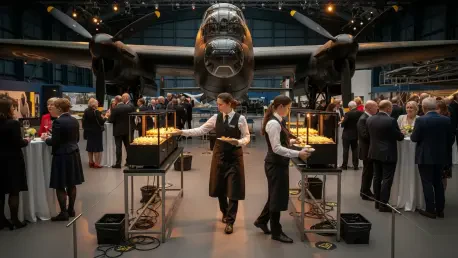
Dining beneath an Avro Lancaster or hosting receptions by a Spitfire is memorable; how do you protect artifacts while delivering premium hospitality? Detail risk controls, floor plans, equipment choices, and incident response drills you’ll require from teams and partners.
We start with artifact-first floor plans—setbacks around aircraft, no open flames near sensitive zones, and low-profile service routes that shield wings and fuselages. Equipment will be electric and enclosed where possible, with drip trays, cable ramps, and non-marking tires on all trolleys. We’ll brief partners on “museum-safe” behaviors: capped beverages near exhibits, guarded glassware, and dedicated spotters when trays pass close to displays. Before every event, we run incident drills—spill containment, rapid shield placement, and artifact notification chains—so that elegance never compromises preservation.
For corporate events, how will you position pricing, packages, and AV to win midweek business without cannibalizing public access? Share your revenue mix targets, lead times, and how you’ll convert site visits into confirmed bookings.
We’ll lean into midweek evenings with clear packages—receptions among icons like the Spitfire, or dinners beneath the Avro Lancaster—paired with thoughtful AV that flatters the space without overwhelming it. Daytime public access remains protected; we time builds to open access windows and sequence strikes to keep galleries guest-ready. Our mix balances daytime café revenue with evening events so both audiences feel prioritized across the three-year arc. Conversion hinges on sensory site visits: taste the canapés in situ, hear the acoustics, then leave with a same-day proposal and a simple path to contract.
In a heritage setting, guest experience must feel warm and welcoming yet operationally rigorous; what training standards, mystery shopper tools, and feedback loops will you use? Can you give examples of service recovery playbooks and coaching timelines?
Training blends story and skill—every colleague learns the narrative of the six hangars and practices the greetings and farewells that make service feel personal. We’ll use mystery shoppers tuned to heritage nuance and review results in weekly huddles, closing the loop with micro-coaching within days. For recovery, we empower on-the-spot fixes: remake, replace, or refund paired with a sincere apology and a follow-up check within the visit. If we miss the moment, a next-day note and invite back seals the learning; supervisors coach within 48 hours, then re-observe to confirm the standard holds.
Sustainability often matters in museum venues; what concrete steps will you take on food waste, packaging, and energy use? Please include metrics you’ll track, supplier expectations, and how you’ll communicate results to visitors and corporate clients.
We’ll tackle waste upstream with tighter forecasting and mid-batch cooking, then measure plate and prep waste by menu line to guide tweaks. Packaging will favor reusables and recyclable formats that suit a museum setting without cluttering sightlines. On energy, we’ll schedule equipment start-up to match footfall and prioritize efficient, electric kit suited to sensitive hangar environments. We’ll share progress simply—menu boards noting waste reductions, client briefings with monthly snapshots—so visitors and partners can see impact alongside aircraft that once redefined efficiency.
Crowd surges can hit during special exhibitions or air shows; how will you forecast demand, flex menus, and redeploy staff hour-by-hour? Describe your data sources, threshold triggers, and the escalation path when performance dips.
We forecast using ticketing patterns, school calendars, and event timetables, then set staffing plans that can swing resources across the six hangars. Menus flex to surge items with fast throughput—handhelds and pre-prepped favorites—while slower dishes step back. Thresholds are practical: when queue time or table turn stretches, we add a pickup lane, dispatch runners, or open a satellite till. If dips persist, a duty manager triggers an escalation huddle to re-cut roles, pause non-essentials, and reset flow until service is back within target.
Accessibility is critical for diverse audiences; how will you design menus, wayfinding, and seating to serve guests with mobility, sensory, or dietary needs? Share staff training details, labeling standards, and metrics for continuous improvement.
Menus will be clear, high-contrast, and icon-led for dietary needs, supported by staff trained to explain options without jargon. Wayfinding keeps routes wide and readable from multiple heights, while seating zones include quiet corners and movable tables for mobility aids. Training covers respectful assistance—offering, not assuming—and rehearsed routes to priority seating. We’ll track requests we can and can’t meet, then adjust layouts and recipes so the next guest’s path is easier than the last.
How will you integrate digital ordering, pre-booked meals, and event pre-selects without losing the human touch? Walk us through your tech stack, data privacy approach, and how you’ll use analytics to refine offers.
Digital supports the story; QR menus and pre-orders shorten waits so teams can host, not just transact. Pre-selects for events arrive as clear pick lists that sync to production, while floor staff manage greetings and table pacing. Privacy is straightforward—only necessary data, limited access, and timely deletion—so trust stays intact. Analytics inform small, human changes: adding a runner for a known surge, printing extra kids’ boxes when a school group books, or repositioning a mobile till near the busiest hangar.
What partnerships with local producers, aviation communities, or schools will you pursue to root the offer in Northwest London? Can you outline timelines, joint initiatives, and how you’ll measure community impact?
We’ll phase partnerships over the three-year term: early ties with nearby producers, then programs with aviation groups and schools that bring the Museum’s mission to life. Think themed tasting days aligned to exhibitions and simple cooking workshops that link ingredients to flight-era stories. Impact shows up in repeat participation, student feedback, and supplier spotlights that resonate with guests. Each initiative should feel authentically Northwest London—grounded in place and aligned with the aircraft that frame the experience.
How will you keep the offer “personal and distinctive” over three years? Share your innovation cadence, pilot-testing methods, and an example of a concept you’d sunset quickly if metrics disappoint.
We’ll pilot small and often—limited runs tied to seasonal British ingredients, tested at a single station before rolling out. Feedback from guests and teams decides the next move; if sentiment dips or waste creeps up, we adjust or pull the plug. A concept that leans more novelty than nourishment won’t last; in a setting this storied, substance wins. The aim is a living menu and service style that evolve without losing the heartbeat of Hendon Kitchen and the six-hangar journey.
What is your forecast for hospitality and events within heritage and museum venues over the next five years, and how will you position this site to lead in that landscape?
Over the next five years, heritage venues will fuse scholarship with immersion—visitors will want meaningful stories with their meals and events. Sites that protect artifacts while delivering seamless, tech-light convenience will stand out, and unique settings—like dining beneath an Avro Lancaster—will stay magnetic. We’ll lead by proving that warmth and rigor can coexist: honoring the six-hangar narrative, keeping families comfortable, and giving corporate clients confidence that every detail is considered. For readers planning visits or events, expect a welcome that feels personal and distinctive—rooted in British flavor, safeguarded by museum-grade care, and refined across our three-year journey.