
The Dawn of the Post-Tech Era in Live Events
The days of attendees being dazzled by the sheer brightness of an LED wall or the decibel level of a sound system have officially vanished into the archives of the early twenty-first century. As the global events industry maneuvers through the current landscape, a radical transformation has taken root, moving the market away from a fascination with hardware and toward a profound focus on human-centric experiences. This shift marks the beginning of the post-tech era, a period where audio-visual components are no longer viewed as the primary attraction but serve as invisible conduits for engagement, community building, and sophisticated storytelling. The market analysis for the current year indicates that event organizers are now navigating a complex environment defined by digital fatigue and a rising demand for authenticity. In this context, technology is being repositioned as a silent facilitator, designed to enhance the physical presence of participants rather than distracting from it.
The current transition is not merely a change in aesthetic preference but a fundamental shift in the economic value proposition of live gatherings. In the present market, the success of an event is measured by the depth of the connection it fosters among its participants. This evolution is driven by a collective understanding that technical specifications alone cannot justify the time and resource investment required for in-person attendance. Consequently, the industry is seeing a consolidation of resources toward platforms that prioritize the attendee journey above all else. By focusing on the emotional and psychological outcomes of an event, professionals are creating a new standard for excellence that relies on the subtle integration of digital tools into the physical environment, ensuring that the technology remains a supportive element in a much larger narrative.
From Equipment Specs to Emotional Resonance: A Historical Shift
For several decades, the efficacy of an event was quantified by the scale of its technical setup, including the lumens of its projectors, the pixel pitch of its screens, and the complexity of its lighting rigs. This equipment-centric mindset dominated the industry until the global health crises of the early 2020s necessitated a total reliance on digital interfaces. However, as the industry transitioned back to in-person formats, a significant psychological shift occurred within the target audience. People began experiencing profound digital fatigue, becoming increasingly skeptical of screen-mediated interactions and demanding more substantial value from their physical presence. This background is essential for understanding why the threshold for a must-attend event has risen so dramatically in the current market.
Physical events have been reclaimed as sanctuaries for authentic human experiences that digital platforms are fundamentally unable to replicate. The historical emphasis on hardware served a world where access to high-quality digital content was limited, but in the current era of ubiquitous streaming and high-speed connectivity, the novelty of a large screen has worn off. Instead, the focus has moved toward emotional resonance—the ability of an event to leave a lasting impact on the attendee’s perspective or professional network. This historical shift underscores a move from passive consumption to active participation. Organizers have realized that the most powerful tool at their disposal is not the latest piece of hardware, but the ability to create an environment where meaningful human interaction can flourish without the interference of technological barriers.
The Architecture of Modern Immersive Experiences
Invisible Technology and the Priority of Narrative Outcomes
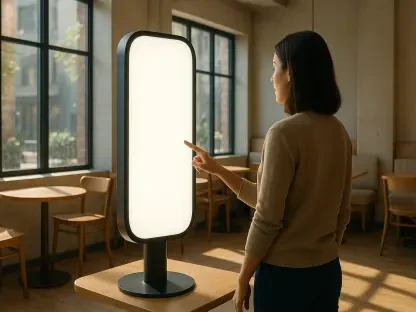
The current methodology for event design prioritizes what the technology does over what the technology is. Clients and attendees are no longer impressed by lists of hardware; they seek seamless outcomes that enhance the overall story being told. Audio-visual elements have become essentially invisible, integrated so naturally into the venue’s architecture that they support the narrative without drawing attention to themselves. While LED technology remains a staple of the industry, its application has evolved from simple flat surfaces to complex, multi-dimensional scenic environments. By utilizing curved and transparent displays, production teams can create depth and dimension that guide the audience through a curated journey, turning hardware into a flexible tool for sophisticated storytelling rather than a static backdrop.
Personalization and the Frictionless Attendee Journey
The one-size-fits-all approach to event programming has been discarded in favor of a gold standard of individualization. Modern events leverage technology to reduce friction, which refers to the small frustrations and logistical hurdles that prevent attendees from fully immersing themselves in the experience. This individualization is achieved through AI-driven accessibility tools, such as real-time multilingual captioning, and the integration of Bring-Your-Own-Device (BYOD) strategies. These strategies allow participants to interact with the event environment using their own smartphones, creating a more comfortable and familiar interface. Furthermore, the use of anonymous interaction tools has become essential for fostering participation, allowing even the most hesitant attendees to engage in Q&A sessions or live polling without the social pressure of a public forum.
Transforming Live Events Into Year-Round Content Engines
The measurement of Return on Investment (ROI) has moved significantly beyond the traditional counting of badge scans or business cards. In the current landscape, a live event is viewed as the epicenter of a 365-day marketing strategy. Modern venues are now expected to function as high-end production studios, fully equipped with podcast suites and broadcast-quality streaming setups that allow for the immediate creation of digital assets. Stage designs are crafted with a content-first mentality, ensuring that every visual angle is optimized for social media capture and global distribution. By treating the live show as a content engine, organizers can extend the lifespan of their event far beyond the physical duration of the show, maintaining a constant and high-quality connection with their global community throughout the year.
Anticipating the Future: Festivalization and AI Implementation
The industry is currently moving toward a concept known as festivalization, which blends professional networking with the immersive and high-energy atmosphere of cultural and music festivals. This trend prioritizes experience-rich environments that keep attendees engaged for longer periods through a variety of sensory inputs and social configurations. However, the path forward is not without significant hurdles. The industry is currently grappling with an AI implementation gap, where the intense hype surrounding artificial intelligence often outpaces its practical and meaningful application in a live setting. Many organizations are still experimenting with how to use AI to provide genuine value rather than just a novel gimmick.
In addition to the technological gaps, operational pressures are mounting due to increasingly compressed build times at major venues. As venues seek to maximize their own revenue by hosting a higher volume of events, production teams are being forced to execute complex setups in shorter windows. This pressure is driving a move toward modular, pre-configured systems that can be deployed rapidly without sacrificing the quality of the experience. The evolution of the market will likely be defined by how well organizations can bridge these operational gaps using smarter design strategies and more efficient logistical planning, ensuring that the push for high-quality experiences does not collapse under the weight of unrealistic production schedules.
Strategic Frameworks for the New Event Landscape
To remain competitive in an experience-driven market, event professionals must adopt several key strategic frameworks. First, sustainability can no longer be treated as an afterthought or a marketing tagline; it must be integrated into the initial design phase. This involves the use of modular graphics, reusable staging assets, and a commitment to long-life materials that reduce the environmental footprint of the event while also providing cost-efficient delivery. Second, organizers must prioritize story over screens, ensuring that every technological investment serves a specific narrative purpose that aligns with the event’s core objectives. If a piece of technology does not directly contribute to the attendee’s understanding or engagement, it is often viewed as a redundant expense in the current fiscal environment.
Finally, it is essential to embrace frictionless technology that empowers the attendee to customize their own experience. This means moving away from mandatory, rigid schedules and toward flexible environments where technology assists the participant in finding the content and people most relevant to them. By focusing on these best practices, businesses can move away from superficial displays of innovation and toward tangible, impactful event delivery. The focus should remain on creating value through smart design rather than sheer volume. Professionals who successfully implement these strategies will find that they can deliver more memorable experiences while simultaneously managing the rising costs of labor and logistics in the modern economy.
Conclusion: Putting Human Connection at the Center of Innovation
The shift from hardware to experience ultimately proved that the true value of the events industry lay in its unique ability to foster community. By the time this transformation reached its peak, it was clear that technology functioned best when it was felt rather than seen. The industry successfully moved beyond the novelty of technical specifications and instead prioritized the psychological and social needs of the attendee. This era demonstrated that while high-definition displays and artificial intelligence provided powerful tools, they were merely the silent architecture supporting a much more vital objective: the facilitation of human interaction. The most successful organizers were those who recognized that their primary role was to provide a compelling reason for people to connect in person, using digital innovation as the bridge to that connection.
Strategic takeaways from this period highlighted the necessity of viewing events as multifaceted content ecosystems rather than isolated occurrences. The transition to a content-first mentality allowed organizations to maintain relevance in a crowded digital marketplace while preserving the sanctity of the physical gathering. In the end, the maturity of the industry was defined by its willingness to let the hardware fade into the background. By focusing on narrative outcomes and frictionless journeys, the sector ensured its long-term viability in a world that craved authenticity. The lesson learned was that the most sophisticated technology is the one that allows humans to forget it is there, enabling them to focus entirely on the ideas and people in front of them.