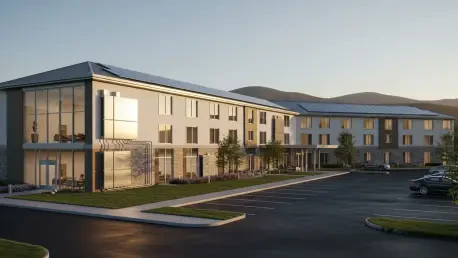

The hospitality sector is currently witnessing a profound transformation where the traditional preference for brand-new developments is being replaced by the strategic expansion of existing, high-performing assets in secondary markets. A prominent example of this shift is the recently completed 47,000-square-foot wing at the DoubleTree by Hilton in South Burlington, Vermont. This project, which added 66 guest rooms and four executive suites, represents more than just a 20% increase in lodging capacity; it serves as a blueprint for how owners like AAM 15 Management navigate the risks of the current economic climate. By partnering with PC Construction and Smith Buckley Architects, the ownership group opted to reinvest in a proven location rather than gambling on entirely new sites. This approach minimizes land acquisition hurdles while maximizing the return on investment through modernized amenities. The four-story expansion reflects a maturing market where scalability and reliability are prioritized over the unpredictable nature of new ground-up ventures in unproven territories.
Sustainable Infrastructure: Beyond Traditional Energy Solutions
Central to the Vermont project is a move away from the fossil-fuel-dependent mechanical systems that have long dominated commercial hospitality architecture across the United States. Instead of relying on traditional boilers or gas-fired furnaces, the new wing utilizes a sophisticated all-electric heating and cooling system powered by room-based heat pump technology. This transition is not merely a symbolic gesture toward environmentalism but a calculated response to the rising costs of energy and the increasing stringency of regional carbon regulations. These heat pumps provide precise climate control for each individual guest room, significantly reducing the energy waste associated with centralized systems. By decoupling the building’s climate control from carbon-intensive fuels, the property establishes a buffer against future price volatility in the energy market. This shift toward electrification represents a broader industry consensus that high-efficiency systems are now essential for long-term operational viability and financial health.
The commitment to sustainable infrastructure extends to the building’s exterior and site management, featuring a 4,250-square-foot rooftop solar array designed to offset a significant portion of the wing’s power consumption. This renewable energy integration is complemented by an advanced gravel wetland stormwater management system, which treats runoff naturally before it enters the local ecosystem. Such systems are becoming standard requirements for developers seeking to mitigate the environmental footprint of large-scale commercial expansions. The inclusion of these technologies demonstrates that green hospitality is no longer an optional luxury but a core component of risk management and resource efficiency. For the operators, the long-term reduction in utility expenditures provides a competitive advantage, allowing them to reinvest savings into guest services rather than overhead. This holistic approach to resource management ensures that the facility remains compliant with evolving environmental standards while appealing to a growing demographic of eco-conscious travelers.
Operational Precision: Navigating the Complexity of Active Sites
Executing a multi-story expansion on an active hotel campus requires a level of logistical sophistication that transcends typical construction management practices. Builders at the South Burlington site had to navigate the intricate challenges of live-site construction, where the primary objective was to maintain a seamless guest experience despite the presence of heavy machinery and large crews. This involved meticulous planning of material deliveries and the implementation of phased construction schedules to minimize noise and dust disturbances. The collaboration between the construction team and hotel management was vital in ensuring that occupancy rates remained stable throughout the development process. Such projects underscore the increasing necessity for specialized contractors who can operate within tight urban footprints without disrupting daily business operations. The ability to manage these complex dynamics is becoming a prerequisite for firms looking to secure high-profile hospitality contracts, as owners are increasingly unwilling to sacrifice current revenue for the sake of future growth.
A defining technical feature of the project is the newly constructed sky bridge, which serves as the physical link between the original hotel structure and the modern four-story wing. Designing and installing this connection required precise engineering to ensure structural integrity while facilitating fluid guest circulation throughout the expanded campus. This bridge does more than provide a passage; it integrates the aesthetics of the legacy building with the sleek, high-efficiency design of the new addition. The integration of such structures necessitates a high degree of architectural coordination to align floor levels, HVAC distribution, and fire safety systems across two different building eras. This technical challenge reflects the broader trend of sophisticated retrofitting, where new construction must be perfectly harmonized with existing infrastructure. For the construction sector, these requirements highlight a shift toward more technical, data-driven builds that prioritize the continuity of the guest journey. Successful execution in this area proves that existing properties can be modernized to meet contemporary standards without losing their original identity.
Future Pathways: Strategic Evolution in Lodging Development
The successful completion of the Vermont expansion demonstrated that the future of hospitality development resides in the intersection of increased capacity and aggressive sustainability targets. Owners who integrated high-efficiency electrification and renewable energy sources into their portfolios early found themselves better positioned to handle the economic shifts of the current decade. The industry moved toward a model where retrofitting and targeted expansion became the preferred methods for scaling operations in a resource-constrained world. Decision-makers learned that investing in all-electric systems and advanced site management was not just about environmental compliance but about securing the long-term value of the asset. For future projects, the emphasis shifted toward selecting partners with proven expertise in live-site logistics and technical integration. This project confirmed that the most resilient properties were those that treated sustainability as a fundamental financial strategy rather than a secondary marketing tool. These developments provided a clear roadmap for stakeholders aiming to balance the demands of modern travelers with the necessity of operational efficiency.
Stakeholders in the lodging sector recognized the need to conduct thorough audits of their existing infrastructure to identify opportunities for electrification and capacity upgrades. The transition away from fossil fuels required a reevaluation of traditional utility partnerships and a move toward localized energy generation, such as the rooftop solar arrays used in South Burlington. Future considerations now involve the integration of smarter building management systems that can optimize energy use across both old and new wings in real-time. Architects and planners began prioritizing flexible designs that allowed for future modular expansions or technological upgrades without requiring extensive demolition. This proactive approach to development ensured that the hospitality industry remained a leader in sustainable urban growth while meeting the ever-evolving expectations of a global audience. By focusing on these high-efficiency retrofits, the industry established a new standard for resilience that prioritized durability and ecological responsibility. This evolution ultimately shifted the focus of hospitality construction from simple square-footage growth to the creation of high-performing, carbon-neutral environments.