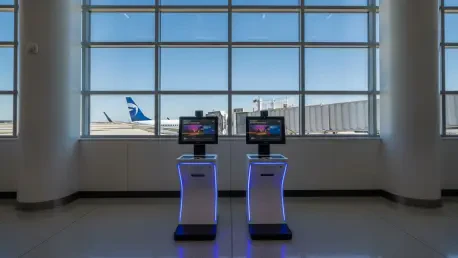

The transition from traditional, paper-reliant gate procedures to a fully digital, automated environment marks a significant milestone in the evolution of modern air travel operations. At Dallas Fort Worth International Airport, the bustling primary hub for American Airlines, the sights and sounds of the boarding process are undergoing a fundamental transformation. Rather than congregating around a crowded podium where agents manually scan every individual pass, passengers are now encountering sleek, electronic gates that handle the heavy lifting of identity and ticket verification. This shift is not merely about replacing paper with screens; it is a calculated effort to reduce the friction that has historically defined the final moments before a flight departs. By integrating advanced sensors and real-time data processing, the airline is addressing the logistical bottlenecks that often lead to delays and traveler anxiety. As these automated systems become a permanent fixture in the terminal landscape, they represent a broader commitment to utilizing technology as a bridge between high-capacity logistics and a more refined, self-service passenger experience.
Enhancing Efficiency Through Modern Infrastructure
Deploying Advanced Hardware at Major Hubs
The physical implementation of this technological leap centers on the deployment of approximately 20 dormakaba Argus Air XS electronic gates, which are currently active within the newly expanded piers of Terminal A and Terminal C. This rollout is particularly noteworthy because it represents the first instance of a major U.S. network carrier implementing such sophisticated automation on a hub-wide scale. These units are far more than simple turnstiles; they are equipped with high-definition, American-branded touchscreens that provide clear, visual instructions to travelers in multiple languages. By placing this hardware in high-traffic zones, the airline is testing the durability and reliability of the system under the most demanding conditions possible. The hardware is designed to integrate directly with the airline’s backend databases, ensuring that every boarding pass scanned is validated against the most current flight manifest in milliseconds. This immediate feedback loop prevents the processing lags that often occur when agents must manually override system errors or deal with malfunctioning handheld scanners.
Furthermore, the introduction of these electronic gates serves as a vital security filter that reinforces the integrity of the sterile area at the airport. By utilizing sophisticated sensors that can detect tailgating—where an unauthorized individual attempts to follow a valid passenger through the gate—the system adds an extra layer of protection that is difficult to maintain consistently with human observation alone. During the preliminary testing phases conducted in late 2025, data indicated that these automated portals significantly reduced the instances of boarding errors and unauthorized access attempts. This level of operational consistency is crucial for a hub as complex as DFW, where hundreds of flights depart daily and thousands of passengers move through the gates in tight windows of time. The standardization of the hardware also means that the aesthetic and functional experience remains uniform across different terminals, creating a sense of predictability that helps to lower the cognitive load on frequent flyers and occasional travelers alike.
Regulating Movement and Safety Protocols
A primary technical objective of the new electronic gate system is the careful regulation of the physical flow of passengers into the jet bridge and onto the aircraft. Traditionally, the boarding process can become chaotic as a sudden surge of passengers creates a secondary bottleneck at the aircraft door, leading to frustration and potential safety hazards in confined spaces. The dormakaba software is programmed to act as a metering device, pacing the intervals between successful scans to ensure that the jet bridge never becomes over-congested. This systematic approach to flow management allows the cabin crew to manage the stowage of carry-on luggage more effectively, as the influx of passengers remains steady rather than sporadic. By smoothing out the “pulse” of the boarding groups, the airline can maintain a calmer environment on the bridge, which is often the most stressful part of the pre-flight experience. This level of control is a significant departure from manual scanning, where the speed is dictated by the agent’s pace rather than the actual capacity of the walkway.
In addition to managing the volume of people, the automated gates are designed to deliver much clearer guidance than traditional overhead announcements, which can often be muffled or drowned out by terminal noise. The integrated touchscreens provide real-time updates on which boarding groups are currently eligible to scan, using high-contrast visuals to direct passengers precisely where they need to stand and how to position their devices. This clarity is essential for reducing the “gate lice” phenomenon, where passengers hover near the podium out of fear of missing their group. When the hardware clearly indicates that a passenger’s group is not yet called, it provides a firm but polite boundary that discourages premature crowding. This behavioral shift, driven by the technology’s clear and consistent messaging, results in a more organized gate area where passengers feel informed and empowered to wait until their specific turn. The result is a departure lounge that feels less like a staging ground for a scramble and more like a professional, managed transit point.
Transforming the Journey for Travelers and Staff
Elevating Customer Service Through Automation
A critical distinction in this automation strategy is that the deployment of electronic gates is intended to supplement, not replace, the human element of the airport experience. By delegating the repetitive and low-value task of scanning barcodes to the dormakaba units, gate agents are liberated from behind the podium, allowing them to engage in more meaningful customer service roles. This strategic reallocation of personnel means that when a traveler encounters a complex issue—such as a missed connection, a seat assignment conflict, or a need for special assistance—there is a staff member available to provide undivided attention. The airline’s leadership has emphasized that this shift is about moving team members “in front” of the counter, where they can proactively identify and assist passengers who may be struggling or confused. This transition from being a “ticket validator” to a “service coordinator” fundamentally changes the dynamic at the gate, fostering a more helpful and less transactional atmosphere for everyone involved.
Moreover, the presence of these automated systems allows for a more personalized level of service for passengers with specific requirements, such as those traveling with young children or those requiring mobility assistance. Because the electronic gates handle the standard flow of the general population, agents can dedicate their time to ensuring that these priority groups are boarded with the care and attention they require. This dual-track approach ensures that while the majority of travelers enjoy a fast, self-service experience, those who need a human touch are not left waiting in a long line of people simply trying to scan their phones. The efficiency gains realized by the automation are effectively “reinvested” into the customer experience, creating a higher standard of care across the board. As the airline continues its expansion through 2026 and 2027, this model of human-tech synergy will become the cornerstone of its operational philosophy, proving that automation can actually lead to a more compassionate and responsive service environment.
Creating a Unified Digital Travel Ecosystem
The rollout of electronic boarding gates at DFW is not an isolated project but rather a foundational element of a much larger, multi-year digital transformation aimed at creating a frictionless journey. These gates are designed to interface seamlessly with emerging technologies such as TSA PreCheck Touchless ID, which uses facial recognition to verify identity without the need for physical documents. By aligning the gate hardware with these biometric initiatives, American Airlines is moving toward a future where a passenger’s digital identity serves as their universal key throughout the airport. From the moment a traveler checks a bag at the curb to the moment they step onto the plane, the goal is to eliminate the need for repeated manual checks. This ecosystem is further supported by AI-driven disruption management tools that can automatically rebook passengers and update their digital boarding passes in real-time, ensuring that the information displayed at the electronic gate is always accurate, even during irregular operations.
Building on this integrated foundation, the airline is also leveraging high-speed connectivity to enhance the traveler’s experience even further. The synchronization between the mobile app, the electronic gate, and the onboard Wi-Fi services creates a continuous loop of communication that keeps the passenger informed at every stage. For example, a traveler might receive a notification on their device that their boarding group is next, proceed through the automated gate with a single tap, and then immediately connect to free inflight Wi-Fi upon reaching their seat. This level of connectivity ensures that the transition between the terminal and the cabin is as smooth as possible, removing the traditional “black holes” of information that often occur during the boarding process. As this technology continues to mature through 2028, it will establish a new industry standard for how airlines manage high-volume hubs, proving that a sophisticated digital ecosystem is the most effective way to meet the evolving expectations of the 21st-century traveler.
The transition toward automated boarding gates at Dallas Fort Worth represents a significant shift in the operational paradigm of the aviation industry, prioritizing both efficiency and human-centric service. By successfully implementing the dormakaba Argus Air XS system at its largest hub, American Airlines has provided a functional blueprint for how technology can mitigate the long-standing frustrations of terminal congestion and manual processing. The data from early deployments suggests that this model effectively balances the need for high-throughput logistics with the desire for a more personalized and less stressful passenger journey. For stakeholders and travelers alike, the takeaway is clear: the future of air travel depends on the intelligent integration of hardware and software to create a predictable, secure, and frictionless environment. Moving forward, the focus will likely shift toward expanding these capabilities to international gateways and further refining the biometric integrations that will eventually make physical boarding passes a thing of the past. Passengers should prepare for a landscape where their digital identity is the primary driver of their movement through the airport, ensuring a more streamlined and professional experience from start to finish.