
The skyline of Dubai serves as more than just a testament to architectural ambition; it now represents the epicenter of a meticulously synchronized urban overhaul that is fundamentally redefining the city’s operational rhythm this July. This watershed moment signals a comprehensive shift toward a proactive, data-driven urban strategy that moves beyond mere climate adaptation to achieve total economic optimization. As the emirate navigates the extreme heat of the Arabian summer, the government has implemented a series of interconnected policies designed to manage the unique pressures of a high-growth environment. This transformation is not merely about surviving the seasonal temperature spikes; it is a calculated effort to optimize mobility, tourism, and labor for long-term resilience. By utilizing advanced analytics and strict regulatory frameworks, the city is evolving into a model of precision, where every sector works in harmony to maintain momentum during a period traditionally marked by a slowdown.
Strengthening the Legal and Social Fabric
Transitioning to Standardized Resident Oversight
A major pillar of the structural overhaul occurring this July is the return to strict immigration discipline, enforced through the final expiration of the Federal Authority for Identity, Citizenship, Customs and Port Security grace period. On July 9, the hard deadline for residents to regularize their legal status arrives, signaling a definitive end to the era of temporary flexibility that characterized the post-disruption years. This policy shift forces a transition from a lenient safety net toward a highly regulated and legally compliant resident population, ensuring that the city’s demographics are accurately mapped and managed. By requiring immediate action from those with expired documentation, the government is reinforcing the rule of law while enhancing its ability to plan for public services and social welfare programs. This move is essential for maintaining the integrity of the national security framework and providing a stable environment for long-term economic investment.
The transition toward standardized oversight reflects a broader maturing of the administrative infrastructure, where digital integration allows for real-time tracking of resident status and compliance. This push for structure is not simply a bureaucratic exercise but a strategic move to ensure that the workforce is legally protected and integrated into the official economic system. Residents who have previously benefited from extensions are now finding that the new regulatory environment leaves no room for ambiguity, necessitating a proactive approach to documentation. As the city matures into a global financial and logistics hub, the reliability of its resident data becomes a critical asset for both local governance and international partnerships. This systemic tightening ensures that the emirate can maintain high standards of living and safety, even as its population continues to grow at an accelerated pace, setting a benchmark for other rapidly expanding metropolitan areas across the globe.
Refining International Travel and Regional Protocols
This pursuit of administrative structure extends directly into international travel protocols, most notably highlighted by the termination of the visa-free agreement with Armenia on July 1. For many expatriates who have long utilized Armenia as a convenient and accessible regional getaway, this shift represents a move toward a more nuanced and nationality-based immigration policy. This change reflects the emirate’s commitment to aligning its travel agreements with broader geopolitical objectives and security requirements that define the current era. By ending the visa-free status, the government is exerting greater control over entry and exit flows, ensuring that every traveler is thoroughly vetted before arrival. This adjustment requires residents and visitors to exercise a higher level of vigilance regarding their travel plans, as the convenience of the past gives way to a more disciplined and structured approach to regional movement and cross-border interactions.
Together with the strict domestic visa deadlines, these international policy changes demand a higher level of documentation and legal compliance from the city’s significant non-national workforce. This evolution mirrors a wider regional trend toward geopolitical maturity, where nations are increasingly prioritizing sovereignty and precise border management over historical precedents of ease. For the expatriate community, these shifts emphasize the importance of maintaining an impeccable legal status, as the margin for administrative error continues to shrink. This environment encourages a more stable and committed resident base, as individuals must now demonstrate a greater degree of planning and adherence to the evolving legal landscape. Ultimately, these measures contribute to a more predictable and secure urban environment, allowing the government to focus its resources on strategic growth and innovation rather than managing the complexities of a largely unregulated population segment.
Innovations in Seasonal Economic Strategy
Countering the Summer Lull with Policy Innovation
To safeguard against the economic stagnation that often accompanies the peak of the Arabian summer, the city has deployed aggressive retail and aviation incentives to maintain commercial vitality. The launch of the Dubai Summer Surprises festival on July 2 serves as the primary engine for domestic spending, paired with exclusive luxury hotel offers from Emirates airline to attract global travelers. By rebranding the city as a premier year-round destination through world-class entertainment and significant price reductions, the emirate is effectively decoupling its retail and hospitality revenue from climate limitations. These strategic triggers are designed to fill the economic void left by resident families who depart for cooler climates, ensuring that malls, hotels, and tourist attractions remain active. This approach transforms the summer heat from a liability into a unique selling point, leveraging indoor infrastructure to provide high-end experiences.
Beyond the retail sector, the “Our Flexible Summer” initiative introduces a progressive shift in workplace culture for the public sector, prioritizing productivity in the face of extreme temperatures. By implementing four-day workweeks and significantly reduced operational hours, the government is prioritizing employee welfare and protecting workers from the physical exhaustion associated with the summer heat. This experiment not only preserves the health of the workforce but also positions the city as a forward-thinking employer that values work-life balance and sustainable labor practices. The successful implementation of these flexible hours provides a roadmap for the private sector, potentially influencing long-term employment standards across the region. By demonstrating that productivity can be maintained through shorter, more focused bursts of activity, the government is challenging traditional notions of labor and creating a more resilient and adaptable work environment.
Integrating Sustainable High-Speed Infrastructure: Etihad Rail
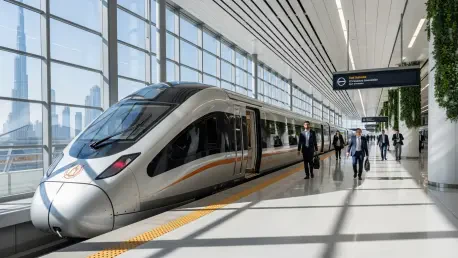
Perhaps the most transformative component of the current urban overhaul is the official launch of the Etihad Rail passenger service, which commenced operations on June 30. This development marks a fundamental departure from the traditional car-dependent culture of the region, introducing a high-speed and sustainable rail network as a cornerstone of domestic mobility. The project stands as a central pillar of the national environmental strategy, aiming to drastically reduce road congestion and lower carbon emissions across all emirates. By providing a reliable and efficient alternative to highway travel, the rail system is reshuffling the way people think about distance and connection within the country. This infrastructure not only facilitates easier commuting between urban centers but also supports the logistics industry by freeing up road capacity for commercial transport. The shift toward rail represents a significant step in the city’s transition toward a greener and more efficient future.
The timing of the rail’s introduction was strategically aligned with the massive school-related travel surge that occurs annually at the beginning of July. While the international airports are currently facing heavy traffic from departing residents, the local road network is experiencing a significant drop in peak-hour congestion due to the lack of school runs and family commutes. This specific window of reduced local traffic provided an ideal environment for the phased rollout of the passenger rail system, allowing for a smooth integration of the new transit mode into the urban landscape. By launching during this seasonal lull, the authorities were able to monitor and refine the service with lower operational pressure before the full return of the population in the coming months. This precision in timing highlights the sophisticated synergy between various government sectors, ensuring that major infrastructure projects enhance urban life without causing initial disruptions to the city’s flow.
Strategic Urban Management and Resilient Growth
The comprehensive changes implemented throughout July proved that a high-growth city could successfully navigate extreme seasonal pressures through the application of precise, data-driven governance. By synchronizing immigration deadlines, labor flexibility, and transportation breakthroughs, the authorities established a new blueprint for urban resilience that moved beyond temporary fixes toward permanent structural optimization. The expiration of legal grace periods and the shift in travel protocols effectively matured the social fabric, ensuring that the resident population remained both documented and disciplined. Meanwhile, the strategic rollout of the Etihad Rail passenger service provided a sustainable alternative to traditional mobility, permanently altering the national logistics landscape. Moving forward, urban planners in other developing hubs should consider similar models of seasonal decoupling and infrastructure timing to maintain economic momentum. Future strategies must continue to prioritize the integration of technology with flexible labor policies to ensure stability.