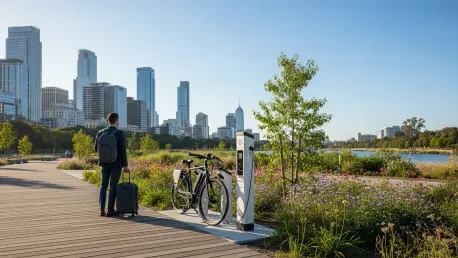

The traditional image of urban exploration is rapidly transforming as major American metropolitan hubs replace high-impact sightseeing with integrated ecological experiences. Travelers are no longer satisfied with concrete jungles; they seek a seamless blend of city convenience and pristine nature. This shift is driven by a growing awareness of carbon footprints and a desire for authentic environmental engagement. In the current landscape, cities are reimagining their relationship with local ecosystems, turning formerly isolated green spaces into central pillars of the tourism economy. By prioritizing low-emission transport and the protection of fragile habitats, municipal planners are proving that dense urban centers can serve as gateways to the wilderness. This evolution reflects a broader trend where the “eco-tourism” label is no longer reserved for remote rainforests but is becoming a standard for the modern American city. This model ensures that visitors can experience deep-forest immersion without ever needing a car or contributing to the degradation of the very sites they came to admire.
Strategic Frameworks for Green Travel
Sustainable Infrastructure and Mobility Systems
Municipalities are adopting a three-pillared approach to facilitate this transition, focusing primarily on transit integration, protected urban landscapes, and rigorous conservation management. The goal is to eliminate the necessity for private vehicles, which have historically been the primary source of emissions in tourist transit. By leveraging “last-mile” transportation options such as expanded light rail networks, electric ferry routes, and zero-emission bus fleets, urban centers are linking their downtown cores directly to nearby wilderness areas. This connectivity allows a visitor to move from a high-rise hotel to a dense forest trailhead in under thirty minutes using only clean energy. Such infrastructure investments are not merely about convenience; they represent a fundamental redesign of the urban experience. These systems prioritize the movement of people over the movement of cars, creating a quieter and more breathable environment that benefits both the temporary visitor and the permanent resident.
Hospitality Evolution and the Eco-Corridor Model
The hospitality sector is undergoing a parallel transformation, moving away from traditional clusters in dense commercial districts toward strategically placed “eco-corridors.” Instead of centering all accommodations in a single high-traffic zone, developers are now positioning hotels and boutique lodgings along existing light rail or trolley lines. This geographic dispersion helps to reduce local congestion and encourages travelers to explore a wider variety of neighborhoods while remaining car-free. These eco-corridors serve as functional arteries that connect residential life, commercial activity, and natural preserves. By integrating hospitality into these transit-oriented zones, cities are making it easier for visitors to maintain a low-impact lifestyle throughout their stay. This model also encourages the redevelopment of older districts, bringing green building standards and sustainable practices to areas that were previously overlooked. The result is a more resilient urban fabric that supports both economic growth and environmental conservation.
Regional Leaders and Management Innovations
Urban Case Studies in Environmental Connectivity
On the West Coast, cities like Portland, Seattle, and San Francisco are currently setting the benchmark for connecting dense urban areas with expansive nature preserves. Portland has successfully utilized its robust cycling culture and extensive light rail system to provide seamless access to the 5,200-acre Forest Park, one of the largest urban forests in the country. Similarly, Seattle’s “Trailhead Direct” service has become a model for other municipalities, linking the city core directly to mountain trails via public transit during the peak hiking season. In the East, Washington, D.C., has earned LEED for Cities Platinum status by utilizing its Metro and bike-share systems to provide low-carbon access to the 1,754-acre Rock Creek Park. Boulder further supports this by prioritizing shared transit to manage its 46,000 acres of open space. These cities have demonstrated that geographical proximity to nature is only the first step; the real success lies in creating infrastructure that makes nature accessible without fossil fuels.
Technological Integration and Strategic Outcomes
The evolution of American urban ecotourism relied heavily on a “managed equilibrium” that leveraged modern technology to maintain ecological integrity. Standardizing the rollout of e-bike and scooter fleets became a requirement for cities seeking to attract environmentally conscious travelers. These micromobility options provided a flexible and low-impact way for visitors to navigate between urban amenities and natural sites. To replicate this success, municipalities prioritized the implementation of real-time digital monitoring to track ecosystem health and visitor impact. The most effective strategy involved the deployment of smart sensors to monitor air quality and noise levels in sensitive habitats, allowing for immediate interventions. Actionable success was achieved when planners treated natural assets as vital components of urban infrastructure rather than separate attractions. By combining strict capacity controls with zero-emission transit, these cities proved that tourism could serve as a sustainable economic force while protecting the environment.