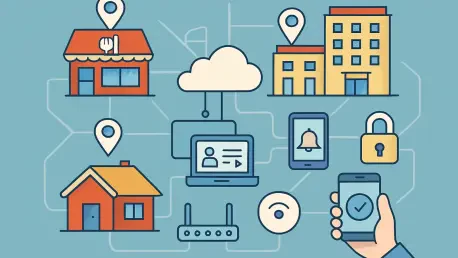

The rapid convergence of high-speed data networking and physical building management has transformed the average hotel into a sophisticated, self-correcting machine that operates with the precision of a modern aerospace vessel. In a landscape where travelers expect instantaneous personalization and owners face escalating labor costs, the deployment of a connected hospitality infrastructure has shifted from a competitive advantage to a fundamental requirement for operational survival. This review analyzes the current state of these systems, examining how integrated hardware and software ecosystems are redefining the guest experience while providing a robust defense against economic volatility.
The Evolution of Integrated Hospitality Systems
The journey toward the contemporary connected ecosystem began as a response to the inherent inefficiencies of fragmented property management. Historically, various departments such as housekeeping, maintenance, and front-desk operations functioned as isolated silos, communicating through manual logs or antiquated radio systems. This lack of transparency often led to delayed service and overlooked maintenance issues, directly impacting the bottom line. As cloud computing and high-bandwidth wireless networks matured, the industry began to adopt a more holistic approach, treating the entire property as a single, data-producing entity rather than a collection of separate rooms.
The transition was accelerated by the increasing technological literacy of the global traveler. Guests who utilize smart home technology daily began to demand similar levels of control and connectivity during their stays. This demand forced a shift from simple, stand-alone digital tools toward comprehensive infrastructures that can manage everything from energy consumption to individual guest preferences in real-time. By moving toward this integrated model, the hospitality sector has aligned itself with broader technological trends in smart city development and industrial automation, signaling a new era of “intelligent” lodging.
Core Components of a Connected Ecosystem
Unified Property Management Frameworks: The Central Brain
At the heart of any successful connected infrastructure lies the Property Management System (PMS), which has evolved from a basic reservation ledger into a comprehensive operational brain. Unlike legacy platforms that require manual data entry and local server maintenance, modern unified frameworks leverage cloud-native architecture to synchronize information across every touchpoint of the property. This centralization allows for a “single pane of glass” view, where managers can monitor occupancy, revenue per available room, and staff performance from a single interface. The primary differentiator here is the move away from vendor-locked software toward open Application Programming Interfaces (APIs), which allow diverse third-party applications to communicate without friction.
The performance of these unified frameworks is measured by their ability to automate complex workflows that previously required significant human intervention. For instance, when a guest checks in via a mobile application, the system automatically updates the HVAC set point, activates the digital room key, and notifies the housekeeping staff that the room is occupied. This level of synchronization reduces the cognitive load on staff and eliminates the potential for human error. In a market where labor remains both scarce and expensive, the capacity for a system to manage these micro-interactions autonomously provides a significant ROI that traditional, disconnected systems simply cannot match.
Internet of Things and Sensor Networks: Real-Time Intelligence
The physical layer of the connected infrastructure is defined by a dense network of Internet of Things (IoT) sensors and smart devices that monitor the property’s health and environment. While early IoT implementations were often gimmicky—such as voice-activated curtains—current technology focuses on high-impact operational metrics. Sophisticated sensors now monitor “vibrational drift” in heavy machinery, such as elevators and commercial chillers, to identify mechanical wear before a failure occurs. This transition to predictive maintenance is a critical shift from the reactive “break-fix” cycles that have historically plagued the industry, reducing equipment downtime by as much as 75 percent.
Furthermore, these sensor networks extend into the guest room, providing a level of environmental control that is both efficient and non-intrusive. Smart thermostats and occupancy sensors work in tandem to adjust temperatures based on whether a guest is present, avoiding the wasted energy of cooling or heating empty spaces. The data generated by these devices is not just used for immediate adjustments; it is aggregated to provide long-term insights into building performance. By interpreting this data, operators can identify specific units that are underperforming compared to the building average, allowing for targeted repairs that extend the lifespan of expensive mechanical assets.
Current Trends in Digital Transformation
The most significant trend currently influencing the trajectory of hospitality technology is the integration of behavioral AI to enhance guest interactions. Rather than relying on static profiles, modern systems analyze real-time data to predict guest needs. For example, if a guest consistently orders room service at a specific time, the system can preemptively offer a curated menu through a mobile interface. This level of anticipatory service mimics the intuition of a high-end concierge but scales it across thousands of rooms, creating a premium experience that was previously impossible at a mid-market price point.
Another emerging shift is the adoption of “decentralized security,” where blockchain or similar encrypted ledger technologies manage guest credentials. This trend addresses the growing concern over data privacy and the security of centralized databases. By distributing access rights and identity verification across a secure network, hotels can provide a seamless mobile entry experience while significantly reducing the risk of large-scale data breaches. This move toward localized, secure data management reflects a broader industry shift toward putting the guest in control of their own digital footprint.
Real-World Applications and Sector Deployment
The deployment of connected infrastructure is most visible in the luxury and upper-upscale segments, where the complexity of operations justifies the initial capital expenditure. In large resort environments, connected systems manage expansive landscapes, tracking guest movement to optimize shuttle routes and pool-side staffing. However, we are also seeing a rapid adoption in the “limited-service” sector, where technology compensates for a smaller headcount. In these environments, the system handles the bulk of guest communication and room management, allowing a single staff member to oversee a property that would have previously required an entire team.
Beyond standard guest rooms, specialized implementations are appearing in the “bleisure” market—travel that combines business and leisure. Hotels are now deploying smart conference centers with integrated telepresence and adaptive lighting that responds to the number of participants in a room. These applications demonstrate that connected infrastructure is not a one-size-fits-all solution; it is a modular framework that can be tailored to the specific needs of different market segments, from high-touch luxury boutiques to streamlined, tech-forward urban hubs.
Challenges and Implementation Barriers: The Friction of Change
Despite the clear advantages, the road to total connectivity is fraught with significant technical and logistical hurdles. The most pressing issue is the prevalence of legacy hardware. Many older properties are built with materials that interfere with wireless signals, and upgrading the internal wiring to support modern data rates can be prohibitively expensive. This creates a “digital divide” where newer properties have an inherent operational advantage over historic ones, forcing older establishments to find creative, and often costly, workarounds to stay competitive.
Cybersecurity remains the other major obstacle. Every connected sensor or smart lock represents a potential entry point for malicious actors. As the industry moves toward more integrated systems, the “attack surface” for hackers grows exponentially. Operators must now balance the convenience of a connected environment with the rigorous demands of network security, often requiring dedicated IT teams that many smaller hotel owners cannot afford. The market is currently seeing a surge in “Security-as-a-Service” providers who specialize in hospitality, but the integration of these services adds another layer of complexity to the overall infrastructure.
Future Outlook and Technological Trajectory
Looking ahead, the trajectory of connected hospitality infrastructure points toward even greater autonomy and environmental responsibility. We are likely to see the rise of “carbon-neutral” operating systems that optimize energy consumption not just for cost, but for regulatory compliance and brand reputation. As governments implement stricter environmental standards, the ability of a hotel’s infrastructure to track and reduce its carbon footprint in real-time will become a vital asset for institutional owners and investors.
The long-term impact on the workforce will also be profound. Rather than replacing human staff, the next generation of connected tech will likely act as a “co-pilot,” handling the repetitive, data-heavy tasks of room assignments and maintenance scheduling. This will free up human employees to focus on the emotional aspects of hospitality—empathy, problem-solving, and personalized service—that machines cannot replicate. The ultimate goal is a property that functions with the efficiency of an algorithm but retains the warmth of a traditional guest house.
Final Assessment and Summary
The review of connected hospitality infrastructure demonstrated that the sector moved beyond the experimental phase into a period of mature, data-driven management. The integration of unified property management frameworks with sophisticated IoT sensor networks provided a tangible solution to the dual pressures of labor shortages and rising energy costs. While the technical barriers to entry remained high, particularly for legacy properties, the shift toward open APIs and predictive maintenance models created a clear path for sustainable growth.
The evaluation found that the most successful implementations were those that prioritized operational efficiency over flashy guest-facing gadgets. By focusing on predictive analytics and centralized control, hoteliers successfully converted their physical assets into high-performance digital ecosystems. Ultimately, the transition to a connected infrastructure proved to be a necessary evolution, providing the resilience required to navigate an increasingly complex economic landscape. The verdict was clear: those who embraced the “intelligent building” model were better positioned to deliver superior guest experiences while maintaining healthy profit margins.