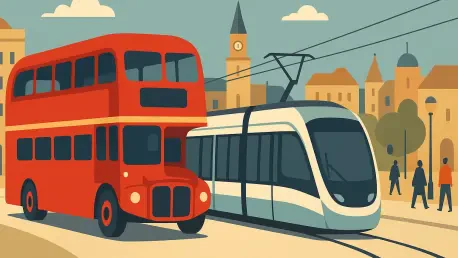

The success of Edinburgh’s transit system relies on a city-owned entity that maintains a predictable flat-fare structure for all its bus passengers. This financial stability has allowed the Scottish capital to skyrocket to the top of the European rankings, achieving a staggering 92.4% satisfaction rate among its residents. In an era where urban congestion often stifles economic growth, Edinburgh has demonstrated that public investment in reliable infrastructure pays significant dividends. The city’s rise to the fourth position globally reflects a broader trend across the continent, where municipal authorities are prioritizing the rider experience over short-term profit margins. By analyzing the feedback of over 24,000 urban dwellers, researchers found that the integration of modern payment technologies and network expansions has transformed public perception. While global financial centers struggle with aging systems, Edinburgh has managed to cultivate a transit environment that locals describe as both seamless and indispensable for their daily lives.
Leadership and Infrastructure: The United Kingdom Example
Part 1: The Impact of Integrated Tram and Bus Networks
The expansion of the Edinburgh Trams to Newhaven stands as a testament to the city’s commitment to long-term infrastructure development. This project, completed with a focus on connecting high-density residential areas to the commercial heart of the city, has significantly reduced reliance on private vehicles. Furthermore, the implementation of contactless fare capping has removed the friction of traditional ticketing, allowing passengers to move between buses and trams without calculating costs. In 2025 alone, the combined network supported over 130 million passenger journeys, showcasing a level of efficiency that rivals much larger metropolises. The synergy between Lothian Buses and the tram network ensures that even remote neighborhoods have access to frequent service. This holistic approach to urban planning improves the quality of life for residents and positions the city as a leading example of how mid-sized urban centers can outpace global giants through smart management and sustained public funding.
Part 2: Competitive Standards among Central European Capitals
While Edinburgh takes the top spot, Central European capitals like Zurich and Vienna continue to maintain exceptionally high standards of service. Zurich, which secured the second position in Europe and sixth globally, achieved a 90.7% approval rating by leaning into its reputation for precision. The Swiss model relies on an incredibly dense network where transit stops are situated approximately every 300 meters, ensuring that public transport is always the most convenient option for the populace. Similarly, Vienna has maintained a 90.3% satisfaction rate despite necessary price adjustments for its annual transit passes. The Austrian capital’s network managed over 900 million passengers while simultaneously being lauded for its world-class cycling infrastructure. These cities demonstrate that high-quality transit is not just about the vehicles themselves but about the integration of different mobility modes. The ability to switch from a train to a tram or a bicycle with minimal effort remains a hallmark of European excellence.
Operational Excellence: Emerging Models for Universal Transit Access
Part 3: Progressive Fare Structures and Service Efficiency
A defining characteristic of the highest-rated systems was the move toward simplified and, in some cases, entirely free transit models. Tallinn, Estonia, became a pioneer in this regard, ranking fourth in Europe because it has offered free transit to registered residents since 2013. This policy boosted ridership and served as a powerful tool for social equity and environmental sustainability. Meanwhile, Helsinki saw a surge in resident approval following the early completion of its light rail line 15, known as Jokeri. The Finnish capital emphasized a single ticketing method that permitted seamless travel across buses, trams, metro lines, and ferries. This trend toward intermodal connectivity was mirrored in cities like Warsaw, Stockholm, and Amsterdam, which maintained satisfaction rates above 75%. By reducing the complexity of fare structures and expanding the reach of light rail, these municipalities successfully incentivized the public to abandon personal cars in favor of more sustainable communal options.
Part 4: Strategic Pathways for Long-Term Urban Growth
The recent shifts in the European transit hierarchy indicated that the dominance of traditional hubs was successfully challenged by resident-focused cities. Edinburgh’s ascent past long-standing leaders like London highlighted a change in passenger priorities, favoring accessibility and affordability over sheer network size. This transition proved that the quality of the user journey served as the primary driver of satisfaction across the continent. To maintain this momentum, city authorities recognized that stabilizing fare structures and integrating diverse transit modes into a single digital interface was essential. It became clear that investing in last-mile solutions and expanding light rail projects, similar to the Helsinki model, remained critical for long-term competitiveness. Furthermore, the implementation of contactless, capped payment systems emerged as the standard for removing barriers. By adopting these strategies, metropolitan areas ensured their transit networks functioned as the backbone of vibrant urban environments.