
Katarina Railko is a veteran of the travel and tourism industry who has honed her expertise through the complex worlds of hospitality, entertainment, and large-scale event management. With a deep understanding of how physical spaces influence guest behavior and owner profitability, she offers a unique perspective on the rapid evolution of modern lodging. Today, we explore her insights on the strategic shift toward upper-economy extended stays and the launch of the Studio 6 Plus brand, which aims to redefine the living experience for a new generation of mobile professionals.
The conversation covers the rising demand for sophisticated yet affordable long-term accommodations and how specific design choices, such as interior corridors and enhanced storage, cater to specialized workers. Railko also delves into the financial mechanics of innovative franchise fee structures and the operational transition toward “hospitality ambassadors” facilitated by digital automation.
Why is the upper-economy segment becoming a primary focus for extended-stay development, and how do you specifically tailor the environment to meet the needs of project-based workers like traveling nurses or technicians? Please elaborate on the geographic markets that offer the highest growth potential for these properties.
The upper-economy segment is seeing a massive surge because long-term stays are no longer just a temporary stop; they are a necessary lifestyle for a massive workforce of traveling nurses and infrastructure technicians. We are tailoring these environments by focusing on the functional “living” aspect, ensuring that a guest staying for weeks feels the comfort of a home rather than the sterile, cramped nature of a traditional motel. Secondary and tertiary markets are the true gold mines here, particularly where manufacturing, energy, and large-scale construction projects are booming and driving consistent demand. By aiming for an Average Daily Rate of $75 to $90, we provide a price point that accommodates professional project budgets while maintaining high-quality standards that build long-term trust.
How does moving to interior-corridor designs change the residential feel and security for long-term guests? Beyond adding a full kitchen, what specific storage and power configurations are essential for people living in a space for months, and how do these design choices impact the overall construction budget?
Moving to interior-corridor designs is a fundamental shift that instantly elevates the sense of security and privacy for a guest who is essentially living with us for an extended period. When a technician returns from a grueling twelve-hour shift, walking through a protected, climate-controlled hallway provides a psychological buffer from the outside world that exterior-facing doors simply cannot offer. We have also prioritized expanded storage and a high density of power outlets because modern professionals carry an array of laptops, diagnostic tools, and personal gear that require dedicated space and constant charging. While these ground-up developments for 60 to 150 rooms require a more intentional construction budget, the residential feel they create justifies the investment by driving longer lengths of stay and higher guest satisfaction scores.
Transitioning from traditional front-desk roles to “hospitality ambassadors” requires a shift in staffing strategy. How does a three-click digital check-in system facilitate this change, and what steps are taken to ensure that automated technology doesn’t diminish the personal service that extended-stay guests rely on for comfort?
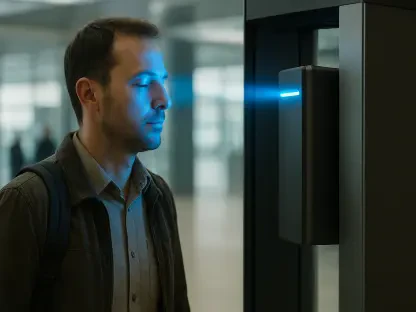
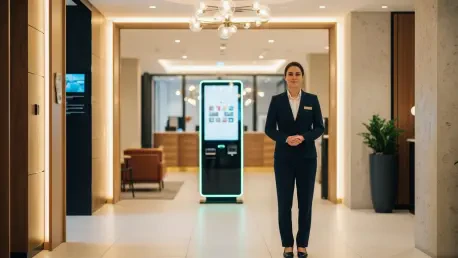
The transition to “hospitality ambassadors” is entirely about reclaiming time; by using a three-click digital check-in system, we strip away the friction of administrative paperwork and manual data entry. Instead of a staff member being tethered to a computer screen and a credit card reader, they are free to walk the lobby and engage with guests on a genuine human level. This automation doesn’t replace the personal touch—it actually enhances it by allowing our team to focus on solving guest problems and providing a warm, familiar face for someone far from home. We want the arrival process to be so seamless that the first interaction a guest has is a meaningful “welcome home” rather than a cold request for an ID and a signature.
Charging franchise fees only on direct brand bookings is a significant departure from industry norms. How does this incentive structure better align brand goals with owner performance, and what are the specific operational benchmarks required to hit RevPAR targets of $60 to $70 in secondary and tertiary markets?
Charging franchise fees only on direct brand bookings is a radical way to prove that the brand has skin in the game alongside the hotel owner. It creates a powerful incentive for the brand to drive high-value, direct traffic through its own channels rather than just collecting a percentage of every guest, regardless of whether they came from an expensive third-party OTA. To hit those RevPAR targets of $60 to $70 in smaller markets, owners must maintain a laser focus on operational efficiency and consistent occupancy from project-based contracts. This structure ensures that both the brand and the franchisee are working toward the same goal: maximizing the profitability of every room night through the most cost-effective booking channels available.
Commercial-grade laundry facilities and smart TV platforms are often viewed as secondary amenities. How do you integrate these features to drive ancillary revenue, and what specific data or feedback loops do you use to refine the food-and-beverage monetization strategy for guests staying for long periods?
We treat commercial-grade laundry facilities and smart TV platforms as vital hubs for both guest satisfaction and steady ancillary revenue. For a guest staying for a month, the ability to do laundry in a clean, efficient space is a non-negotiable part of their daily routine, and it provides a reliable, low-overhead income stream for the property. Our smart TV platforms do more than just stream movies; they serve as a centralized digital marketplace where guests can easily order food or services, allowing us to capture more of their daily spend right on the property. We use the data from these digital interactions to see exactly what products are being searched for, allowing us to refine our food-and-beverage offerings to ensure we stock exactly what a tired worker wants after a long day on a job site.
What is your forecast for the extended-stay hotel market?
I expect the extended-stay market to become the most resilient pillar of the hospitality industry as the lines between permanent housing and temporary lodging continue to blur. With the ongoing boom in domestic manufacturing and infrastructure investment, we will see an even greater demand for upper-economy brands that provide a “home-plus” experience rather than just a bed. The winners in this space will be those who can balance the high-tech efficiency of automated check-ins with the high-touch comfort of a secure, residential environment. As long as there is a need for skilled labor to be mobile and project-based, the demand for sophisticated, long-term spaces like Studio 6 Plus will only continue to climb.