
Guests are moving through search clutter faster than ever and completing bookings where recognition, clarity, speed, and tangible value align, pushing hotels to rethink how technology and operations convert intent into revenue. This market analysis examines the shift toward direct bookings and explains why a unified Property Management System (PMS) has become the critical infrastructure for capturing demand, strengthening loyalty, and improving economics while keeping distribution partners in play.
Market Context and Purpose
The hotel distribution landscape has tilted toward a pragmatic balance: use Online Travel Agencies for reach, then convert repeatable demand directly. The thesis is simple but urgent—profit pools concentrate where hotels control data and experience. Direct channels rise when buying feels effortless and personalized, and that outcome depends on unified, real-time systems more than on discounts.
This report maps how the market arrived at a “direct renaissance,” identifying the operational bottlenecks that previously suppressed conversion and the technologies now removing them. The goal is to equip leaders with an evidence-based view of channel economics, system design, and execution priorities that shift share toward owned channels without sacrificing visibility.
Demand and Channel Mix Trends
OTAs earned dominance by standardizing comparison and scaling acquisition, particularly for first-time stays and long-tail destinations. However, the path to purchase has splintered through meta-search and AI-guided discovery, compressing decision windows and rewarding whoever delivers the cleanest offer at the moment of choice. As a result, guests often research widely, then pivot to the channel that pairs value with certainty.
Industry indicators show direct channels capturing higher-value reservations, with studies citing more than 60% greater revenue per direct booking due to lower commissions and better packaging of add-ons and benefits. Comparative analyses also find that official sites frequently present equal or better prices, especially when bundled with transparent inclusions. The underlying dynamic is not price alone; it is trust built by consistent information, live inventory, and clear entitlements.
Economics of Direct Bookings
Direct bookings improve unit economics through commission avoidance and richer margin on upsells, but the gains are nonlinear. Marginal improvements in conversion compound when the hotel consistently matches promise to delivery, lowering service costs and refund risk. Moreover, first-party data captured on direct journeys feeds smarter pricing and segmentation, lifting both attachment rates and repeat propensity.
Leakage back to OTAs happens when friction appears—slow pages, vague fees, or misaligned room data. As AI-driven recommendation layers surface options side by side, milliseconds and message clarity matter. Hotels that present total price, inclusions, and upgrade paths without delay reduce abandonment and retain guests who began elsewhere.
Unified PMS as Competitive Infrastructure
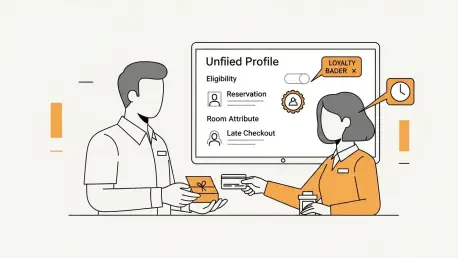
A unified, single-image PMS centralizes guest, reservation, and folio data so every touchpoint—booking engine, call center, front desk—operates from the same truth. Real-time eligibility rules, room attributes, and entitlements display consistently, eliminating contradictions that break trust. The effect is immediate: fewer cart exits, fewer check-in surprises, and smoother service recovery when needed.
This platform role does not displace CRM or marketing automation. Rather, the PMS anchors transactions and operational status while CRM extends lifecycle communication and a CDP enriches segments. The most significant limiter of personalization is not tool variety but data latency. Event-driven PMS architectures overcome this by streaming updates to pricing, loyalty, and merchandising systems during the session.
Loyalty and Recognition Dynamics
Modern travelers, particularly younger cohorts, favor immediacy over deferred rewards. Soft benefits—priority room selection, welcome amenities, flexible checkout—change decisions when surfaced at search and booking. Embedding loyalty logic inside the PMS enables contextual offers that respect rate integrity while improving perceived value.
Consistency across channels matters as much as the perk itself. When the same recognition appears on the website, in the app, and at the desk, guests stop hunting for contradictions and start associating the brand with reliability. By contrast, siloed loyalty programs that trigger late or conflict with property reality erode belief and suppress direct conversion.
Technology and Integration Ecosystem
Open APIs and event streaming are transitioning from innovation features to table stakes. Booking engines, revenue management, and CRM tools must react instantly to PMS signals such as inventory shifts, member status changes, or in-session behaviors. Structured, machine-readable content—room attributes, policy details, sustainability markers—also grows in importance as AI surfaces and compares offers.
The misconception that unification equals lock-in is fading. Leading PMS platforms balance a single source of truth with modular extensibility through marketplaces and webhooks. The trade-off to avoid is batch-based syncing that delivers personalization after the click. Real-time data paths are the practical differentiator.
Regional and Segment Variations
Markets with high OTA penetration and strict parity norms still show gains from direct when value is bundled as recognition rather than raw price. Urban, transient-heavy properties benefit from instant perks and smooth mobile flows, while resorts win by packaging experiences and add-ons that are harder to compare on third parties. Independents gain leverage by standardizing data and automating recognition without the overhead of bespoke integrations.
Corporate and group segments also respond to unified data. Accurate profile consolidation reduces duplicate accounts, improves negotiated-rate compliance, and streamlines approval workflows. When meeting planners encounter consistent inventory and benefit rules, repeat business migrates to direct channels that spare administrative cycles.
Forecast and Scenarios
Baseline projections point to continued share shift toward direct as discovery accelerates and purchase windows narrow. In a steady state, hotels that unify PMS data and embed loyalty in-session unlock higher conversion and repeat rates, raising revenue per available room through mix improvement rather than blanket discounting.
In a demand-softening scenario, direct resilience increases because owned audiences are cheaper to reactivate and easier to steer with modular offers. Conversely, in tight supply conditions, unified data enables precision yield management and perk-based differentiation without eroding rate. Across scenarios, regulatory pressure for fee transparency favors channels that present coherent, all-in pricing and clear inclusions—an inherent advantage when PMS data drives the storefront.
Strategic Implications and Recommendations
- Conduct a data lineage audit to locate gaps among PMS, booking engine, CRM, and revenue tools; make the PMS the authoritative source for guest, inventory, and eligibility.
- Redesign the direct journey for speed and certainty: instantaneous availability, transparent totals, comparable room attributes, and prominent yet sustainable incentives.
- Activate loyalty inside the booking flow with soft benefits tuned to trip context and lifetime value; keep offers consistent across channels and test copy, timing, and perk combinations.
- Operationalize recognition with live profiles for front-of-house and service teams, and close the loop by measuring redemption, service recovery outcomes, and repeat direct share by source.
- Retain OTAs for reach, then convert post-stay through targeted, channel-consistent messaging grounded in first-party data.
Closing Perspective: Actions That Reshape the Mix
The analysis showed that direct momentum rested on reducing friction, amplifying recognition, and aligning promises with delivery, and that a unified PMS was the enabling core. Hotels that centered a single source of guest truth gained conversion, protected rate integrity, and trimmed operational drag. The most durable edge came from real-time orchestration: benefits and content adjusted in session, data streamed without delay, and teams serving with context. The next steps were clear—treat the PMS as competitive infrastructure, wire every decision point to it, and let channel balance follow the consistency guests already rewarded.