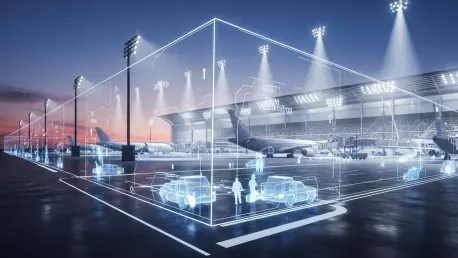

More than five billion people are now traversing the globe annually, creating an unprecedented strain on the traditional security checkpoints that once defined the modern airport experience. This massive surge in passenger volume has necessitated a radical shift in how aviation authorities approach the delicate balance between rigorous safety protocols and operational efficiency. The industry has reached a tipping point where legacy systems can no longer handle the density of traffic without causing significant delays that ripple through the global travel network. Consequently, Artificial Intelligence has moved beyond its role as a niche technological novelty to become the cornerstone of global airport infrastructure. By leveraging intelligent video analytics and real-time data processing, security frameworks are now more robust yet less intrusive. This transition allows for a sophisticated monitoring environment where every movement is analyzed for potential risks while passengers enjoy a smoother journey.
The Evolution of Intelligent Security Infrastructure
Transitioning: From Experimental Tools to Essential Systems
The primary functional role of AI in the current aviation landscape is to provide a proactive and always-on analytical layer that substantially exceeds the cognitive capabilities of human operators. In contrast to the fragmented systems of the past that required intensive manual oversight, modern AI integration allows for a seamless connection with existing camera networks to monitor every square inch of an airport facility. This evolution ensures that security is no longer viewed as a series of isolated, manual checks but as a continuous and automated process that functions twenty-four hours a day. These systems are immune to the biological limitations of distraction, boredom, or physical exhaustion, which previously compromised safety standards during peak travel hours. By processing massive amounts of visual data in real-time, the infrastructure identifies anomalies that might be missed by the human eye, creating a safety net that remains consistently vigilant across the entire airport.
Analysis: Addressing Legacy Gaps in Surveillance Models
The necessity of this technological shift becomes particularly clear when evaluating the inherent limitations associated with legacy surveillance models used in previous years. Traditional airport security relied heavily on rooms full of human operators watching banks of video feeds, a method famously prone to monitor blindness after only twenty minutes of observation. Furthermore, these older models were primarily reactive in nature, often serving merely as a tool for forensic review after a security incident had already occurred. AI addresses these biological and operational gaps by identifying potential threats as they develop, allowing security personnel to intervene before a situation escalates into a crisis. This transition from retrospective analysis to real-time preventive action marks a significant milestone in aviation history, ensuring that the safety of the flying public is maintained through a combination of high-speed data processing and immediate, intelligent response protocols.
Proactive Threat Detection and Perimeter Defense
Security: Utilizing Pattern Recognition for Restricted Zones
A significant technological breakthrough observed in the current year involves the ability of AI to monitor restricted airside zones with unprecedented levels of precision. Advanced algorithms are now specifically trained to recognize complex patterns, such as unauthorized personnel movement near aircraft parking stands or fuel storage areas. By synchronizing directly with biometric access control systems, the AI can trigger instantaneous alerts the moment a perimeter breach is detected or when an individual enters a zone for which they lack proper clearance. This digital shield ensures that the most sensitive parts of the airport are protected by a system that never sleeps and is not subject to human error. The integration of high-definition thermal imaging and motion sensors further enhances this capability, allowing for effective monitoring even in low-visibility conditions or during extreme weather events that would normally hinder traditional surveillance methods or patrol routines.
Behavioral: Identifying Abandoned Items and Movement Patterns
Beyond simple perimeter defense, modern AI systems have become exceptionally effective at identifying abandoned items and suspicious behaviors through sophisticated time-threshold analysis. The technology is capable of distinguishing between a traveler who has briefly set a bag down to check a flight board and a piece of luggage that has been genuinely left unattended for a suspicious duration. This precision reduces the frequency of false alarms and unnecessary terminal evacuations while maintaining a high level of vigilance. Additionally, by identifying specific movement patterns such as loitering in high-risk areas or attempts to bypass established checkpoints, AI provides a layer of behavioral analysis that traditional cameras simply cannot offer. These systems can track multiple subjects of interest across different camera feeds, maintaining a continuous chain of custody that is vital for security teams to understand the intent behind certain suspicious actions.
Enhancing Throughput and the Passenger Experience
Efficiency: Reducing Traveler Friction via Predictive Analytics
Artificial intelligence is now instrumental in balancing stringent safety requirements with the need for a pleasant traveler experience by managing the landside environment. By monitoring passenger density and movement flows in real-time, AI systems can identify potential bottlenecks at security checkpoints several minutes before they result in actual congestion. This predictive capability allows airport managers to reallocate staffing resources dynamically and redirect passenger traffic to underutilized gates or screening lanes. As a result, the transition from the airport entrance to the terminal remains fluid, even during the busiest holiday seasons when volumes typically spike. This data-driven approach ensures that the infrastructure remains adaptable to the changing needs of the passenger population, preventing the frustration and safety risks associated with overcrowded terminals. The ability to forecast surges allows for a proactive management style that improves overall throughput.
Innovation: Creating a Seamless and Invisible Security Layer
The prevailing consensus among global aviation experts is that modern security measures should remain essentially invisible to the law-abiding passenger to ensure a positive journey. AI facilitates this philosophy by ensuring that high-intensity screening processes, such as baggage scanning and body imaging, operate at their peak efficiency with minimal human intervention. This minimizes wait times without compromising the rigorous safety standards that the industry demands for international travel. This data-centric approach to terminal management not only improves the overall passenger experience but also ensures that critical security resources are always deployed precisely where they are needed most. By automating the routine aspects of surveillance and crowd control, the technology allows for a more personalized approach to traveler assistance when problems do arise. Ultimately, the goal is to create an environment where safety is a silent background process rather than a source of stress.
Protecting Internal Facilities and Accelerating Investigations
Protection: Addressing Insider Threats in Restricted Areas
Internal security for restricted areas such as maintenance hangars and baggage handling zones has also been revolutionized by the application of AI technologies. While traditional security systems relied heavily on physical badge swipes and static cameras, modern AI monitors activity after an employee has entered a secure zone to flag unusual behavior. This capability is vital for mitigating insider threats, such as unauthorized access to sensitive flight hardware or suspicious movements that deviate from established operational protocols. The system can detect when an employee is using stolen credentials by cross-referencing their movement patterns with historical data and biometric markers. This layered approach ensures that the internal operations of the airport are just as secure as the public-facing areas. By providing a continuous audit trail of all activities within restricted zones, AI helps maintain the integrity of the aviation supply chain and prevents any disruptions.
Forensics: Accelerating Incident Response and Investigations
When security incidents occur, AI-powered forensic search capabilities have reduced the time required for comprehensive investigations from several days to just a few minutes. Modern systems allow law enforcement and airport security teams to search through vast video archives using simple natural language descriptions, such as a person wearing a specific color or an object left near a certain gate. This rapid search capability is essential for evidence preservation and the real-time tracking of persons of interest across multiple terminals or parking facilities. The efficiency of these AI tools significantly reduces the operational downtime often caused by security investigations, allowing airports to return to normal functioning much faster. By quickly identifying the source and scope of a threat, security officials can make informed decisions about whether a full evacuation is necessary or if a localized response is sufficient. This precision is key to maintaining both safety and continuity.
Unified Ecosystems and the Human-AI Partnership
Centralization: Managing Global Operations for Resilience
Modern airports are sprawling, complex ecosystems that require a centralized management strategy to avoid the development of operational silos that can hinder response times. By the current year, cloud-based AI platforms provide a unified view of all security operations, allowing leadership to monitor entire facilities from a single, cohesive dashboard. Whether it is a perimeter breach at a remote cargo hub or a sudden increase in passenger congestion at the main international terminal, all alerts are funneled into a centralized interface. This fosters better collaboration between different departments, such as police, fire, and airport operations, ensuring a standardized and efficient response to any event. The ability to share real-time data across different stakeholders means that every member of the security team is working from the same set of facts. This high level of situational awareness is critical for maintaining resilience in an increasingly complex and interconnected global aviation network.
Collaboration: Optimizing the Human-AI Force Multiplier
The integration of AI serves as a powerful force multiplier for human security professionals, rather than a replacement for human judgment and tactical expertise. The technology handles the massive and repetitive task of data analysis and pattern recognition, which frees up human guards to focus on high-level decision-making and direct intervention. This partnership ensures that aviation security remains both data-driven and human-centric, resulting in higher safety baselines and more cost-efficient operations. Human operators are now able to act on high-quality intelligence provided by AI, allowing them to engage with travelers in a more meaningful and helpful way during security screenings. This collaboration optimizes the strengths of both parties: the machine’s ability to process infinite data and the human’s ability to interpret nuance and emotion. This balanced approach is the hallmark of modern aviation safety, ensuring that technology serves to enhance the capabilities of the people.
Outlook: Standardizing Global Safety Protocols and Ethical Oversight
Aviation authorities successfully transitioned toward a future-proof security model by prioritizing the implementation of ethical AI frameworks and robust data governance. Leaders in the industry recognized that the effective use of these technologies required not only technical investment but also a commitment to passenger privacy and transparency. These organizations adopted comprehensive training programs for their staff, ensuring that human operators were fully prepared to manage and interpret the outputs of complex algorithmic systems. Moving forward, the focus shifted toward the standardization of AI protocols across international borders to create a seamless global security network. This initiative involved sharing best practices and threat intelligence between different nations to ensure that no part of the travel chain remained vulnerable. By fostering a culture of continuous improvement and technological adaptation, the aviation sector secured its position as one of the safest modes of transport.