
The Italian travel landscape is currently undergoing a radical transformation as international visitors abandon traditional coastal retreats in favor of deeply immersive historical experiences across the country. While the Mediterranean coastline has historically served as the primary draw for summer travelers, the middle of 2026 has marked a definitive shift toward the interior and the extensive network of archaeological sites that define the nation’s identity. As the world leader in cultural conservation, Italy now leverages its status as the holder of more UNESCO World Heritage Sites than any other nation to redefine the modern vacation. This movement highlights a broader global trend where travelers seek intellectual enrichment over simple relaxation. The Ministry of Tourism has observed that this current surge is not merely a seasonal fluctuation but a fundamental reconfiguration of how explorers interact with the Italian peninsula, prioritizing the deep historical roots of the Mediterranean over the superficial allure of luxury resorts.
Data Analytics: Quantifying the Shift in Global Interest
Recent digital metrics provide a startling look at how rapidly the global travel market has redirected its focus toward the archaeological treasures of the Italian peninsula. Online search volume for specialized tours of Pompeii and the surrounding Vesuvian areas has experienced a massive spike, jumping by 5,000% within a remarkably short period of time this season. Furthermore, general interest in visiting Italian UNESCO World Heritage Sites has seen a consistent weekly increase of 80%, placing unprecedented levels of pressure on the local infrastructure of historical hubs. These statistics suggest that the digital-first traveler is increasingly motivated by the promise of rare, educational encounters that were previously reserved for academic researchers or specialized students. The sheer scale of this data indicates that the primary driver of Italian tourism has transitioned from leisure to learning, forcing a rapid adjustment in how information and access are provided to the millions of people arriving from abroad each month.
Building on these digital trends, a comprehensive report released by the Ministry of Tourism suggests that the current growth represents a permanent change in traveler psychology rather than a temporary trend. Global explorers are now arriving with a pre-existing baseline of historical knowledge, often acquired through high-production digital documentaries and virtual lectures. This high level of preparation has led to record-breaking visitor numbers in several key regions that were once considered secondary to the major coastal hubs. The transition is fueled by a collective desire to establish a meaningful connection with the past, which has turned the country into a living classroom for international guests. This fundamental change is reshaping the economy of entire provinces, as the demand for historical literacy drives investment into rural archaeological parks and previously neglected medieval villages. Consequently, the tourism sector is now focused on providing depth and context rather than just convenience and comfort for the modern visitor.
Geographic Hotspots: Exploring the Archaeological Epicenters
Rome continues to serve as the primary anchor for this heritage-driven boom, but the nature of visits to the Eternal City has changed significantly compared to previous seasons. Travelers are no longer satisfied with a cursory glance at the Colosseum or the Roman Forum; instead, they are demanding access to complex underground sites like Nero’s Golden House. This subterranean monument has seen a dramatic increase in bookings, as its unique preservation offers an unparalleled glimpse into the architectural ambitions of the early imperial era. The current focus on hidden or restricted sites illustrates the modern traveler’s preference for exclusivity and historical depth. By opening more sections of these ancient structures, local authorities have managed to distribute the massive crowds more effectively, though the demand for these high-quality experiences remains at an all-time high. This strategic focus on “depth over breadth” has transformed Rome into a hub for serious archaeological inquiry.
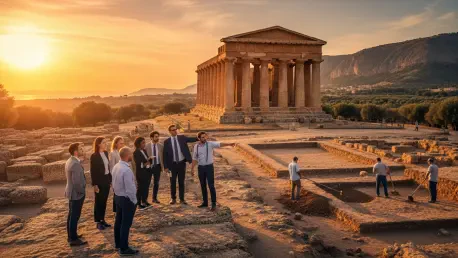
Beyond the central hub of Rome, the island of Sicily has emerged as a major draw for those captivated by the complex, layered history of Greek and Roman civilizations. The Valley of the Temples is currently experiencing a record-breaking influx of visitors who are eager to witness the ongoing excavations and the preservation of Doric architecture. Similarly, the city of Naples is witnessing a rediscovery of its vast subterranean networks, which provide a vertical history of the city from its Greek origins to its medieval expansions. In the north, the Byzantine mosaics of Ravenna have become a focal point for art historians and casual travelers alike, drawn by the vibrant colors and religious symbolism of the late Roman period. These diverse locations offer a comprehensive view of history that spans from antiquity to the early Middle Ages, appealing to a wide range of cultural enthusiasts. The geographic spread of this surge ensures that the economic benefits of tourism are distributed more evenly across the entire Italian territory.
Evolving Motivations: The Rise of Educational Exploration
A significant driver of the current trend is the profound change in the psychology of the modern tourist, who increasingly seeks experiential journeys rather than passive observations. There is a growing demand for what experts call “active history,” where visitors participate in the narrative of a site rather than just viewing it from behind a barrier. This shift has led to a noticeable decline in the popularity of traditional “sun and sand” tourism as the primary motivation for visiting Italy. Modern travelers are prioritizing intellectual growth and the acquisition of new knowledge, treating their vacations as opportunities for personal development. This desire for an educational journey has created a new market for expert-led tours and workshops that focus on ancient craftsmanship, Roman engineering, and historical gastronomy. As a result, the travel industry is evolving to meet these sophisticated needs, focusing less on standard leisure amenities and more on providing high-quality, research-backed content for its guests.
The decline of the passive vacation model is also reflected in how visitors choose to spend their time once they arrive at a historical destination. Instead of spending hours at a beach club, the average tourist in 2026 is likely to be found at an active archaeological dig, observing the meticulous process of uncovering new artifacts. This fascination with the scientific aspect of history has transformed archaeologists into cultural influencers, with public interest in their work reaching an all-time high. The educational value of a site is now the primary metric for its success, overshadowing traditional factors like proximity to luxury shopping or high-end dining. This trend is particularly strong among younger generations of travelers, who view cultural heritage as a vital part of their global identity. By fostering a deeper understanding of the past, Italy is creating a new generation of informed travelers who are committed to the long-term preservation and appreciation of the historical sites they choose to visit.
Preservation Strategies: Balancing Visitor Flow with Integrity
The sudden increase in foot traffic across Italy’s most sensitive historical locations has created a series of complex management challenges for local authorities. Experts have noted that the sheer volume of visitors can lead to the physical erosion of ancient stone pavements and delicate mosaic floors that have survived for centuries. Furthermore, in enclosed environments such as ancient villas or subterranean chambers, the humidity and carbon dioxide produced by large groups of people can trigger damaging chemical reactions. These reactions often lead to the deterioration of frescoes and other sensitive artworks that are susceptible to environmental changes. To address these critical issues, the Italian government has accelerated the implementation of sophisticated monitoring systems that track atmospheric conditions in real-time. These measures are essential to ensure that the influx of modern tourism does not result in the permanent destruction of the very artifacts that people are traveling thousands of miles to see.
To combat the negative effects of overcrowding, the country is currently implementing “Smart Tourism” strategies that prioritize the quality of the visit over the quantity of visitors. This modern approach includes the mandatory use of timed-entry passes and strictly enforced daily limits at the most popular landmarks to prevent physical degradation. Additionally, new technologies like Virtual Reality and Augmented Reality are being integrated into the visitor experience to provide a vivid recreation of what ruins looked like in their prime. By using digital overlays, authorities can reduce the need for physical restoration while still providing a high-quality educational experience for the public. This technological integration allows travelers to visualize the grandeur of the past without placing further physical stress on the fragile archaeological remains. These strategies represent a new era of heritage management, where the preservation of the past is harmonized with the demands of a high-tech, highly mobile global society.
Strategic Planning: Sustaining the Cultural Momentum
For those planning to participate in this period of cultural discovery, logistical preparation has become a mandatory component of a successful journey. Travel specialists currently advise that booking timed-entry tickets several months in advance is no longer a suggestion but a requirement for accessing major landmarks. The high demand for these sites has necessitated a more disciplined approach to itinerary planning, where visitors are encouraged to target the “shoulder seasons” or choose off-peak hours to avoid the most intense crowds. Working with certified historical guides has also become increasingly recommended, as these professionals provide the necessary context to understand the sites while ensuring that preservation rules are strictly followed. By adhering to these new logistical norms, travelers can ensure that their presence contributes to the sustainability of the sites rather than adding to the problem of congestion. This structured approach to travel is becoming the standard for all international arrivals.
The 2026 season established a new baseline for how cultural heritage was preserved and promoted across the entire Italian peninsula. Local authorities successfully integrated digital monitoring systems and timed-entry protocols that prevented the physical erosion of delicate archaeological sites while maintaining record-breaking visitor numbers. These strategic interventions allowed for a sustainable balance between public access and historical integrity, ensuring that the frescoes and mosaics of antiquity remained protected for future observation. As the global interest in historical literacy continued to grow, the government expanded funding for ongoing excavations, which uncovered new structures beneath the streets of major urban centers. This proactive approach to heritage management demonstrated that a country could modernize its tourism industry without sacrificing its historical identity. Consequently, the lessons learned during this period provided a clear roadmap for other nations seeking to protect their own cultural treasures while catering to the needs of a new generation of sophisticated global explorers.