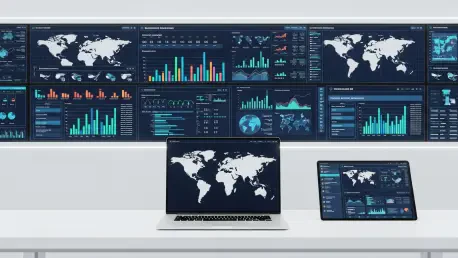

The ambition to transform a single boutique property into a globally recognized hospitality brand often founders on the jagged rocks of fragmented data and operational silos that stifle real-time decision-making. Expanding a hospitality brand is frequently a double-edged sword: while increasing room counts signals financial success, it introduces exponential operational complexity that can overwhelm existing management structures. For many boutique collections and lifestyle brands, the transition from a single successful property to a multi-national portfolio is hindered by localized workflows and disconnected software systems that inevitably erode the guest experience. This article examines how a unified technological foundation allows ambitious hospitality groups to bypass traditional growing pains, transforming isolated properties into a cohesive, high-performing ecosystem.
The fundamental shift toward what industry leaders call “intelligent growth engines” represents a departure from the static property management models of the past. Instead of viewing technology as a mere utility for checking guests in and out, modern hospitality groups treat their digital infrastructure as a strategic partner that facilitates centralized visibility. This visibility is becoming the primary differentiator for brands looking to dominate new markets, as it allows for the standardization of service quality and operational protocols regardless of geographic distance. By creating a scalable blueprint for growth, organizations can move away from reactive troubleshooting and toward proactive market positioning, ensuring that each new acquisition contributes to the strength of the brand rather than diluting its core value proposition.
Engineering Success through a Unified Cloud-Based Infrastructure
Eliminating the ‘Lost Booking’ Trap through Portfolio Connectivity and Real-Time Availability
In high-growth hospitality, the ability to retain guests within a brand’s own ecosystem is a critical metric for long-term profitability and customer lifetime value. When properties operate on isolated systems, a fully booked hotel represents a missed opportunity that often sends a potential guest to a competitor’s booking engine. However, unified connectivity allows front desk teams and reservation agents to view real-time availability across an entire portfolio, effectively turning “no” into a referral within the brand. Case studies involving the management of waterfront properties, such as those overseen by HP Hospitality, demonstrate that this “keep it in the family” approach can drive direct booking rates as high as 84%.
The primary challenge for expanding groups remains the speed of integration, yet modern cloud platforms now allow for the rapid onboarding of new acquisitions in as little as 48 hours. This significantly shortens the time-to-market for new investments, allowing owners to begin generating revenue through the group’s centralized distribution channels almost immediately. Furthermore, real-time data synchronization ensures that inventory is never double-booked and that pricing remains consistent across all sales channels. This level of connectivity not only protects the bottom line but also enhances the guest experience by offering alternative options that meet the brand’s specific standards of luxury or lifestyle appeal.
Transitioning from Legacy Limitations to Centralized Strategic Control
Legacy property management systems often act as invisible barriers to scale because they lack the flexibility to handle diverse accommodation types or sophisticated revenue strategies required by modern travelers. For groups managing hundreds of rooms across varied concepts, such as the mixed-use portfolios seen with Grupo Catedral in Mexico, moving to a single source of truth is essential for maintaining brand identity. Moving away from fragmented reporting allows operations directors to implement cohesive pricing strategies that account for different market dynamics without losing granular control over individual property performance.
The shift from guesswork to data-driven management mitigates the risks associated with rapid expansion by ensuring that internal processes remains robust even as the number of keys increases. Centralized visibility means that regional managers can identify performance trends, such as a sudden dip in occupancy at a specific location or an uptick in last-minute cancellations, and address them before they impact the group’s overall financial health. By consolidating guest data, hospitality groups can also develop more effective loyalty programs and personalized marketing campaigns that resonate with their target demographics, further solidifying their market position against larger, more impersonal hotel chains.
The Rise of Open API Architectures in Customizing the Modern Guest Journey
A significant disruption in hospitality technology is the move toward open architecture, which allows groups to build bespoke tools on top of their core management system. This level of customization enables businesses to automate high-volume, error-prone tasks, such as proportional rate adjustments across hundreds of units, which previously required hours of manual labor. Innovations in this space, notably seen in the Malta-based Leo Property Group, show how custom-built applications can reduce staff training time from several months to just two weeks. This agility is vital for maintaining service standards in hypergrowth environments where rapid staff onboarding and operational efficiency are the only ways to stay competitive.
Customization through open APIs also allows for a more tailored guest journey, as properties can integrate third-party solutions for digital keys, contactless check-in, or localized concierge services. This flexibility ensures that the technological stack grows alongside the business, rather than becoming obsolete as guest preferences evolve. By leveraging these integrations, hospitality groups can focus their human capital on guest interaction and high-level strategy rather than mundane data entry. This approach not only improves staff morale but also positions the brand as a forward-thinking leader in an industry that has traditionally been slow to adopt cutting-edge technological advancements.
Navigating the Regulatory Labyrinth of Cross-Border Hospitality Expansion
Scaling across international borders introduces a complex layer of compliance, including diverse tax regulations, government reporting standards, and localized invoicing requirements. Instead of burdening local teams with multiple software solutions that do not communicate with one another, global groups like Onefam utilize integrated ecosystems to automate compliance across several European borders. This ensures that while local properties remain legally compliant—meeting specific Portuguese invoicing rules or Spanish government reporting standards—the corporate level receives standardized, clean data for high-level analysis.
This centralized approach challenges the assumption that international growth requires fragmented local tech stacks, proving that a unified platform can harmonize global operations while respecting local nuances. Moreover, the ability to analyze hundreds of daily reservations across multiple countries in a short timeframe allows management teams to optimize decision-making processes at the corporate level. Standardizing compliance also reduces the risk of legal penalties and financial discrepancies, providing a more stable foundation for aggressive international expansion. In a world where regulatory environments are increasingly stringent, having an automated system for cross-border management is a significant competitive advantage.
Operational Best Practices for Sustaining Long-Term Revenue Performance
To maximize the impact of a unified growth engine, hospitality groups should prioritize the automation of manual revenue tasks to free up leadership for high-level strategy. Successful groups, such as the Mexico-based We Hotels, have leveraged these efficiencies to achieve up to 28% growth in Revenue Per Available Room (RevPAR) by shifting their focus from data entry to market optimization. Actionable strategies include standardizing on a single tech stack early in the expansion phase to avoid the prohibitive costs and operational disruptions of retrofitting systems later. Furthermore, utilizing real-time data to pivot strategies when entering new territories allows brands to remain agile and guest-centric during periods of aggressive growth.
The modernization of revenue management also involves adopting non-traditional models, such as those implemented by Neighbourgood, which manages co-living and co-working spaces alongside traditional accommodations. Reliability in reporting is paramount for companies in hypergrowth, as accurate data on booking sources and customer segments is vital for securing investment and refining the business model. By maintaining a focus on performance metrics and guest feedback, groups can identify which segments of their portfolio are driving the most value and adjust their acquisition strategies accordingly. This continuous loop of feedback and optimization ensures that growth is not just rapid, but also sustainable and profitable in the long term.
Future-Proofing Hospitality Brands in an Era of Intelligent Growth
The evolution of the hospitality industry moved rapidly toward the concept of the connected growth engine, where technology functioned as a strategic partner rather than a mere utility. By consolidating distribution, revenue management, and property operations into a single interface, brands scaled with a level of precision that was previously reserved for global hotel giants. The ongoing importance of data centralization and open integrations remained a cornerstone of success; they were the tools that allowed independent groups to maintain a unique guest experience while competing on a global stage. As the market continued to favor brands that blended high-speed expansion with operational excellence, the right technological foundation proved to be the most critical asset for any hospitality group aiming for international prominence.
The integration of advanced analytics allowed regional leaders to move beyond retrospective reporting and toward predictive modeling, which helped in anticipating market shifts before they fully materialized. This shift in perspective empowered brands to be more resilient against economic volatility and changing travel patterns. Furthermore, the focus on building a custom technological ecosystem fostered a culture of innovation where staff members were encouraged to find new ways to improve the guest journey. Ultimately, the successful groups were those that understood that growth was not just about the number of properties in a portfolio, but about the strength and flexibility of the digital infrastructure supporting those properties. The lessons learned during this period of transformation highlighted the necessity of agility and the power of a unified vision in navigating the complexities of the modern hospitality landscape.