
Katarina Railko is a seasoned specialist in the hospitality and travel sectors, having built a distinguished career by navigating the high-stakes intersection of luxury service and logistical precision. With a deep background in the travel industry and a particular expertise in high-level entertainment and global conferences, she understands the evolving demands of the international elite. Today, she shares her insights on the strategic expansion of Flexjet following its acquisition of The Jet Business, a move that promises to redefine the luxury aviation landscape. We explore the intricacies of fleet lifecycle management, the shift toward immersive retail in aircraft brokerage, and the operational synergies required to maintain a cutting-edge fleet in an increasingly competitive global market.
When managing a large-scale fleet renewal strategy, such as the sale of 20 Challenger 300 aircraft to Baker Aviation in 2025, how does the integration of a dedicated brokerage service facilitate the introduction of next-generation technology for fractional owners?
The key to a successful luxury strategy in this sector is maintaining one of the youngest and most modern fleets in the industry. By successfully transitioning those 20 Challenger 300 aircraft to Baker Aviation, the company is able to move aging assets out of the fleet with grace, creating the necessary space for next-generation aircraft to take their place. This isn’t just about turnover; it is about ensuring that fractional owners always have access to the latest in aviation technology and comfort. The integration of specialized brokerage capabilities allows for a more seamless transition, where the disposition of older models is handled with the same precision as the procurement of new deliveries. Ultimately, this approach provides the firm with much tighter control over fleet quality and the overall lifecycle management of their valuable assets.
The Jet Business has built a unique reputation through its street-level retail showroom at Hyde Park Corner and its digital presence; how do these non-traditional elements change the way clients engage with the aircraft brokerage process?
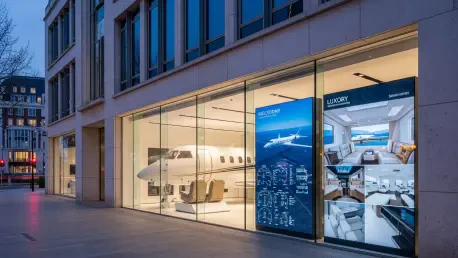
Since its founding in 2011, The Jet Business has completely reimagined the client experience by moving away from sterile corporate offices and into an immersive, street-level retail showroom in London. This physical presence at Hyde Park Corner, combined with a very strong digital footprint, has evolved the brand into a source of education and mentorship rather than just a sales outlet. Clients at the top of the market are looking for more than just a transaction; they want an experience that is presented with style and backed by deep, expert research. By bringing this immersive model into a larger ecosystem, the process of buying or selling a jet becomes a transparent, advisory-led journey. It transforms the brokerage into a trusted partner that manages the complexities of the market while maintaining a high-end, luxury feel.
With a record-breaking order for 300 Phantom 3500 aircraft, how does having an internal brokerage and advisory platform help manage the logistical complexity of such a massive fleet expansion?
Managing a record order of 300 Phantom 3500 aircraft requires a sophisticated dual-track strategy where the brokerage team works in tandem with fleet operations. As these new deliveries arrive, the combined brokerage expertise of The Jet Business and the existing FXSolutions team will be vital in coordinating the transition of current aircraft leaving service. This ensures that the fleet remains balanced and that there is a steady outlet for older models, preventing any operational bottlenecks during periods of high growth. Having an internal brokerage means the company can control the timing and quality of these transactions without relying on outside parties. It is a massive undertaking that relies on a unified global platform to maintain high standards while scaling at an unprecedented rate.
Since entering the European fractional market in 2021, what has been the strategic impact of establishing a presence at Farnborough Airport, and how does the new private terminal fit into the international growth strategy?
The expansion into Europe in 2021 was a pivotal moment that required a significant investment in physical infrastructure to match the brand’s luxury promises. Establishing a Tactical Control Centre at Farnborough Airport provided the operational backbone needed to support a growing fleet across the continent. The addition of a new private terminal at the airport later this year represents the next step in creating a fully integrated, premium environment for international travelers. This infrastructure doesn’t just support flights; it serves as a hub for the entire service ecosystem, including aircraft-on-ground response and maintenance. It allows the company to offer a unified global platform that feels consistent whether a client is in London, New York, or mainland Europe.
How do the specific service offerings within the new Flexjet Solutions platform, such as turnkey management and AOG response, help reduce the operational complexity that many private jet owners face?
Private jet ownership is notoriously complex, involving a labyrinth of maintenance schedules, staffing requirements, and unexpected technical issues. The Flexjet Solutions platform simplifies this by offering a turnkey management service that leverages a massive existing infrastructure, including providers like Sirio and Sentient Jet. For example, having dedicated aircraft-on-ground response resources means that a mechanical issue that might ground an independent owner for days can be resolved much faster within this integrated system. Clients also benefit from expert pre-purchase inspections and maintenance support that are handled by the same people who manage one of the world’s largest fleets. This level of support transforms the ownership experience from a logistical burden into a streamlined, worry-free luxury service.
What is your forecast for the luxury private aviation industry?
I anticipate a rapid acceleration toward total vertical integration, where the most successful brands control every single touchpoint of the customer journey, from the initial brokerage consultation to the final touchdown. The market is increasingly demanding a one-stop-shop luxury experience that removes the fragmentation currently seen between chartering, owning, and managing aircraft. We will likely see more immersive, retail-style environments like the London showroom appearing in other global financial hubs to cater to a new generation of owners who value transparency and education. Digital platforms and social media will continue to play a massive role in building the trust necessary to move high-value assets, but they will be anchored by physical centers of excellence like Farnborough. Ultimately, the future belongs to those who can marry data-driven research with an uncompromising commitment to the tactile, human elements of luxury hospitality.