
Katarina Railko brings a wealth of expertise from the high-end travel and tourism sector to our discussion on the intersection of fashion history and hotel interiors. As a seasoned voice in hospitality and global events, she possesses a keen eye for how legendary figures are immortalized through spatial design and sensory storytelling. Today, we explore the intricate details of the newly unveiled suite at The Fife Arms, examining how Coco Chanel’s 1920s Scottish escapades have been woven into the very fabric of the guest experience.
Coco Chanel’s 1920s connection to the Highlands was deeply influenced by her passion for fly fishing and local fabrics. How were these rugged pastimes translated into the room’s opulent aesthetic, and what specific design choices were made to evoke the feeling of an “exotic bird’s nest”?
To capture the spirit of a woman who was both an avid fly fisher and a global fashion icon, the design team aimed for a balance of wildness and extreme refinement. We see this in the “nest” concept, where the room feels like a secluded, luxurious sanctuary tucked away from the world, much like Chanel’s own retreat during her romance with the 2nd Duke of Westminster. By integrating materials she discovered in the 1920s, the space mirrors the rugged beauty of the Cairngorms while maintaining a high-fashion edge. The opulence is found in the layering of textures that feel both organic and meticulously curated to honor her free-spirited character. It evokes a sensory experience where the guest feels protected yet connected to the untamed Scottish landscape.
Designers often use trompe-l’œil techniques to hide entrances, such as the secret door marked by a Camelia symbol. What is the psychological impact of this “secret” entry on a guest’s stay, and how does it reflect her documented personal dislike of traditional doors?
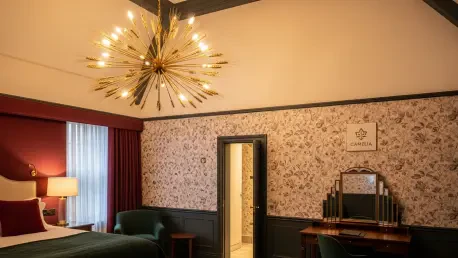
Chanel famously disliked traditional doors because they signaled a cold departure; she preferred the flow of screens, hoping her guests would lose track of time and never want to leave. By utilizing a trompe-l’œil door, the hotel creates a sense of mystery and exclusivity that begins the moment a guest follows the path of the special Camelia symbol. This secret entrance transforms the act of entering a room into a discovery, shifting the psychological state from a standard check-in to entering a private, hidden world. It honors her documented personal quirks by making the threshold nearly invisible, blending it into the surrounding decor inspired by her Paris apartment. The result is a seamless, immersive environment that feels more like a sanctuary than a typical hotel suite.
The use of Linton mill tweeds and wallpaper patterns from Rosehall Hall establishes a direct link to the fashion house’s history. How do you source and integrate such specific heritage materials without making the space feel dated, and what role do these textures play in the room’s narrative?
The key to using heritage materials like the Linton mill tweeds, which Chanel first discovered back in 1928, is to treat them as living elements rather than museum artifacts. By choosing rich greens and burgundy, the designers ground the room in the natural palette of the Highlands while maintaining the sophistication of a fashion house that still works with that mill today. The wallpaper is a direct copy from Rosehall Hall, the manor she once decorated, which provides an authentic backdrop that tells a story of her personal life in Scotland. These textures are essential to the narrative because they provide a tactile connection to her history, allowing guests to touch the very fabrics that inspired her legendary collections. This richness bridges the gap between a century-old romance and a modern luxury stay.
Incorporating elements from the 31 Rue Cambon apartment, like the wheatsheaf chandelier, creates a bridge between Paris and Scotland. How do you balance these Art Deco touches with Scottish Chinoiserie furniture, and what is the process for ensuring such diverse influences remain cohesive?
Balancing the sleek lines of an Art Deco vanity mirror with the intricate patterns of Scottish Chinoiserie requires a very disciplined design eye to ensure the room feels curated rather than cluttered. The wheatsheaf chandelier serves as a focal point, bringing a touch of Parisian elegance into the rugged heart of the Scottish mountains. To ensure cohesion, the designers used hand-painted furniture that echoes motifs found in both cultures, creating a visual dialogue between her two worlds. This process involves layering historical references so that each piece feels like it was collected over a lifetime of travel. The result is a space that feels eclectic yet unified, reflecting the complex, multifaceted personality of Chanel herself.
Moving the family-oriented facilities to the ground floor has allowed for a new space filled with local crafts and “Deeside Knitwits” creations. How does integrating local community artistry enhance the guest experience, and what are the logistical steps for relocating an established communal room within a luxury hotel?
Relocating an established space like the Family Room to the ground floor is a significant logistical undertaking that requires careful planning to maintain the hotel’s functional flow. Once moved, the space was transformed into a treasure trove filled with books and games that spark imagination for guests of all ages. The integration of local artistry, specifically the “Deeside Knitwits” who hand-knitted red squirrels hidden throughout the room, adds a layer of authentic community warmth. It makes the hotel feel like a living part of the village rather than an isolated luxury bubble, enhancing the guest’s emotional connection to the local culture. This transition allows the hotel to serve different demographics—from the romantic couple in the Chanel suite to inquisitive families—without compromising the atmosphere.
The monochrome bathroom and freestanding copper bath create a specific romantic atmosphere. Why is the bathroom an essential space for storytelling in a themed suite, and how do you choose a color palette that honors a historical figure’s signature style while meeting modern luxury expectations?
In high-end hospitality, the bathroom has evolved into a sanctuary for relaxation, making it the perfect stage for immersive storytelling. By utilizing Chanel’s signature monochrome palette, the design pays homage to her revolutionary aesthetic while providing the clean, modern feel that guests expect today. The freestanding copper bath, tucked into an arched niche, adds a touch of warmth and classic luxury that contrasts beautifully against the black-and-white theme. This space is essential because it allows the guest to slow down and fully immerse themselves in the “Chanel” experience during their most private moments. Every detail, from the color choice to the placement of the tub, is intended to evoke the romanticism of her time in the Highlands.
What is your forecast for the future of immersive historical design in the luxury hospitality sector?
I believe we are moving toward a period where “curated storytelling” will become the ultimate luxury, far surpassing traditional markers of wealth like simple marble or gold. Guests are increasingly seeking out properties that offer a deep, intellectual connection to the past, similar to how this suite allows one to live within the narrative of a fashion legend. We will see more hotels partnering with heritage mills and local artisans to create spaces that are not just beautiful, but are historically significant and socially connected. The future lies in the fine details—those secret doors and hand-knitted elements—that make a stay feel like a once-in-a-lifetime journey through time. Luxury will be defined by the ability to offer a guest a temporary identity, allowing them to step into the shoes of the iconic figures who shaped our culture.