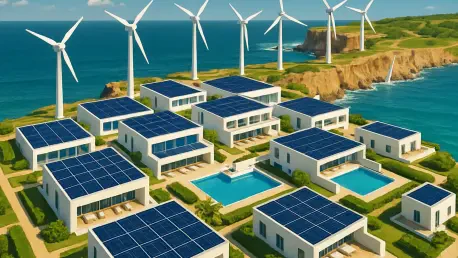

The landscape of international travel has undergone a transformative evolution where the prestige of a destination is no longer measured solely by its historical landmarks or scenic beauty, but by the carbon intensity of its underlying electrical infrastructure. As travelers navigate an era defined by heightened environmental awareness, the priority has shifted from mere accessibility toward a holistic requirement for systemic sustainability and energy reliability. This profound change stems from a decade of increasing climate volatility and the subsequent realization that traditional fossil-fuel-dependent tourism models are inherently fragile and prone to disruption. Consequently, the global tourism market has bifurcated, creating a clear distinction between regions that have modernized their power sectors and those that remain tethered to outdated, high-emission energy sources. This transition is not merely a trend among niche demographic groups but has become a foundational pillar of the industry, influencing everything from corporate travel policies to individual vacation planning decisions on a global scale. Travelers today are more likely to scrutinize a country’s renewable energy mix than its local hotel ratings, recognizing that a clean grid often correlates with superior service reliability and local ecological health.
The Global Leaders in Energy Decarbonization
Iceland’s Blueprint: Success Through Renewable Dominance
Iceland currently represents the definitive model for how a nation can leverage natural volcanic and hydraulic resources to create a tourism sector that is essentially decoupled from carbon emissions. By achieving an extraordinary carbon intensity of just 4.5 grams of CO₂ per kilowatt-hour, the nation has established an environment where every hotel stay, electric shuttle ride, and heated spa facility operates on nearly 100% renewable or nuclear power. This achievement is not merely a technical milestone; it serves as a powerful marketing engine that attracts high-value visitors who are desperate to reconcile their desire for exploration with their commitment to environmental preservation. The result is a specialized “guilt-free” tourism ecosystem where the visitor’s presence contributes to the maintenance of a low-impact economy rather than straining it. This systemic approach has forced other nations to reconsider their own energy strategies, as the Icelandic model proves that deep decarbonization is not only environmentally necessary but also highly lucrative in attracting the most discerning global travelers who prioritize ethical consumption.
Beyond the obvious environmental benefits, Iceland’s complete energy independence has provided a unique layer of economic security that has become a major competitive advantage in the global market. Because the country has achieved a 0% dependency on natural gas and coal imports, its entire tourism infrastructure remains insulated from the dramatic price spikes and supply chain instabilities that frequently cripple other markets. When geopolitical tensions or resource scarcities cause utility costs to skyrocket in traditional hubs, Iceland’s operational costs remain remarkably stable, allowing for predictable pricing and uninterrupted services for tourists. This resilience is a critical factor for luxury travel planners and tour operators who require long-term financial certainty to manage complex itineraries. The synergy between a stable, clean grid and a flourishing tourism sector demonstrates that energy security is the bedrock of modern economic resilience. By removing the volatility associated with fossil fuels, the nation has created a safe haven for international visitors, ensuring that the guest experience is never compromised by external energy crises or fluctuating fuel surcharges.
Rapid Progress: The European Continent’s Shift to Clean Power
While Nordic nations have long led the way in sustainability, the rapid transformation of the Portuguese energy sector highlights how established destinations can pivot toward green energy with remarkable speed. Portugal has achieved the world’s fastest rate of carbon reduction in its power sector, slashing emissions by nearly 70% over the last decade through aggressive investments in wind and solar capacity. This shift has fundamentally altered the nation’s tourism profile, rebranding it as a leading hub for eco-conscious travel in Southern Europe. Travelers visiting the coastal resorts of the Algarve or the historic centers of Lisbon now benefit from an energy grid that is increasingly powered by the very natural elements they come to enjoy. This alignment between geography and energy production creates a narrative of harmony that resonates deeply with modern tourists. The Portuguese success story serves as a case study for mid-sized nations, showing that a legacy grid can be modernized rapidly to meet the demands of a changing market, provided there is a concerted effort to align national energy policy with the requirements of a sustainable tourism economy.
In Northern Europe, Finland and its neighbors have set new benchmarks for integrating environmental integrity into the visitor experience through advanced grid management. Finland now generates over half of its electricity from renewable sources, a feat that has significantly bolstered its reputation as a premier destination for travelers seeking pristine natural environments supported by high-tech, low-impact infrastructure. Similarly, Denmark and Norway have successfully balanced grid stability with the expansion of offshore wind and hydroelectric power, creating a regional “green zone” that is highly resistant to the energy disruptions seen in other parts of the world. These countries have utilized their clean energy profiles to support a robust eco-tourism sector that includes everything from zero-emission ferry services to carbon-neutral mountain lodges. The integration of high-capacity energy storage and smart grid technology ensures that even remote tourist destinations remain powered by clean energy, regardless of weather fluctuations. This level of technical sophistication provides a seamless experience for the traveler, who can enjoy the wilderness without the noise and pollution of traditional diesel generators, further reinforcing the link between renewable energy and high-quality tourism.
The Economic and Psychological Impact of Green Power
Redefining Luxury: The Role of Stability and Resilience
The psychological landscape of international travel has shifted toward a new definition of luxury that is centered on the concepts of reliability and systemic resilience. For the modern high-end traveler, the most valuable amenity is no longer found within the walls of a hotel but is instead the assurance that the entire destination’s infrastructure is robust and self-sustaining. This segment of the market increasingly identifies “luxury” with the absence of logistical friction and the presence of environmental responsibility. By choosing destinations with carbon-neutral and self-sufficient grids, travelers are making a conscious decision to avoid the risks associated with energy-related service failures and environmental degradation. This preference has created a specialized market where the stability of the local power grid is a primary factor in hotel selection and travel planning. When a destination can guarantee that its lighting, climate control, and transportation systems are powered by a reliable, clean source, it eliminates a significant layer of travel anxiety, allowing guests to focus entirely on their experience without worrying about the ethical or practical implications of their stay.
This transition toward energy-centric tourism has also catalyzed the development of a fully integrated green visitor experience, where every touchpoint is powered by a sustainable grid. From the moment a traveler arrives at an airport equipped with massive solar arrays to their stay in a smart-grid-integrated eco-lodge, the entire journey is designed to be as carbon-neutral as possible. Extensive electric vehicle charging networks and electrified public transit systems are no longer considered optional upgrades but are essential components of a competitive tourism infrastructure. This holistic integration ensures that the benefits of green energy are felt by the traveler in every aspect of their trip, providing a level of comfort and convenience that fossil-fuel-based systems can no longer match. The move toward “green sanctuaries” is therefore as much about practical performance as it is about environmental ethics. As the global energy transition continues, the destinations that offer the most advanced and stable clean energy systems will naturally rise to the top of the luxury market, leaving behind those that failed to invest in the infrastructure required to support a modern, resilient tourism sector.
Market Strategy: Climate Action as a Competitive Advantage
The success of the world’s most sustainable destinations has proven that aggressive climate action is the single most effective strategy for maintaining long-term competitiveness in the global tourism industry. Experts have observed that the countries which prioritized the decarbonization of their power grids early are now reaping significant economic rewards through increased tourism revenue and higher-quality investment. This economic reality has flipped the traditional script where environmental policies were viewed as a financial burden or a hindrance to growth. In the current market, a clean energy profile acts as a powerful magnet for international investment, attracting hotel chains and transport providers that are seeking to meet their own corporate sustainability goals. By providing a low-carbon environment, these nations make it easier for businesses to operate within the strict environmental regulations that are becoming the global norm. This virtuous cycle of investment and sustainability further strengthens the destination’s appeal, creating a robust economic engine that is powered by green energy and supported by a global community of conscious consumers.
Conversely, nations that have been slow to transition their energy sectors are finding themselves at a significant disadvantage as travelers and investors actively bypass high-emission hubs. The risk of “destination obsolescence” is now a very real concern for regions that remain reliant on carbon-heavy power sources, as the global shift toward green travel continues to gain momentum. As the tourism hierarchy is reshaped, the purity and stability of a nation’s power grid have become the primary benchmarks for success. High-emission destinations face the prospect of dwindling visitor numbers and a decline in high-value tourism as the market moves toward locations that offer both environmental integrity and operational reliability. To remain relevant, these regions must undertake a rapid and comprehensive overhaul of their energy systems, prioritizing grid decarbonization as a central component of their national tourism strategy. The future of global travel is inextricably linked to the success of the green energy transition, and those who lead this charge will define the next chapter of the industry while those who lag behind will struggle to compete in an increasingly eco-conscious world.
The global tourism industry recognized that its survival depended entirely on the rapid integration of sustainable energy practices into the very fabric of national infrastructure. To navigate this new reality, stakeholders moved beyond superficial environmental promises and focused on the absolute decarbonization of the power grids that supported their hospitality and transport networks. Successful regions adopted a strategy of transparent carbon reporting, allowing travelers to verify the energy footprint of their stay in real-time through blockchain-integrated energy monitoring systems. This level of transparency built a new foundation of trust between destinations and visitors, transforming sustainability from a marketing buzzword into a verifiable metric of quality. Moving forward, the industry must continue to prioritize the expansion of decentralized renewable energy systems, such as microgrids for remote resorts and large-scale battery storage for urban centers, to ensure that the progress made is both permanent and scalable. By anchoring tourism development in the principles of energy resilience and low-carbon innovation, the sector established a roadmap that not only protected the planet but also secured the economic future of travel for generations to come.