
Katarina Railko has refined her expertise at the intersection of high-end hospitality and international event strategy, making her a vital voice in the evolution of business tourism. With a background rooted in the travel industry and a specialized focus on large-scale expos and conferences, she understands how a venue’s physical transformation can catalyze industry-wide progress. In this discussion, we examine the significance of the International Association of Ports and Harbours (IAPH) bringing its World Ports Conference back to London, exploring how the massive redevelopment of the Olympia site serves as a backdrop for the future of maritime policy and global trade.
Our conversation touches upon the strategic revitalization of London as a maritime intelligence hub and the logistical shift toward a more interactive, four-day summit format. We explore the challenges of catering to an audience where the vast majority of attendees travel from overseas and how integrated destination design supports the networking needs of C-suite executives. Additionally, we reflect on the historical importance of this “homecoming” to a city that has hosted the association since its early years, while looking forward to the next decade of port leadership.
London serves as a central hub for global shipping and international maritime policy. How does hosting a major summit within a redeveloped, integrated destination like Olympia enhance the delegate experience, and what specific advantages does the city’s business ecosystem offer for high-level maritime collaboration?
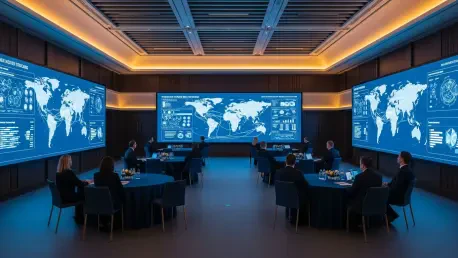
London is widely recognized as the intelligence hub of global shipping, housing critical entities like the International Maritime Organization, which creates an atmosphere of natural gravity for the maritime sector. By hosting the summit at the new International Convention Centre (ICC) within Olympia’s £1.3 billion redevelopment, delegates are no longer confined to a sterile hall but are instead immersed in a vibrant, fully integrated destination for hospitality and business. This environment allows for a seamless transition from formal policy discussions to informal networking in world-class dining spaces, which is essential for building the trust required in international maritime agreements. The city’s unrivaled ecosystem provides a sense of prestige and historical weight, ensuring that every conversation feels connected to the very heart of global trade and innovation.
This upcoming global event is expanding to a four-day format with a projected double-digit increase in attendance. What logistical challenges come with shifting toward interactive, multi-stream sessions, and how do these formats better facilitate knowledge exchange compared to traditional plenary structures?
Expanding the conference to a four-day format while anticipating a 12.9% increase in attendance—bringing the total to 700 delegates—requires a sophisticated approach to space management and scheduling. The shift toward a multi-stream event, featuring roundtables, briefings, and breakout sessions, moves away from the passive “sit-and-listen” model of traditional plenary structures to a more dynamic, participatory experience. Logistically, this means the ICC must support simultaneous high-stakes conversations without interference, allowing senior stakeholders to dive deep into niche technical or financial topics. These interactive formats are far more effective for knowledge exchange because they encourage direct engagement and collaboration, ensuring that the insights gained are actionable rather than just theoretical.
With a vast majority of delegates traveling internationally from over 60 countries, the focus is shifting toward “Port Leadership for a Brave New World.” How do you tailor a program to resonate across so many different nationalities, and what steps ensure site visits provide tangible value?
When over 75% of your audience is traveling internationally from more than 60 different countries, the program must transcend local concerns to address universal challenges like technology and global policy. We tailor the content by focusing on the “Port Leadership for a Brave New World” theme, which speaks to the shared pressures of navigating a rapidly changing global landscape. To ensure site visits provide tangible value, we move beyond simple tours and instead facilitate deep-dive explorations of London’s maritime infrastructure, allowing delegates to see innovation in practice. This hands-on approach ensures that an executive from Asia or the Americas returns home with concrete ideas and a broader perspective on how to modernize their own operations.
Returning to the UK capital for the first time in nearly three decades represents a significant milestone for the maritime community. Can you walk us through the strategic importance of this homecoming and how the industry’s strategic ambitions have evolved since the city first hosted this group in 1965?
The return to London for the first time since 1997 is a powerful symbolic move that reinforces the IAPH’s status as a truly global organization. When the association first held its conference here in 1965, the industry was focused on the early stages of containerization and basic international cooperation, but today’s ambitions are far more complex and professionalized. This homecoming marks a step change in strategic scale, reflecting how port leadership now involves complex intersections of finance, insurance, and environmental technology. By returning to its roots during its 70th anniversary era, the association is not just looking back at its history but is using London’s global outlook to project a more ambitious and unified future for the maritime world.
Modern convention spaces now prioritize proximity to international transit and integrated on-site amenities like hospitality and dining. How do these conveniences impact the ability of C-suite executives to engage in meaningful networking while managing the demands of a rigorous, multi-day global trade summit?
For a C-suite executive managing a global portfolio, time is the most precious commodity, which is why the proximity of the ICC to major hubs like Heathrow is a significant strategic advantage. Having high-end accommodation and diverse dining options directly on-site at Olympia means that leaders can transition from a high-level briefing to a private dinner in minutes, maximizing every opportunity for networking. These integrated amenities reduce the “friction” of travel and logistics, allowing delegates to remain focused on the rigorous demands of the four-day summit without the exhaustion of navigating a sprawling city. When the environment is designed for comfort and efficiency, the quality of engagement improves, leading to more meaningful professional relationships and long-term industry progress.
What is your forecast for the evolution of global port leadership over the next decade?
Over the next ten years, I expect global port leadership to move away from traditional landlord-tenant models and toward becoming central architects of the green energy transition and digital supply chain transparency. We will see a greater emphasis on cross-border collaboration as ports from these 60+ represented nations realize that challenges like decarbonization cannot be solved in isolation. Leadership will require a more diverse skill set, blending maritime expertise with high-level proficiency in data science and international finance. Ultimately, the ports that thrive will be those that embrace their role as multi-modal hubs of innovation, much like the integrated and forward-thinking environment we are seeing developed at the new Olympia.