
The transformation of the historic NH Collection property into the Tivoli President Milano signals a profound shift in how luxury brands approach the competitive landscape of the Italian fashion capital. By pivoting the property into a flagship for Tivoli Hotels & Resorts, Minor Hotels has effectively tapped into the cultural and economic vitality of a city that dictates global trends. This strategic move demonstrates a commitment to upgrading existing infrastructure rather than building anew, allowing the brand to inherit a prime location while infusing it with a fresh, five-star identity.
Milan’s status as a global design hub justifies this high-stakes brand repositioning, as travelers increasingly seek accommodations that reflect the city’s sophisticated spirit. The renovation serves as a case study in architectural preservation, ensuring that the structural history of the building remains intact while the service model evolves. This article explores how the fusion of mid-century bones and contemporary luxury creates a unique proposition for the European expansion of the brand.
Defining the New Standard of Sophisticated Urban Living
Fusing Mid-Century Rationalism with Avant-Garde Interior Design
The hotel represents an architectural marriage between the original Rationalist exterior, designed by Luigi Figini and Gino Pollini in the 1960s, and a contemporary vision by Rodrigo Izquierdo. While the Brutalist façade maintains its rigid, historic authority, the interiors have been softened through a design language of “timeless elegance.” This transition creates a sensory experience where the harsh lines of the past meet the fluid, luxurious textures required by the modern elite.
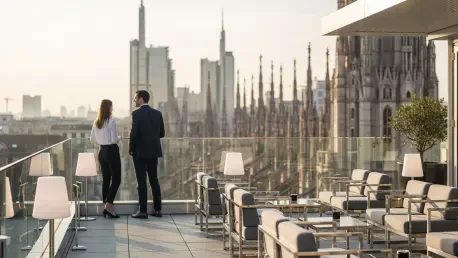
A central highlight of this redesign is the 150-square-meter Presidential Suite, which has quickly become a benchmark for luxury in the city. Industry analysts point to the suite’s panoramic views of the Duomo as a significant data-backed draw for high-net-worth individuals. By effectively softening a mid-century structure, the design team successfully met the high expectations of five-star travelers who demand both historical character and modern comfort.
Integrating Social Fabric Through Destination-Focused Gastronomy and Wellness
Hospitality experts observe a growing shift toward “open hospitality,” where hotels function as public-facing social hubs. The Tivoli President Milano embraces this by offering musical aperitifs at the lobby bar and allowing external guests access to its breakfast buffet. This approach integrates the hotel into the local social fabric, transforming it from a secluded tourist enclave into a central meeting point for the city’s creative and business classes.
The wellness offerings also reflect a response to modern demands for bio-hacking and advanced physical recovery. Through a collaboration with Starpool and Technogym, the hotel provides Zerobody Dry Float technology and specialized recovery tools. These amenities cater to the wellness-conscious urban traveler who prioritizes health optimization even during short stays in a bustling metropolis.
Strategic Market Positioning Within the Quadrilatero della Moda
The hotel’s location in the San Babila district provides a distinct competitive advantage, placing guests within walking distance of the Teatro alla Scala and the Galleria Vittorio Emanuele II. This geographical edge allows the property to capture a specific demographic of travelers who prioritize cultural accessibility and proximity to the world’s most famous fashion houses. Being situated at the edge of the Quadrilatero della Moda ensures the hotel remains a primary choice for retail-focused tourism.
Market disruption is also evident as brand-loyal travelers from Portugal and Brazil follow the Tivoli name into the Italian market. By leveraging its established reputation in South America and Iberia, the hotel has secured an immediate guest base that might otherwise have chosen legacy Italian luxury houses. This cross-continental brand loyalty creates a stable foundation for the property’s long-term success in a crowded sector.
The Italian Growth Pipeline and Minor Hotels’ Long-Term Vision
Establishing a foothold in Milan is a critical milestone for institutional credibility within the European market. Comparing the Milan debut to existing properties in Portopiccolo and Florence reveals a cohesive strategy of securing high-value assets in diverse Italian regions. With an expansion into Lecce planned for the near future, the brand is building a comprehensive Italian circuit that appeals to travelers seeking a consistent luxury experience across the country.
Leadership perspectives suggest that a presence in Milan provides the necessary visibility to compete with long-standing luxury competitors. By offering a destination-centric service model that emphasizes local culture, the brand differentiates itself from more traditional, standardized hotel chains. This long-term vision positions the hotel not just as a standalone success, but as a pillar of a broader European growth strategy.
Actionable Insights for the Modern Luxury Traveler and Industry Professionals
For the luxury traveler seeking exclusivity, the panoramic rooftop of the Presidential Suite offers a unique venue for private events that are unparalleled in the local market. Guests are encouraged to take advantage of the bio-hacking wellness tools, which provide a necessary antidote to the fast-paced nature of Milanese life. Prioritizing these destination-specific experiences ensures that a stay transcends mere accommodation and becomes a cultural immersion.
Industry stakeholders can find strategic value in how this property was rebranded and repositioned. Successfully transforming a mid-century asset requires a delicate balance of respecting original architecture while aggressively updating interior technology and guest services. The move toward “open hospitality” serves as a recommendation for other urban hotels looking to increase their relevance within their local communities and diversify revenue streams.
Cementing a New Legacy in Italy’s Premier Design Hub
The arrival of this five-star establishment served as a transformative moment for the skyline of the city, honoring its Rationalist origins while setting a path for future design trends. The renovation proved that historic structures could be reimagined to meet the rigorous standards of modern international tourism. This expansion signaled a high level of confidence in the Italian luxury sector, showing that brand heritage and localized service could coexist.
Observers noted that the project provided a blueprint for the next generation of lifestyle-centric hotels, where wellness and social integration were as important as the room count. The hotel successfully transitioned from its previous identity into a sophisticated urban sanctuary that attracted a global audience. Ultimately, the project demonstrated how a strategic vision could turn a 1960s landmark into a contemporary icon of high-end hospitality.