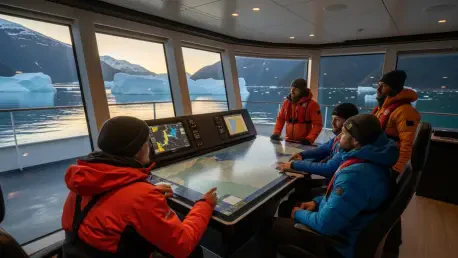

The traditional concept of a sedentary vacation spent by a pool is rapidly losing its appeal to a new generation of travelers who view movement and education as the ultimate luxury. This shift marks the decline of the passive vacation, replaced by a deep-seated hunger for discovery that only intensifies as the population matures. Recent industry data identifies a curiosity evolution that is fundamentally reshaping the travel sector. A majority of Americans now view exploration as a vital instrument for personal development and lifelong learning. This analysis investigates the statistics driving this intentional discovery, explores real-world applications of immersive tourism, and provides expert outlooks on the future of transformative experiences.
The Quantifiable Shift Toward Intentional Discovery
The Statistical Landscape of the Curiosity Evolution
Recent data suggests that 57% of Americans experience a notable increase in curiosity as they grow older, contradicting the common assumption that aging leads to a preference for stagnant routine. This trend is accompanied by a cooling interest in traditional leisure, as 62% of travelers now prioritize discovery and education over the standard amenities of comfort and relaxation. These individuals are seeking more than just a change of scenery; they are looking for challenges that stimulate the intellect.
The demand for adventure remains a primary driver for modern itineraries. Approximately 70% of respondents in recent surveys express a strong desire to be adventurous, while 76% actively seek out unfamiliar or challenging experiences. This statistical shift indicates that the travel industry must pivot from providing mere relaxation to facilitating active engagement with the world. Travelers are no longer content with being observers; they want to be participants in the stories of the places they visit.
Real-World Applications of Purposeful Travel
Industry leaders such as Lindblad Expeditions are responding to this shift by integrating deep historical context and scientific discovery into their core itineraries. This approach transforms a simple cruise or trek into a mobile classroom where the environment serves as the primary instructor. By offering access to experts, researchers, and specialized equipment, these companies provide the intellectual depth that modern travelers crave. This model proves that educational value is now a significant competitive advantage in the luxury market.
Destinations like Alaska and California are being rebranded as hubs for immersive exploration, proving that profound discovery does not always require crossing international borders. These locations are highlighting their rugged landscapes and scientific importance to attract a demographic that values substance over style. Travelers increasingly select destinations based on the potential for gaining new knowledge and enduring memories rather than the presence of luxury infrastructure. The focus has moved from the quality of the linens to the quality of the insights gained during the journey.
Expert Perspectives on the Value of Transformative Travel
Cultural researchers observe a transition from “getting away” to “moving toward” personal growth. This psychological shift highlights the benefits of a curiosity-driven lifestyle, where mental expansion leads to increased life satisfaction and cognitive health. Professionals in the field argue that the act of navigating unfamiliar environments fosters resilience and adaptability. Instead of fleeing from the pressures of daily life, individuals are using travel as a proactive method to build a better version of themselves.
Industry experts point out that 70% of modern travelers now measure a trip’s success by what is gained internally rather than the prestige of the destination. This suggests that the primary motivation for travel has moved from external status symbols to internal evolution. Commentary from travel leaders emphasizes that the most successful brands will be those that can facilitate a fundamental shift in perspective for their guests. The goal is no longer to provide an escape, but to provide an encounter that resonates long after the traveler returns home.
The Future of the Exploration Industry
Looking ahead, the exploration industry anticipates continued growth in educational tourism and niche historical expeditions. However, this popularity brings significant challenges, particularly regarding the management of increased demand for remote and ecologically sensitive locations. Protecting the very “natural beauty” that attracts travelers will require innovative management strategies and a commitment to low-impact tourism. The industry must balance the desire for discovery with the necessity of preservation.
A more curious population generally influences global perspectives positively and bolsters conservation efforts. When travelers engage deeply with a location’s history and ecology, they are more likely to support initiatives that protect those resources. The industry is witnessing a permanent shift where emotional rewards and intellectual gains have replaced physical souvenirs as the primary currency of the modern traveler. This evolution suggests that travel will continue to serve as a vital bridge between global cultures and environmental awareness.
Conclusion: Redefining the Modern Journey
The transition from passive tourism to active, purposeful exploration became a defining characteristic of the modern era. Travel functioned as a sophisticated tool for self-improvement and the cultivation of wonder rather than a mere break from professional life. Organizations focused on facilitating curiosity-driven experiences that challenged the mind and enriched the spirit. This shift ensured that the act of moving across the globe remained a meaningful pursuit for an aging but increasingly inquisitive population.
Future considerations for the industry involved prioritizing sustainable accessibility to natural beauty while ensuring that every journey provided a tangible contribution to both the traveler and the destination. Success was found by those who viewed every itinerary as an opportunity for lifelong learning. Ultimately, the industry moved toward a model where the value of an experience was defined by the depth of the connection it fostered. Exploration remained the most effective way to challenge existing biases and promote a more nuanced understanding of the world.