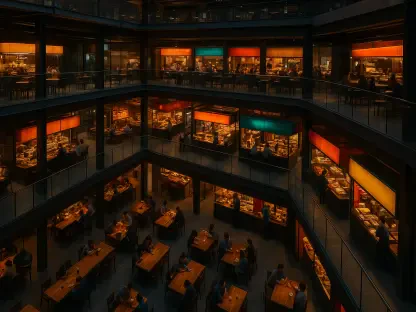

The hiring of seasoned veterans from high-profile venues like House of Blues and MGM signals a new era of professional management for the Hartford destination. For years, the facility functioned primarily as a traditional food hall, where the developer acted as a landlord providing space for independent culinary entrepreneurs. However, the current landscape of the hospitality industry demands a more hands-on approach to ensure consistency, quality, and long-term financial viability. By transitioning into a vertically integrated hospitality and entertainment complex, the market is no longer just a collection of third-party vendors but a centralized operation capable of managing high-volume service and diverse revenue streams. This evolution, led by developer Carlos Mouta, focuses on taking direct ownership of the guest experience, from casual food stall interactions to the formal requirements of large-scale corporate events and private social gatherings, marking a significant strategic pivot.
Transforming the Business Philosophy: Moving Beyond Real Estate
Strategic Culinary Expansion: The Rise of Internal Operations
The primary driver of this transformation is the transition toward direct management of food stalls, which began with the successful launch of the Seafood Shack. This strategic shift allows the developer to fill specific gaps within the market’s culinary landscape that external vendors might overlook or be unable to sustain. Plans are currently underway to introduce several additional owner-operated concepts, including a high-end deli and a soup-and-salad stall, as vendor spaces naturally become available. By managing these brands internally, the market ensures that the food quality aligns with overall brand standards and provides a reliable culinary foundation for the growing catering business. This internal brand development is not merely about competition; it is about creating a curated, reliable experience for daily visitors while maintaining the flexibility to scale operations based on demand. Such a move secures the property’s status as a top-tier destination for the regional dining community.
Economic Synergy: Mastering Pricing and Promotion Flexibility
By operating stalls directly, the market gains unprecedented control over its internal economic ecosystem and promotional strategies. Independent vendors often operate on extremely thin margins, making them hesitant to participate in aggressive marketing campaigns or off-peak discounts that drive overall site traffic. As an owner-operator, the developer can prioritize total campus volume over individual stall profitability, offering deep discounts during slow times to attract visitors who will then spend money on high-margin beverages or entertainment. This flexibility is essential for maintaining a high-energy atmosphere throughout the week and across different seasonal shifts. Furthermore, direct operation creates a pool of laborers who can be moved between counter service roles and high-value event staffing. This staffing agility addresses the volatility of the hospitality labor market and ensures that large-scale functions are always professionally managed by a familiar and trained workforce that understands the unique operational standards.
Professionalizing the Event Experience: Investments and Leadership
Culinary Infrastructure: Creating a Seamless Catering Powerhouse
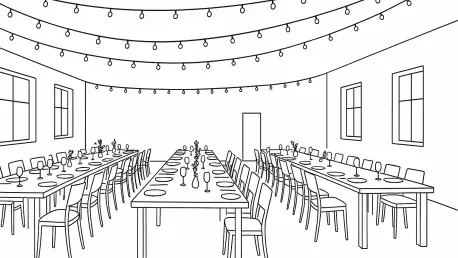
A significant portion of the $2.5 million investment into the property has been dedicated to enhancing the 12,000-square-foot events venue located adjacent to the main market area. Recognizing that a lack of on-site facilities hindered the ability to secure high-value bookings like weddings, the developer is currently installing a state-of-the-art commercial kitchen designed to handle all catering internally. This upgrade effectively transforms the space into a competitive destination for large-scale social celebrations and corporate functions that require bespoke menus and seamless service execution. By eliminating the logistical friction associated with coordinating external catering teams or multiple independent food stalls for a single event, the market can now offer a unified and professional experience for groups of up to 700 guests. This centralized kitchen infrastructure serves as the heartbeat of the hospitality hub, allowing the team to deliver consistent dining experiences at scale.
Management Excellence: Implementing High-Level Hospitality Standards
To support this ambitious expansion, the market has completely overhauled its management structure by recruiting seasoned experts with extensive backgrounds in the entertainment and food industries. This transition is spearheaded by industry veterans like Bradley Cooper and executive chef Jeff Ross, whose combined experience at major venues ensures that every aspect of the operation meets professional hospitality standards. Ross is currently tasked with building a robust culinary team of approximately 20 full-time employees and 40 supplemental event workers, creating a workforce that is both skilled and scalable. This level of professional oversight is critical for maintaining quality across both the casual food hall environment and the highly demanding formal event space. Beyond standard operations, the leadership team is introducing experiential programming, such as curated wine pairings and professional bartending classes, effectively turning the market into a diverse social hub.
Creating a Holistic Campus: Diversification and Future Resilience
Entertainment Integration: Driving Dwell Time and Economic Growth
The final phase of the market’s evolution involves a broader vision of place-making that extends the brand’s reach well beyond traditional food and drink. The campus is expanding to include a new 4,000-square-foot entertainment bar that features high-engagement activities such as professional-grade golf simulators and ax-throwing lanes. This diversification is strategically designed to increase dwell time, encouraging guests to remain on the property for several hours by providing a variety of interactive recreational options. Whether it is a corporate group seeking team-building exercises or social seekers looking for late-night excitement, the addition of interactive entertainment creates a comprehensive destination that captures multiple revenue streams simultaneously. This holistic approach allows the facility to serve as a one-stop campus where dining, recreation, and professional gatherings intersect, hedging against the traditional volatility often found in the food service industry.
Tactical Next Steps: The Roadmap for Sustainable Destination Development
In the final assessment, the strategic transition of the facility into a unified hospitality hub established a blueprint for urban revitalization in the Hartford region. The integration of direct culinary operations, high-end event infrastructure, and diverse entertainment options provided the resilience needed to thrive in a competitive market. Moving forward, the management team prioritized the continuous refinement of internal catering services and the expansion of community-focused experiential events. These steps ensured that the market remained a central pillar of the city’s social fabric while maintaining the economic agility to adapt to shifting consumer preferences. By focusing on professional leadership and operational control, the project moved away from the passive rental model and secured its position as a dominant hospitality empire. The success of this vertical integration served as a model for other mixed-use developments, demonstrating that a coordinated approach to dining and recreation significantly enhanced the long-term value of the property.